What do coconuts have to do with engineers and wells?
Community knowledge, connection and stewardship of a place go hand-in-hand. Listening and building connection is critical not just for the place but also for a sustainable planet
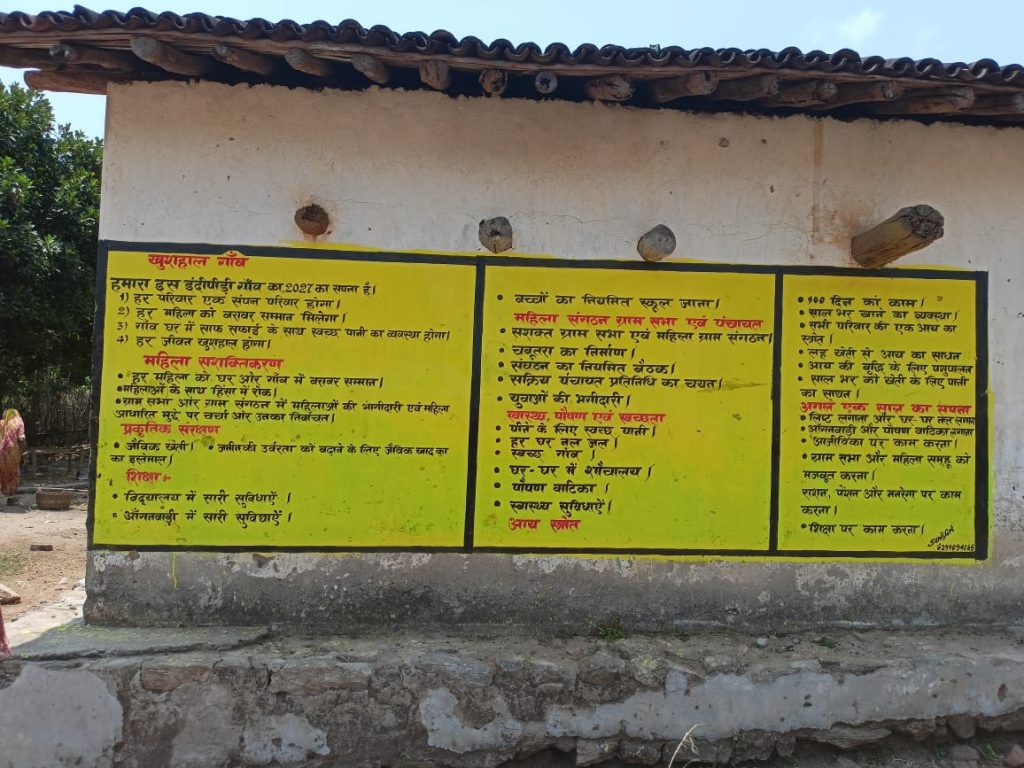
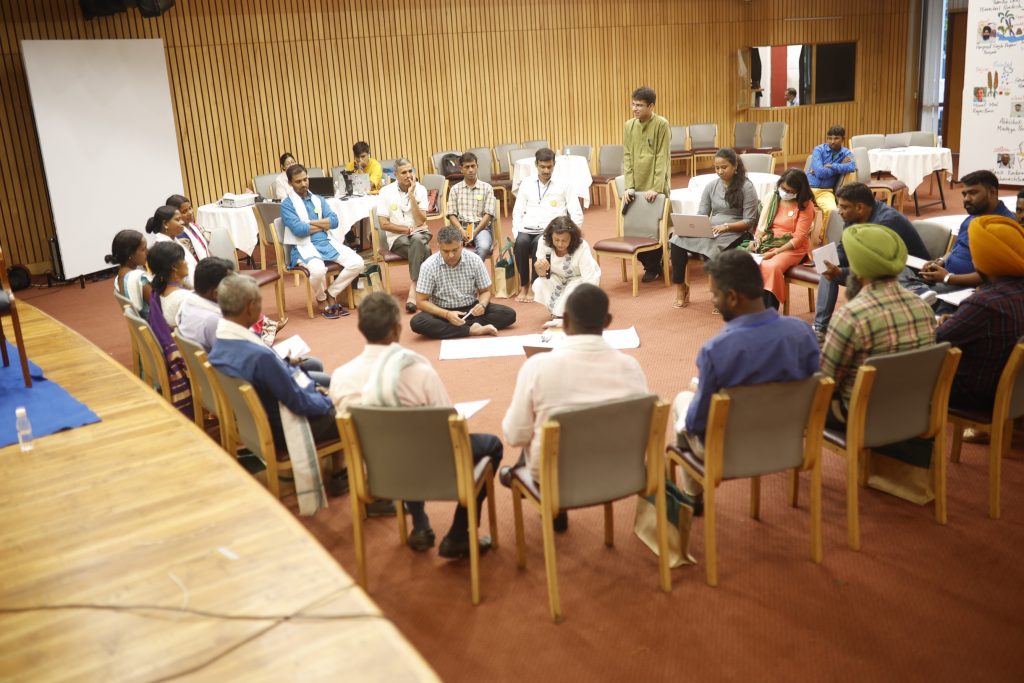
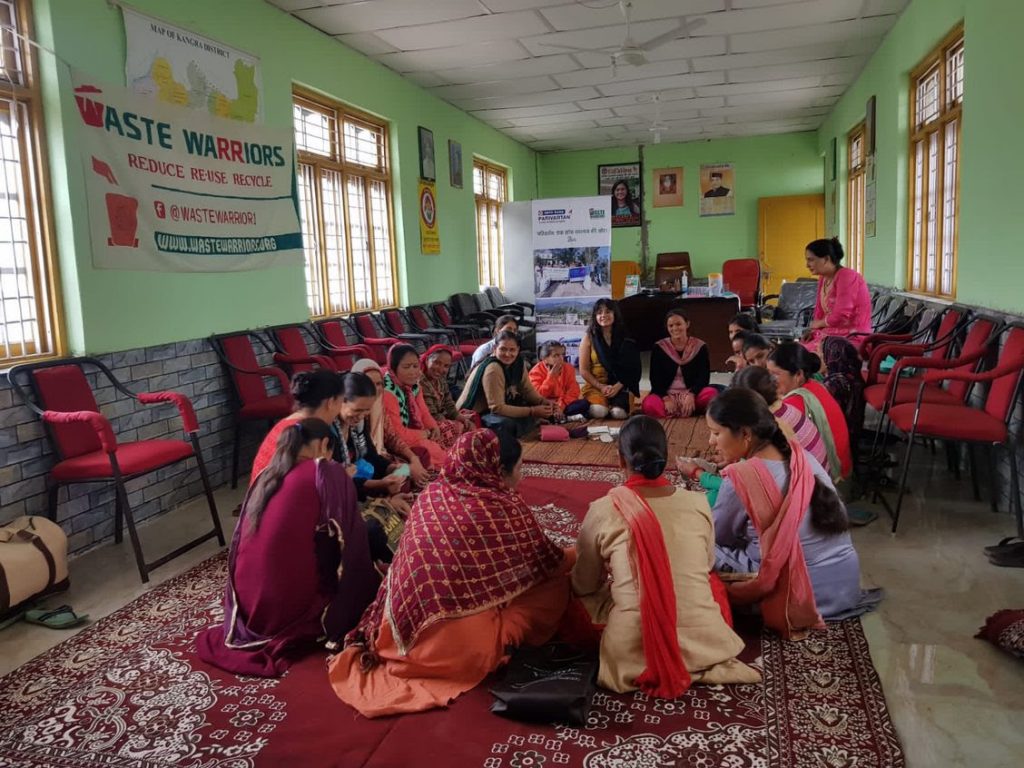
Villagers in Mosanga village in Jharkhand’s Khunti district, document their needs and aspirations as part of a village visioning exercise. Photo: PRADAN
I had never heard of a fasal chakra.
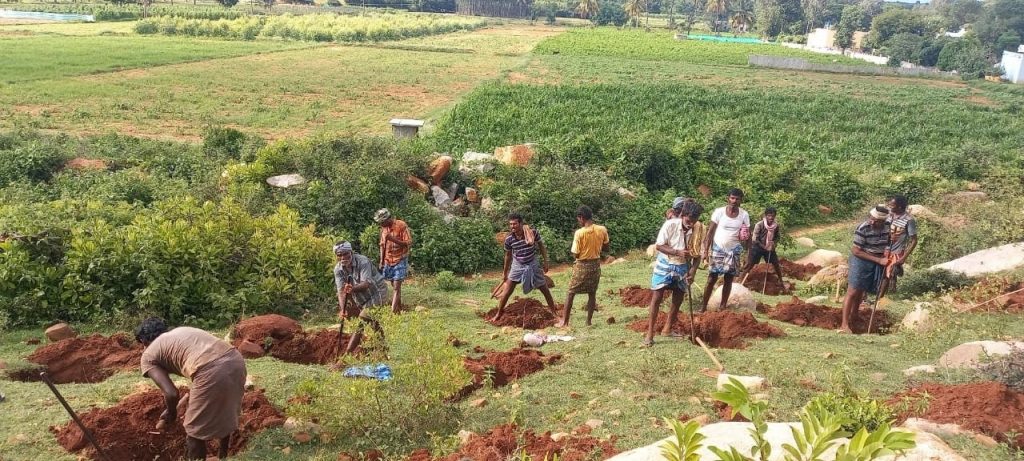
Nor a village engineer. Neither about halma, swaraj shala and gram swabhiman diwar. And the most counter-intuitive and rational-defying thing I learnt was that there are communities in India who have successfully relied on coconut-sensing (and not hydrology engineers) to find suitable spots to dig wells in! There’s a tendency to brand such concepts and notions as unscientific, absurd, and pejoratively, jugaad. And yet these simple tools and methods, often waiting to be investigated by science, go a long way in bringing people together as they navigate and conquer the challenges of their places – be it to locate appropriate spots to dig wells in or to understand season-specific cropping or to give voice to the dreams for their villages.
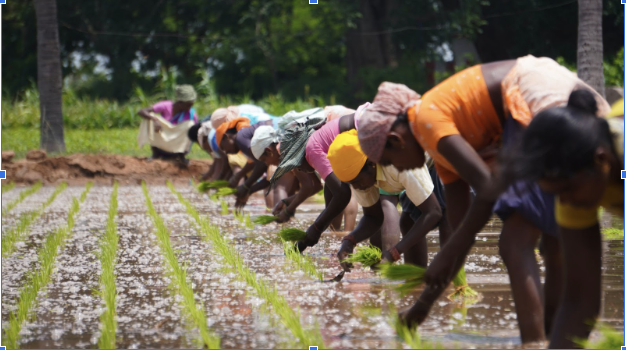
Villages, or the rural, are largely perceived to be places of self-sufficiency, and therefore presumed to be available for production and extraction to meet the needs of the urban scape. This is a myth. Rural India today is not only far from being self-sufficient, but is also on the brink of collapse – evident by the sentiments of truckloads of farmers who had stopped on the borders of the national capital this Valentine’s Day. On the same day, far from the voices of protest, we heard from community organisations about what ailed the rural – deteriorating farms, irregular markets, an ever-mounting problem of waste, disillusioned and unemployed youth, increased migration, decreased dignity, eroding connections and loss of local problem-solving muscle.
Grassroots, non-profit and funding organisations often struggle to navigate the rabbit hole of such interconnected challenges. Reliance on projects and predetermined solutions more often leads to piecemeal fixes and rarely leads to holistic well-being of the people and the place. For instance, advocating solar-powered irrigation to boost food production and cut fossil fuel emissions is a go-to solution for funders, administrators and grassroots organisations. This emphasis on solar-powered irrigation has exacerbated the groundwater crisis, putting a question mark on the well-being of the place. If we are to become the people our places need us to be, then it’s important to listen and learn from the novel and non-mainstream approaches. A session with an eclectic group of grassroots organisations last month provided an opportunity for such reflection. These are some of the things we learnt:
Learn, not prescribe; proactively look for strengths; altruism for the long haul Strive to build model processes, and not a model village, shared Nitin of Shivganga, an organisation that works in Jhabua, western Madhya Pradesh. Building a model village might be good for one village, but it alienates the neighbouring villages, and is counterproductive for social and natural resource outcomes. One of their key tenets as part of model process building is to spend time among residents with the intention to learn (not prescribe, teach or impose), ask about the challenges and the dreams/aspirations of the village (as opposed to of the people), and understand in what ways they would like to resolve the challenges. Another tool they rely on is to proactively ask about the strengths and skills of the community to leverage these as well as seek out those individuals who are action-oriented and ever ready to volunteer their time and effort for the larger good. Probing for these led the organisation to revive a traditional practice that had faded out: halma (also referred to in the region as dhaaas, laah, dhasia, notra) is a culturally-embedded practice wherein all the residents of the village come together to aid a person in need – be it to sow/harvest fields or to rebuild a house. Every household in the village volunteers a person, who contributes his/her time and skill. If a household is unable to send a person, then it contributes by cooking meals, offering tools and equipment, etc. Children are encouraged to watch the halma to instill collective pride as well as to build intergenerational memory. A core principle in this approach is that of parmarth or altruism – an engine that never stops and keeps everyone humble and focussed on the long road ahead.
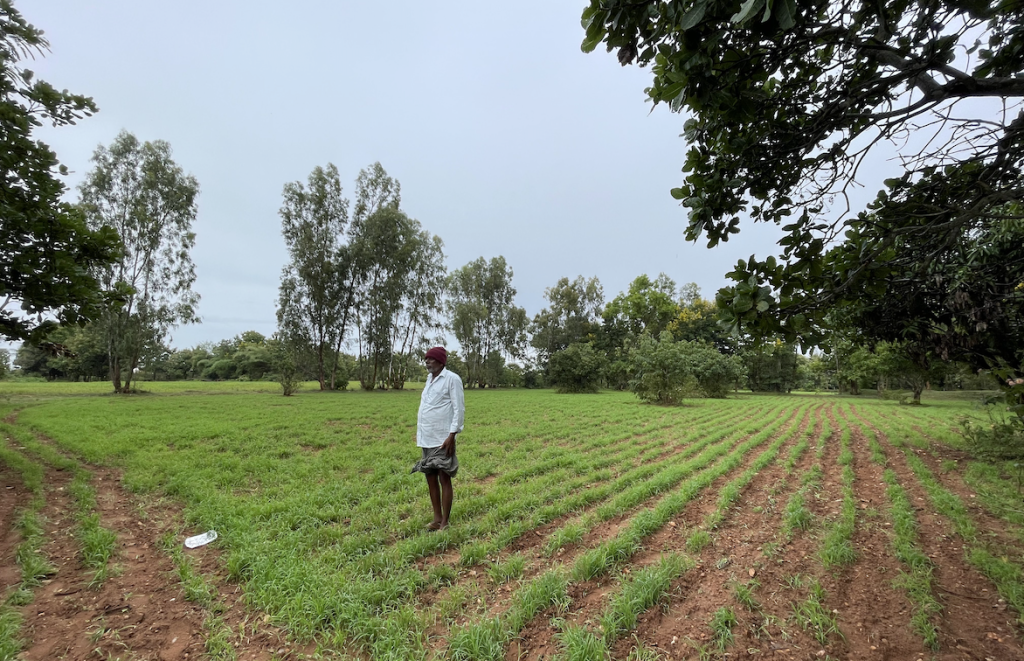
Nature, economics & gain-drain The natural ecosystem (forest, soil, plants, terrain, temperature, water, etc) is fundamental to a place, shared Diksha of WASSAN. From this, emerges a production system, leading to livelihoods, which then adds up to the creation of an economy. Local facilitators rely on games and maps to ask communities to identify the natural assets, be they farmlands, ponds, forests etc in their region in an attempt to visibilise the gain v/s drain from the ecology and the economy. The communities typically are asked about the health of the local ecology, economy, overall quality of human lives, social harmony, institutions, etc. The fasal chakra – a season-wise chart of crops that were traditionally grown be they cereals, oilseeds, pulses, etc – is a part of this exercise, and helps demonstrate what the village economy is producing, what it is failing to produce and therefore expending money on, and the consequences of such trade-offs. For instance, it emerged that one panchayat in Jharkhand was spending as much as Rs.1.2crore per year on vegetables alone. A single-minded focus on increasing farm incomes not only led to cash crops at the expense of soil and water quality, but it also meant the local economy was poorer by Rs.1.2cr since nobody was growing vegetables to meet the local demand. Such efforts often lead communities to a sense of collective loss, and serve as sparks to take action for the ‘drain’.
Enabling local wisdom and dreams
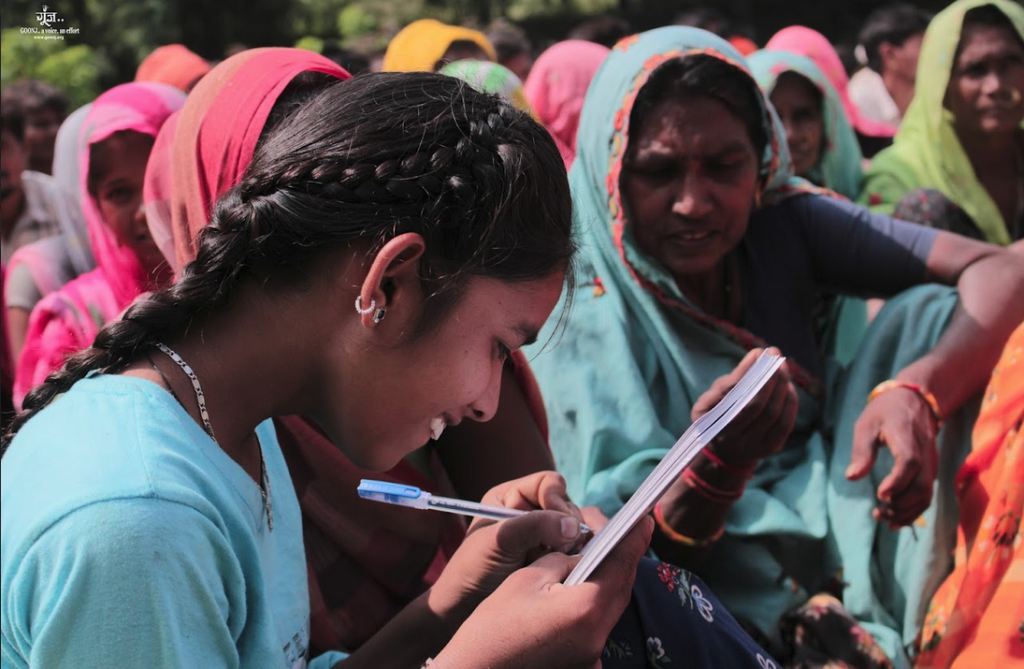
A girl pens her name and the name of her village on the gram swabhian shapath (pledge). Photo: Goonj
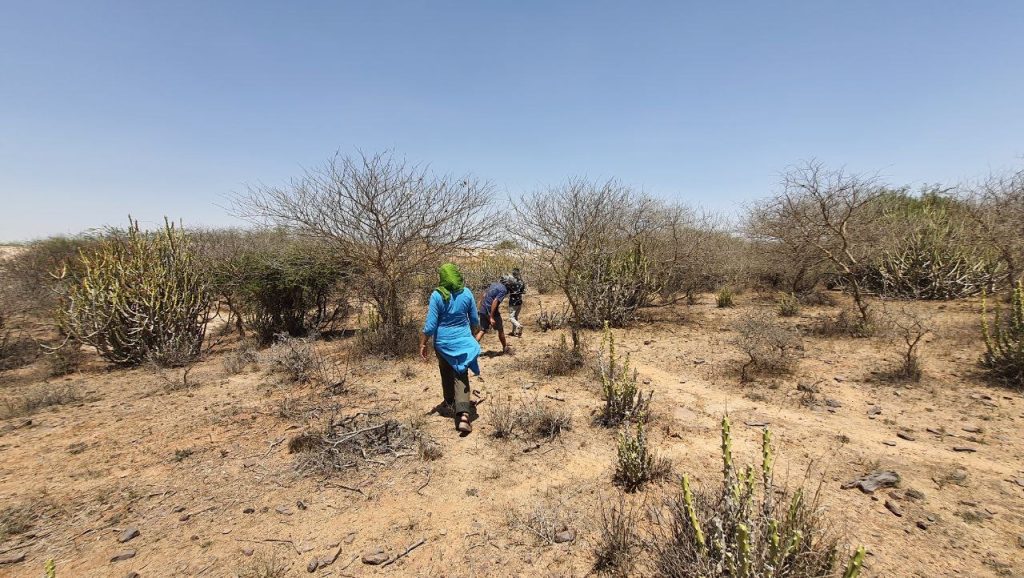
Did people dig wells before the existence of hydrology engineers? How did they know where to dig for water? And does the presence of an engineer guarantee that a newly-dug well will lead to water? Anshu of Goonj posed these questions as he spoke about the value of asking communities what they are rich in (be it knowledge, skills, insights, cultural practices, natural resources, etc) as opposed to what they lack (monetary riches). There is value in local wisdom, resourcefulness and practices, he said, as is evident by the fact that many communities rely on coconuts to ascertain spots to dig wells in. Whether based in superstition or science, Goonj leaves decision-making to the people and sees its role in challenging and supporting the village’s collective sense of pride.
A key principle of this approach is to recognise the inherent dignity of people and places. For instance, why is it that those who give away used clothes are thanked for their giving, but those who receive those very clothes are not acknowledged and thanked for wearing/reusing them? Similarly, most people refer to themselves as ‘poor’ so as to be able to access government subsidies and schemes. They’ve internalised this label to such an extent that they now fear losing out on these benefits.
This is where language has a part to play. Goonj flips the established vocabulary, and ditches the use of words like ‘charity’, ‘donors’, ‘volunteers’, ‘beneficiaries’, ‘poor’, etc. Instead, the emphasis is on valuing people for the skills and strengths they already have. Aids such as the gram swambhiman shapath (pledge) and gram swabhiman diwar (dignity wall) are leveraged to invoke pride and connection to the place.
Himanadī tāla – October newsdigest from Rainmatter Foundation
हिमनदी ताल
(Himanadī tāla, Nepali; Glacial lake)
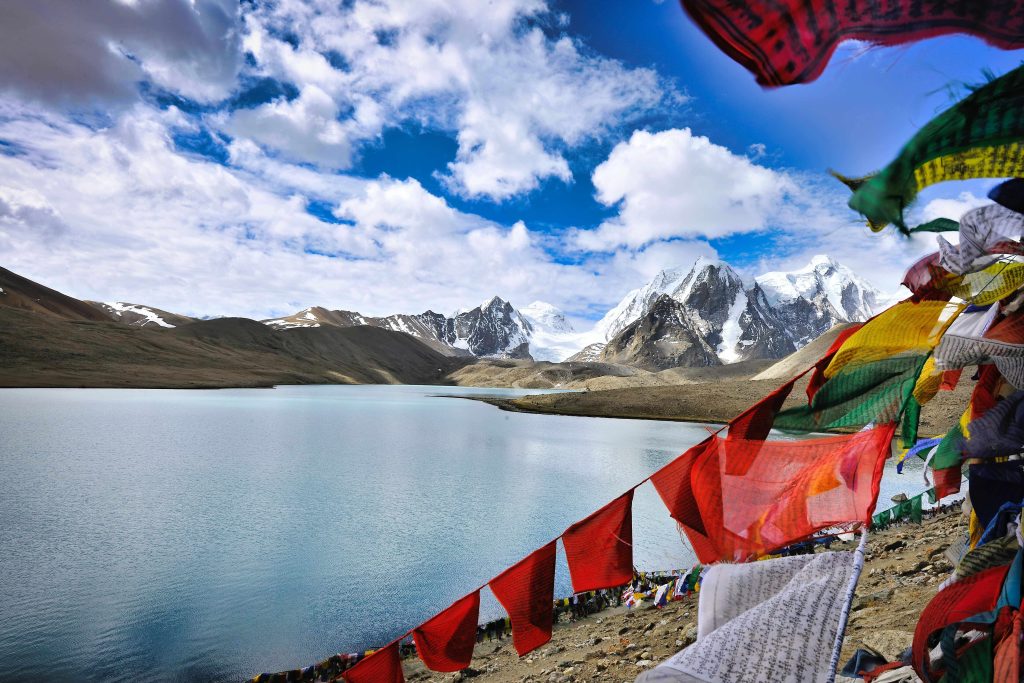
The Gurudongmar Lake is one of more than 300 glacial lakes in Sikkim. Glacial lakes in the Himalayas are in need of early-warning systems and mitigation strategies against Glacial Lake Outburst Flood (GLOF) incidents, the latest of which occurred on the South Lhonak lake on 3-4 October. Photo by Abhishek Singh on Unsplash
Greetings!
Mountainscapes can be otherworldly – the weather is unpredictable and one never knows what the next bend might lead to: a valley, a stream, a forest or a wall of rocky cliffs. The higher one goes, the more magnificent the mysteries: snowy mountains host glaciers, which give way to ethereal, glistening water bodies that sustain and nourish lives. These glacial lakes are now a cause of foreboding, especially in the Himalayas, home to more than 2,000 glacial lakes. Many are at risk of breaching their boundaries and causing flash floods downstream in what is called a Glacial Lake Outburst Flood or GLOF. This is what occurred at the South Lhonak lake in Sikkim in early October. Watch this video to see how this flooded the Teesta river, washed away bridges, decimated the state’s biggest hydropower project (1200MW Teesta III dam), buried entire towns and killed dozens.
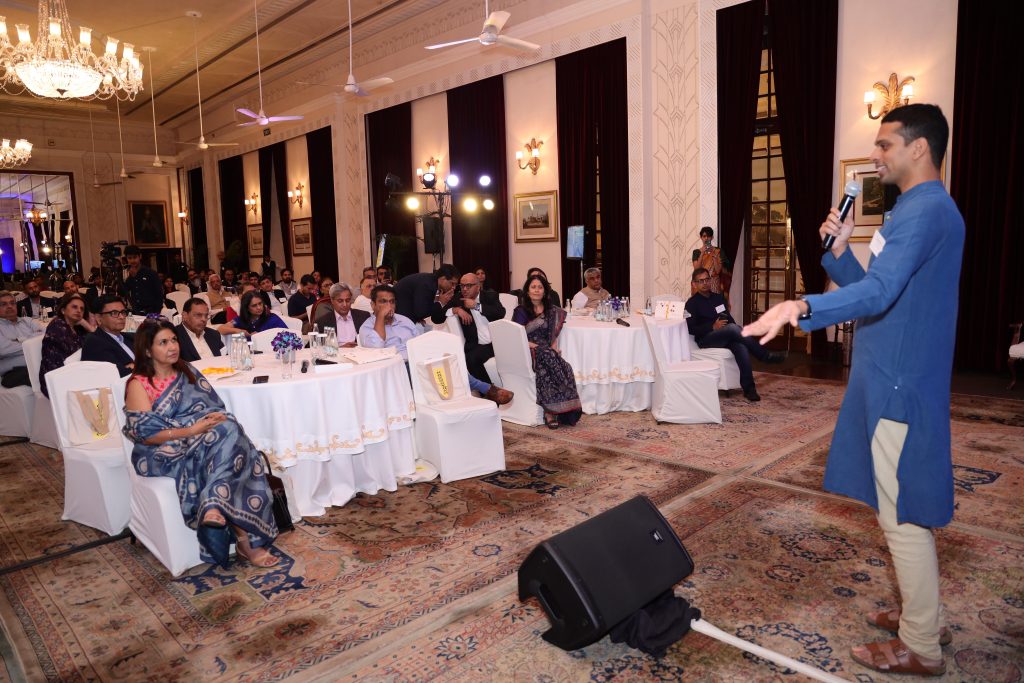
Founding-director Kailash Nadh at Janaagraha’s annual gathering on India’s urban agenda. Photo: Janaagraha
October at the Rainmatter Foundation felt like it passed by too quickly. The team dispersed in different directions – participating in several events, doing field visits, relocating to a new city, completing the first ever triathlon and travelling to new horizons. At Janaagraha’s Annual Urban Conclave (more on this shortly), one of our founding-directors, Kailash Nadh, shared how his experience of climate grief as a teenager has shaped his life, including the decision to not have kids, and how baby steps such as segregating waste at Zerodha eventually led to a deeper commitment to climate action i.e. seeding the Rainmatter Foundation.
Speaking of waste segregation at the workplace, we’ve learnt that a low-waste or a zero-waste office space is not about spending more money on facility management services. Rather, it is about making a commitment and then taking small steps to that goal. Check out Saahas’ visual, step-by-step guide that we launched at the WeWork Sustainability Summit in October. The icing on the cake: it has a handy list of alternatives and contacts for vendors.
This past month, we also had several discussions on the subject of conservation and restoration. Over the years, with the interest in tackling climate change gaining momentum, the focus has been on tree plantations – from mono-cultures to Miyawaki forests. While these efforts might not be called ecological restoration, they can in some cases assist degraded lands. Oftentimes these interventions cause more harm than good. For example, planting up a savannah grassland with trees can cause all sorts of ecological and social problems. Some that we have noticed include wild species such as blackbuck losing their grassland habitat and pastoral communities no longer being able to provide grazing pastures for their flocks.
Ecological restoration is when restoration practitioners assist natural processes to heal a degraded landscape. The focus is on allowing nature to lead the way, with some critical interventions to help the process. Degraded lands can either take a very long time to recover or not recover without intervention. At the Foundation, we are keen to tackle climate change and to contribute to the restoration of ecosystems, while keeping nature and communities at the centre. Our focus in the past few months has been to engage and work with partners who are aligned with these principles.
From the Community Janaagraha hosted its Annual Conclave on Shaping India’s Urban Agenda, a two-day event that saw discussions around alternative finance mechanisms for cities, the architecture of civic institutions, a round-table on climate action in cities and the launch of the Annual Survey of India’s City-Systems. The report examines funding available to cities, urbanisation trends, legislation and reforms, challenges faced by urban local bodies and offers a 10-point framework for delivering a better quality of life.
Waste Warriors has completed 10 years of managing waste in the Corbett Tiger Reserve (CTR). The decade-long journey has been represented in a comic book. As of today, 24 Paryavaran Sakhis take ownership of waste management in their villages in and around CTR and earn through the collection of user fees and sale of recyclable waste. On a separate note, when Waste Warriors’ CEO Vishal travelled to the United States in October, he “tried to collect almost all the (dry) waste I generated from the time I left home, reached New York, attending multiple events, and reached back home in Dehradun. Every time I travel, and most of my team travels, we try to carry our own waste with us and bring it back, so we can send it to an end destination for processing that we know and can trust.” Read this post to see how much dry waste he returned home with.
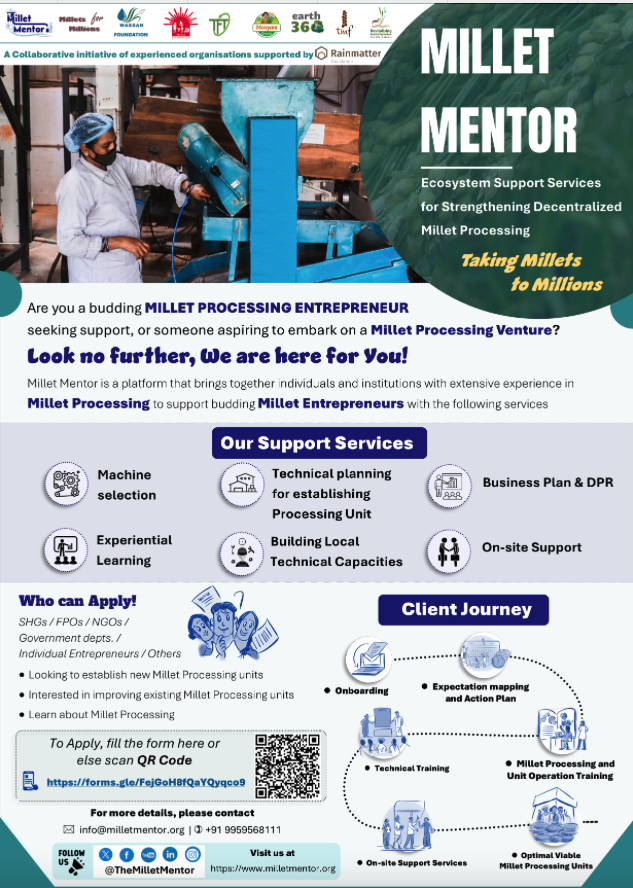
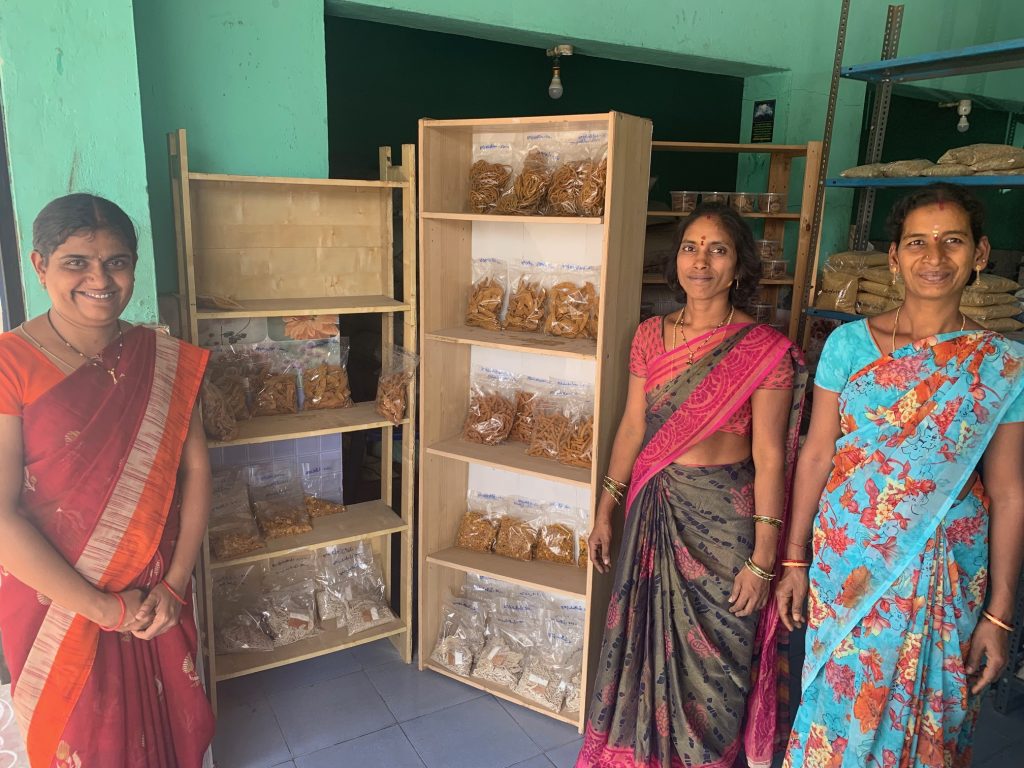
WASSAN launched the Millet Mentor initiative along with multiple partners to support entrepreneurs in the millet value chain. This fills a critical gap since millet processing faces multiple challenges including technical, market and service related. The Millet Mentor program includes operational guidance, machine selection, vendor liaisoning, on-site support, credit linkages, business mentoring, and much more. Fill out this form if you (or someone else you know) need assistance with millet processing and value-addition. Spread the word for good karma… and know that switching to millets is a form of climate action!
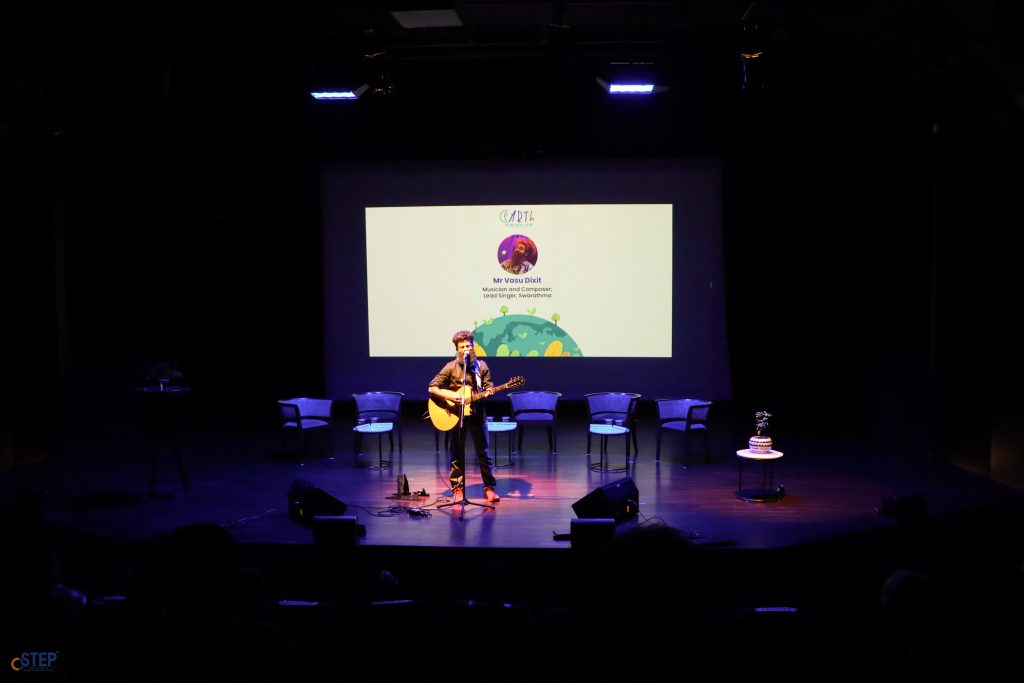
CSTEP roped in musician and singer Vasu Dixit, stand-up comedian Sundeep Rao, singer Anoushka Maskey among others to kick-off the eARTh Initiative. This is a long-term effort to engage with artists to trigger climate-positive behaviour change among citizens. The eARTh Initiative will include an artist collective to mentor young artists and encourage climate art and a climate fellowship for students to enable them to create solution-oriented artistic narratives around climate change. Watch the launch and the performances here.
Noticeboard Take the No Corporate Gift Box Pledge if you haven’t already, and spread the word (for more good karma points).
Have you noticed how almost everything has a review or a rating these days, and yet there is no guidance for how sustainable our restaurants are? Well, Sustainable Eateries is a crowd-sourced platform for eco-friendly restaurants and eateries around the globe. Refer to this the next time you are ordering-in. Better still, do a review-cum-audit to add to the platform!
Opportunities:The Locavore is in need of someone with a culinary background and cooking experience to lead their Millet Cooking Lab for the Millet Revival Project. Details and application information here. Saahas is looking to hire three people for their efforts in Majuli, Assam. Position information and other details here. CEEW is recruiting for various positions including Programme Associate, Energy Transitions, Research Analyst, Sustainable Food Systems and Programme Lead, Centre for Energy Finance among others. Apply for the PRIME-Sauramandala Rural Entrepreneurship Fellowship. PRIME Fellows and local PRIME Associates will be placed in remote blocks of Meghalaya, where they will actively promote rural entrepreneurship. Application deadline: 15th November. More information here.
Spend 30 minutes listening to this podcast about what whale culture can teach us, and if deep listening might get us to learn to coexist respectfully in kinship with these guardians of the deep.
Joydeep Gupta writes about Saleemul Haq, who brought global attention to the need to to pay for the loss and damage that people suffer owing to the impacts of climate change. Raza Kazmi pays a tribute toAnne Wright, a fierce and trailblazing champion of wildlife and conservation efforts in India.
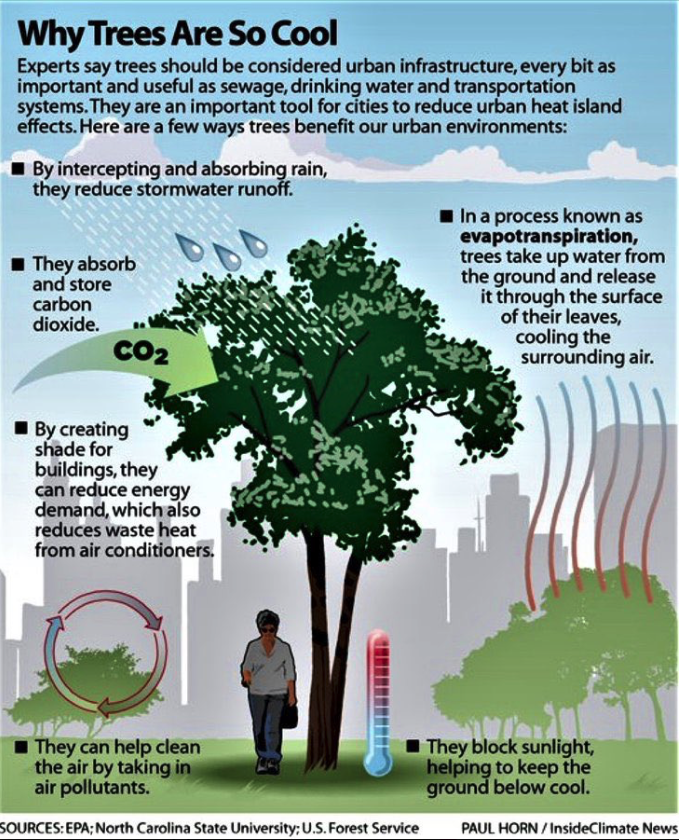
Requiem for a dying tree by philanthropist Rohini Nilekani is a poignant piece! We’d have smarter cities if urban planning efforts started accounting for trees.. perhaps this is why the state of Haryana is offering a pension for old trees now!
Ever wonder how the carbon credit market works? CSE and Down to Earth spoke to project developers, traders, verifier bodies, farmers, rural households, activists, journalists, local leaders, and NGOs and pored over hundreds of project records for months. Their findings are documented in Discredited: Does the Voluntary Carbon Market Benefit People and Climate in India? On the other side of the globe, the New Yorker features a similar report: The Great Cash-for-Carbon Hustle.
The fourth edition of All Living Things Environmental Film Festival (ALT EFF) will showcase 62 climate stories at more than 45 locations across the country from 1-10 December. You can watch these in-person at community screenings or stream them online in a watch free or pay-as-you-feel model. Watch the festival trailer and head here for screening details.
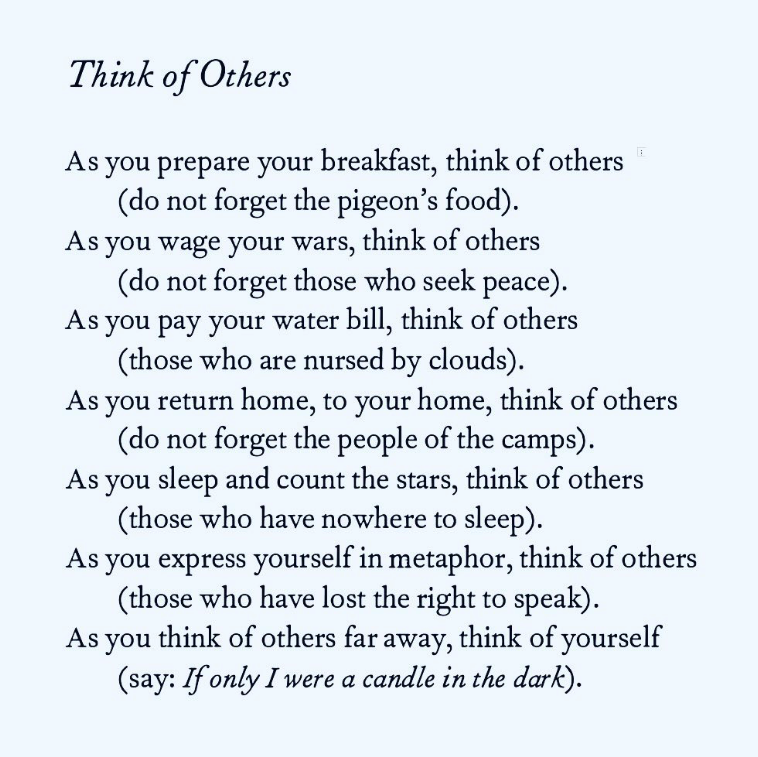
Parting Shot Think of Others by Palestinian author and poet Mahmoud Darwish (1941-2008) is as much about conflict and strife as it is about those whom climate violence and injustice impacts the most; translated from the original Arabic by Mohammed Shaheen.
Until next time, may your roads be auspicious, śubhāste panthānaḥ santu
Team Rainmatter Foundation
Harit Kraanti – September news digest from the Rainmatter Foundation
हरित क्रांति (Hindi: Harit Kraanti; Green Revolution)
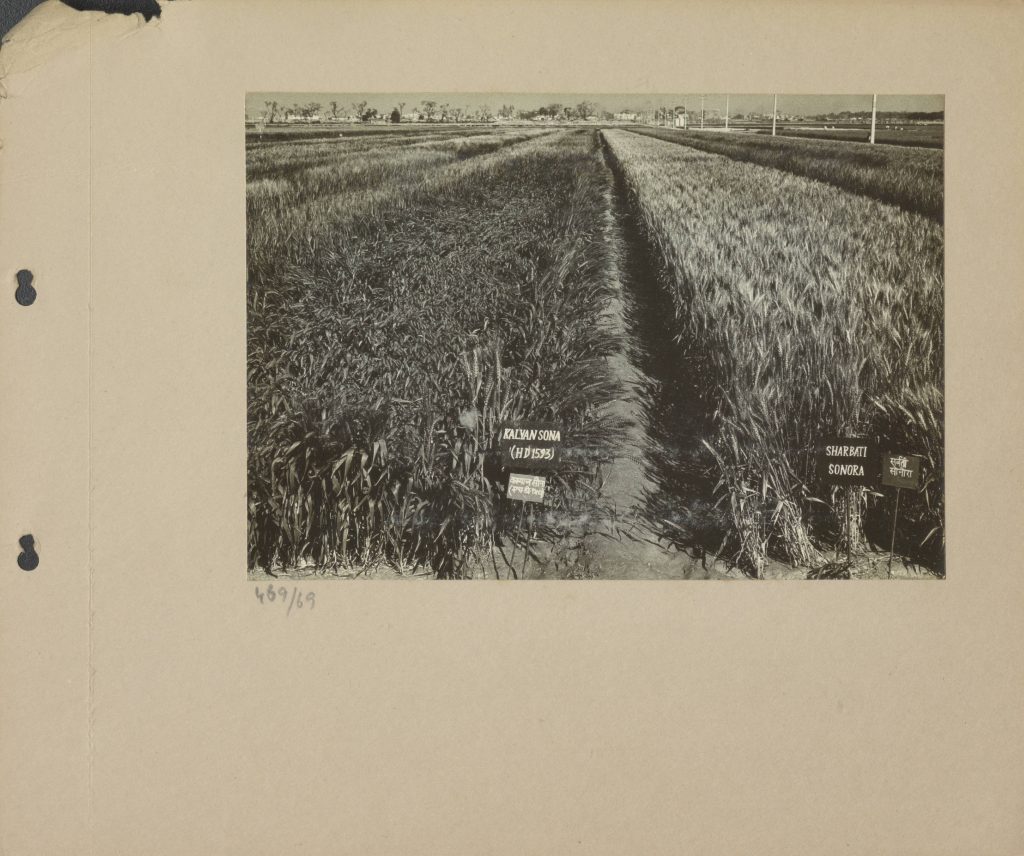
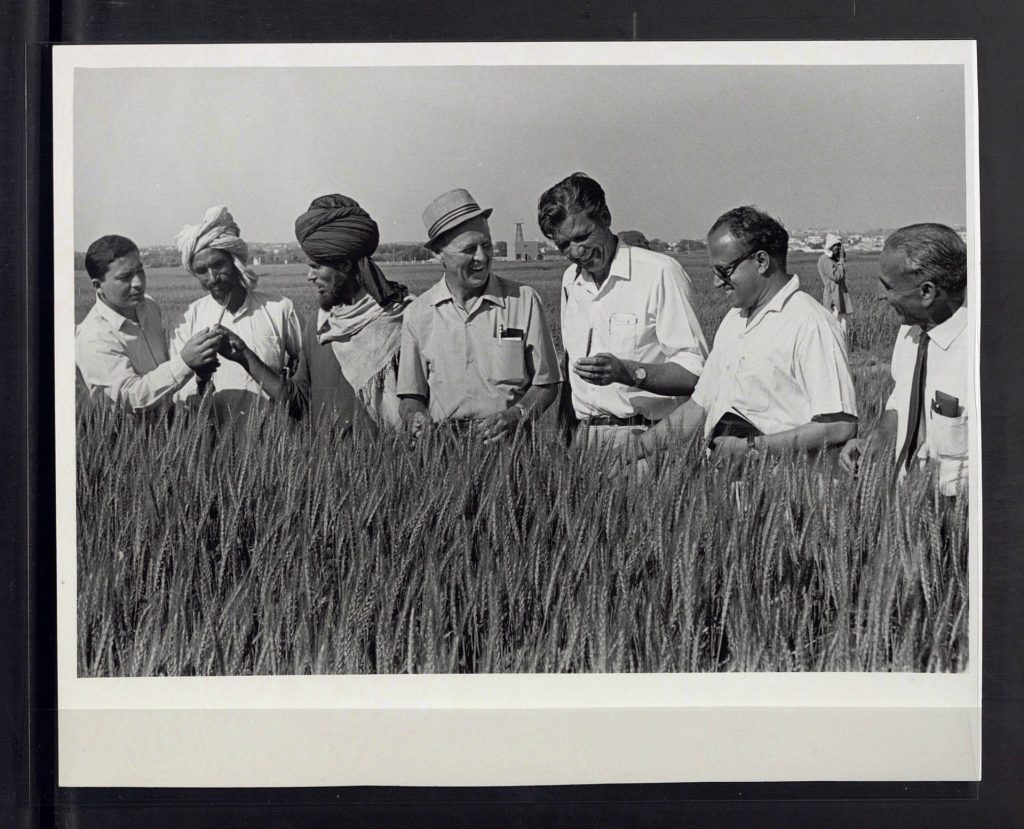
Kalyan Sona and Sharbati Sonora are disease-resistant and high-yielding wheat varieties. Scientists at Indian Agricultural Research Institute, led by MS Swaminathan, developed these varieties from Norman Borlaug’s Mexican wheat dwarfs, rescuing India from hunger and starvation deaths. Image: 007_1_1_45_1_J_0027/MS Swaminathan Papers/Archives at NCBSThis undated, uncaptioned photograph from the University of Minnesota Archives likely depicts American scientist Norman Borlaug (in hat) and MS Swaminathan (second from right). Image: Photo 138/Norman E Borlaug Papers/University of Minnesota Archives
From 10-minute deliveries to social media timelines, food has become a ubiquitous element of our lives. We are able to access food so easily and with so much abundance that most of us fail to realise how much we take it for granted – an average Indian household wastes 50kgs of food each year. And yet not too long ago, we were a nation that was unable to feed itself. Just a decade after independence, millions, including farmers, had little to no access to food.
The late Dr MS Swaminathan, can then “be seen as the male embodiment of Annapoorna, a form of Parvati, the Hindu deity of food and nourishment, holding in one hand a Leitz binocular research microscope and his field notes in another, instead of the pot and ladle filled with food in popular religious iconography,” writes TR Vivek about the architect of India’s Green Revolution.
Even as India was on its way to achieving food self-sufficiency, Swaminathan warned about the wanton use of chemicals in agriculture, and its impact on soil, water and human health. As chair of the National Commission on Farmers, he brought out a series of reports outline the path out of the agrarian and ecological crisis, batting for a new kind of tranformation: “The future of our agriculture and food security and even national sovereignty depends on our ability to increase productivity per units of arable land and irrigation water in perpetuity without associated ecological harm, a process known as “Evergreen Revolution”.
Swaminathan showed us the path. It is upon us to walk now.
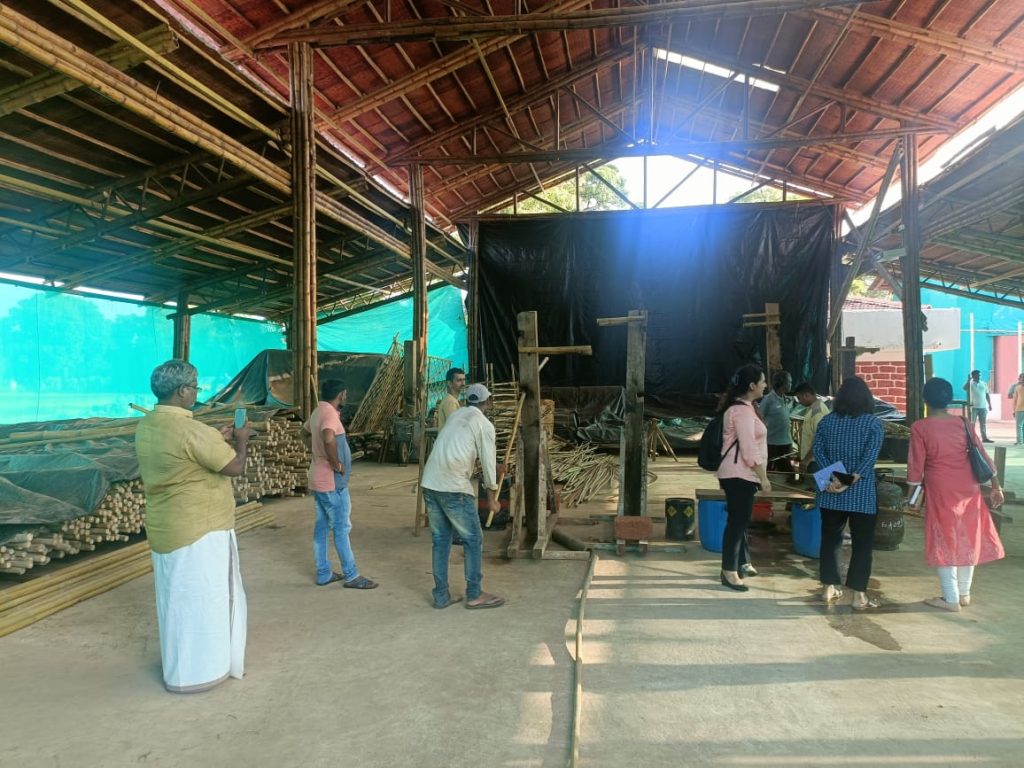
Participants at the bamboo convening visited a workshop in Kudal in Maharashtra’s Sindhudurg district. Photo: Vikas Hosoor/Rainmatter
September at the Rainmatter Foundation felt like kneading flour for a sourdough – we were slow, stuck, stretched, damp and managed to hold it all together. There were several public events – at some we spoke, at others we listened. We spent a couple of days with a wide-range of organisations and individuals engaged in the bamboo sector. #btw, did you know that India is the second-largest producer of bamboo? And that geographically smaller nations such as Vietnam and Thailand export more bamboo than all of India! The convening intended to bring under one roof, the expertise and knowledge, spot the gaps and chart out a roadmap to make bamboo a material of choice for our built environment. Speaking of buildings, the team has been having deep conversations with over 10 partner organisations to frame a strategy for sustainable cities. This is an ambitious undertaking given the many layers that make a city, governance and finance and the relationship that people have with their places.
Midway through the month, we were jolted by Durgesh Agrahari’s sudden passing. A key member of the SayTrees team, Durgesh has been a call-away for many of us in the Foundation team, ever willing to share insights and pitch-in no matter the ask. His enthusiasm, passion and infectious laughter touched us all.
From the Community Tech4Good Community has been working with several non-profit organisations in ecological conservation, agroforestry and carbon credits to leverage Free and Open Source Software (FOSS) – as part of FOSSFwd and FOSS4Climate initiatives. With WASSAN, they are enhancing the Digital Seed Exchange Marketplace and Natural Farming systems to boost adoption rates as a way of supporting sustainable agriculture. For Agro Rangers, the T4G team is supporting the development of a system to integrate data from grassroots farming communities, even in remote areas with poor internet connectivity. This system transforms the data into an indexed warehouse and an intuitive front-end system for Agro Rangers to derive insights from thousands of carbon sequestration records from farmers on the ground. Details here. The FOSS4Climate initiatives hold the potential to drive sector-wide transformation, promote sustainable practices, data-driven conservation, and intensified reforestation, all in the collective battle against climate change. Make sure you check out T4G’s comprehensive resource library for open-source software playbooks for insights on data for climate action. Or reach out: [email protected]
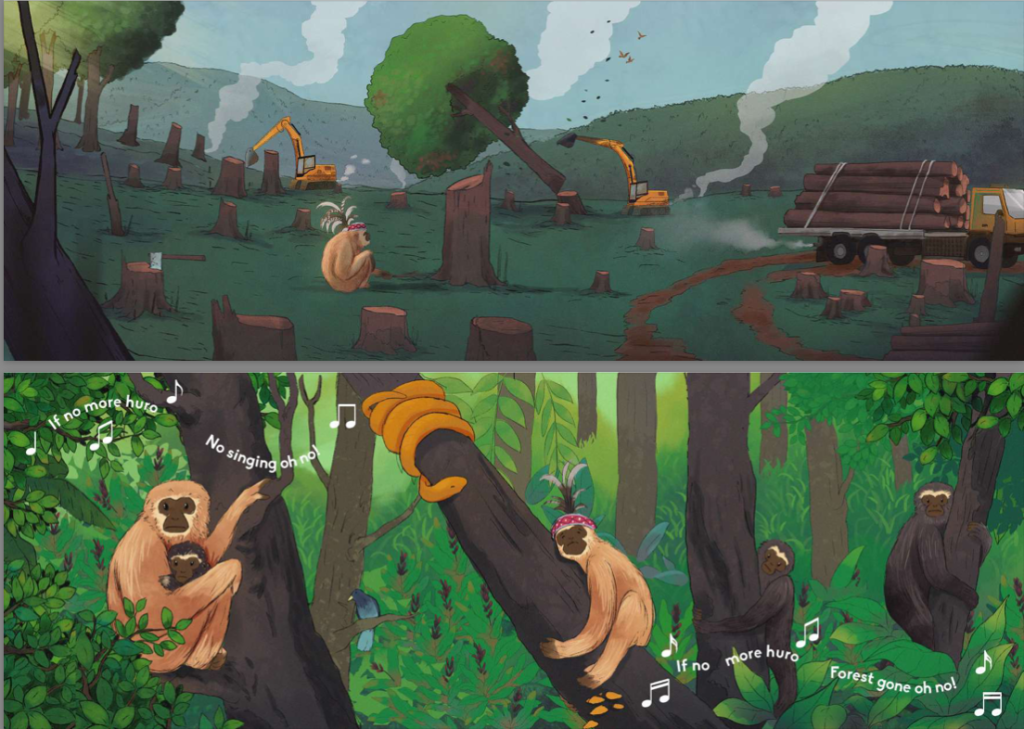
1st September is observed as #WorldPrimateDay. SauraMandala Foundation, under their TheForgottenFolkloreProject, released a title called When A Huro Sings, to put the spotlight on the endangered Huro or the Western Hoolock Gibbon, one of the only species of apes found in India. The Western Hoolock Gibbon sings a unique song that can be heard for miles. But their whoops and hoops have almost been silenced in the forests of northeast India. Changing farming practices and deforestation are shrinking the habitats that these creatures inhabit, and the book is the team’s attempt to provoke public-problem-solving for conservation and climate action. You can also aid the Centre for Wildlife Studies’ conservation plans for these vulnerable primates and their habitats by contributing to funds for young scientists. Every rupee counts, so consider contributing here!
Industree Foundation co-founder Neelam Chhiber spoke about scaling climate finance for frontline communities at the Clinton Global Initiative 2023, a gathering of global leaders attempting to address challenges such as climate change and inclusive economic growth. India can build a more regenerative economy by giving women a share of more money and economically empowering them by enabling them to participate in carbon sequestering activities, she said. This would not only address the declining participation of women in the labourforce but also “do good for communities by intersecting equity, climate and gender, and enable a better society for everyone.”
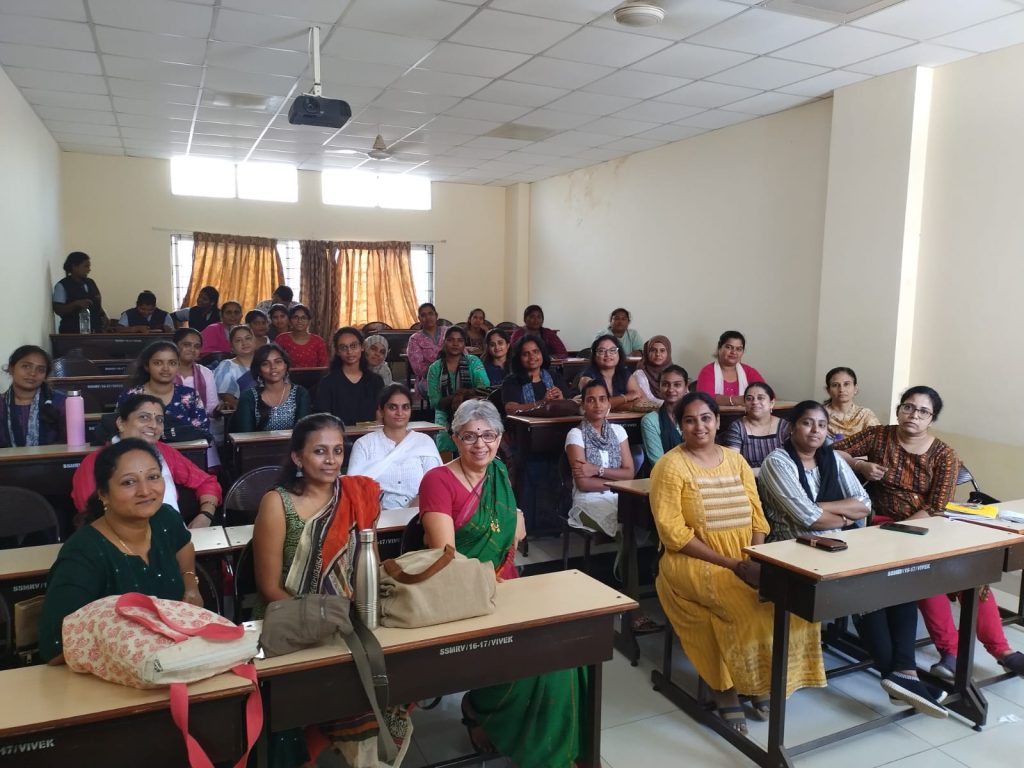
Solid Waste Management Round Table (SWMRT) has been consistently running a sustainable menstruation awareness campaign for several years; Sustainable menstruation refers to adopting menstrual practices that are healthy for individuals and have a negligible environmental impact. The team organised events in Yadgiri, Raichur and Bellary districts in Karnataka to engage with community members and the local administration officials. They also conducted workshops and training sessions in several colleges in Bangalore, including at Jyothi Nivas PU College, SSMRV and Christ College. The sessions focus on menstrual hygiene, the environmental impact of traditional menstrual products and the importance of adopting sustainable alternatives like menstrual cups and cloth pads.
Sustainable menstruation workshop at a college in Bangalore. Photo: SWMRT
Stat of the month 37,000+ alien species have established themselves worldwide and 200 new alien species are being recorded every year, according to the IPBES Invasive Alien Species Assessment. Of the 37,000, more than 3,500 alien species globally are invasives; the economic cost of invasive species is estimated to be more than $423 billion, or roughly the same as Greece’s GDP.
Noticeboard Take the pledge: The festive season is upon us and it’s a cheerful time to take the No Corporate Gift Box Pledge. From the gift to the packaging to the fuel spent in shipping, the Corporate Gift has an environmental cost. Instead, consider giving to a cause instead!
The A-Z (almost) glossary of climate change is available in five languages! Keep it handy, and thank the good folks at The Third Pole for putting it together.
Janaagraha is scheduled to host its Annual Urban Conclave on Shaping India’s Urban Agenda on the 17th and 18th October in New Delhi. The focus will be on city finance, localising climate action for cities as well as Janaagraha’s annual Survey of India’s City-Systems (ASICS) 2023 report. Agenda and speakers here.
The state of Guajarat banned the exotic mangrove species, Conocarpus. Among other reasons, serious pollen allergies and respiratory problems have been reported in the vicinity of their plantations, states this explainer on why this is a problematic species.
Free movies about climate resilience: Bangalore Sustainability Forum is hosting the second edition of Jacaranda Tales at two venues in the city from the 6th-10th October. Schedule and registration here.
Resource: A timeline of the Great Nicobar Island project, which proposed chopping down nearly a million trees. The date-wise timeline links to 130 documents and has been compiled by researchers Pankaj Sekhsaria and Srishti Saxena.
Current Conservation’s latest edition features not just marine creatures such as rhino rays, but also puts the spotlight on people – Satish, Anne & Kalumangothi – who make conservation possible!
ClimateFRAUD is a draft framework that can be used to identify false solutions proposed in the context of the climate and nature emergency (CNE). Originally created by the Federation of the Huni Kui Indigenous Peoples of Acre, in the Amazon, it has been collaboratively redesigned in the context of the Moving With Storms CNE Program of the Peter Wall Institute for Advanced Studies, at the University of British Columbia, Canada.
“The untethered have a harder time seeing and feeling the harm climate change causes, and abandon any pain that does surface more readily. The untethered will minimize their personal discomfort, moving or shielding themselves from harm, doing little to reduce global risks in the process. In contrast, the place-based can feel the pain but also the benefits of digging in for something they love,” writes biologist and climate educator Spencer Scott in his newsletter As If We Were Staying. (Thanks for sharing, Bhuvanesh!)
Until next time, may your roads be auspicious, śubhāste panthānaḥ santu
Team Rainmatter Foundation
Dukāḷa – August news digest from the Rainmatter Foundation
દુકાળ (Gujarati: Dukāḷa; drought)
Photo: Md. Hasanuzzaman Himel/Unsplash
The month of August has been furiously extreme. Incessant rainfall in the Himalayas had the rivers flowing in spate. Buildings and bridges washed away in water and dozens of landslides morphed local maps. Hydropower dams opened their floodgates, without warning, flooding villages and towns downstream. We have on our hands much death, destruction and damage (estimated at Rs 10,000 crore in Himachal Pradesh alone).
At the Foundation, we’ve had our highs and lows in the month. We participated in a few key gatherings to take forward the collaboratives forming around various focus areas, setting common expectations and a shared vision. Both the ClimateRISE Alliance and the Bharat Agroecology Fund convenings around agroecology arrived at a similar vision and agenda. We are optimistic that this will translate into a push for the sector to work together with the government. At the same time, a few collaborations have hit hiccups that are inevitable for a large complex problem with multiple actors. A shared consensus and vision is tough enough, but a lot of details need figuring out tactically. The urban, conservation and agroecology coalitions are all key, and it’s critical that these become effective rapidly if we have to address the climate crisis with the sense of urgency it deserves.
Rajiv Prakash joined the Foundation as an advisor, and has been helping us see the bigger view, spot gaps, challenges and identify possible pathways. The team also had a two day offsite where we did deep dives into various theses and the chases for the same over the next few months. The deep dives were also into the large open well at the farm we were at, and encompassed a morning walk along a stream. We came back with a lot more clarity around what we are chasing individually and together. Back to execution mode now, and the homework video we came away with!
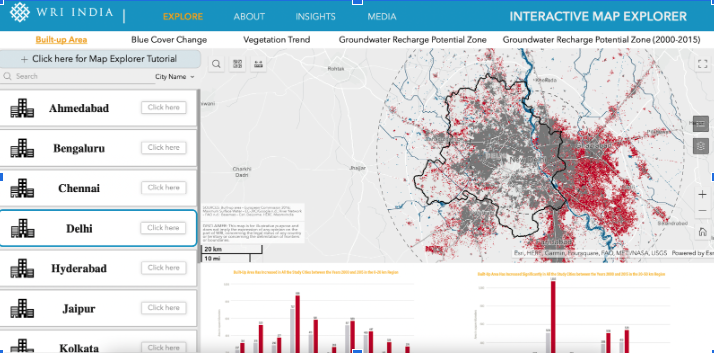
From the Community Explore World Resources Institute (WRI) India’s interactive map that showcases built-up area, water cover, vegetation cover and groundwater for 10 cities. The map explorer is part of WRI India’s paper on the impacts of urbanisation on natural infrastructure and the related negative environmental impact in these cities. Separately, WRI India will serve as a knowledge partner for the Jalandhar Smart Cities Limited’s (JSCL) Eco City-Region Fellowship. This is an 11–month program on urban government systems. Twelve fellows, chosen under the TULIP program, will be involved in projects for urban blue-green systems, solid waste management, GIS-supported urban planning and community awareness building.
The ClimateRISE Alliance convened its first Strategic Advisory Taskforce (SAT) meeting for insights on emerging trends in India’s climate action discourse. The Alliance has so far hosted three thematic convenings to chalk out priorities for: The one on Sustainable Cities was attended by 13 organisations, who laid out a roadmap that emphasised the need to bridge data gaps, evolve narratives on local pride and cultivate a culture of collaborative learning between cities. The second one on Conservation and Restoration was attended by 15 organisations, most of whom stressed the importance of indigenous community involvement in conservation and the pressing need for data. The third one, on Resilient Agriculture, was attended by 17 organisations, which highlighted the importance of sustainable and inclusive agriculture, and the need to imagine agriculture beyond food and fodder.
Sand is the second most extracted natural resource on Earth. Veditum launched India Sand Watch, an open-data platform enabling collection, annotation and archiving of data related to sand mining in the country. Watch the launch and walk-through or sign up for an introductory session.
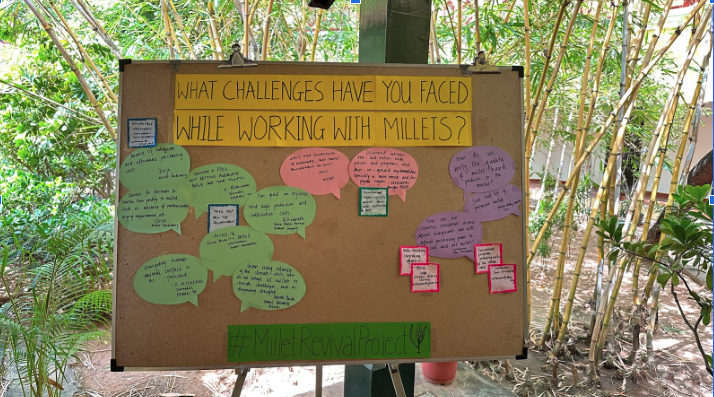
The Locavore conducted a workshop during MS Swaminathan Research Foundation’s international conference on Mighty Millets for Food, Nutrition & Health Security in Chennai. Through the #TLworkshop on ‘Cultivating Creativity: Uniting Stakeholders to Innovate Solutions for Millet Challenges’, the team engaged with individuals from across India’s food system, discovering their professional and personal journeys with millets. They also set up a Challenge Mapping Station and were part of a panel on bringing millets to consumers. The Locavore is also kicking-off the second phase of the Millet Revival Project, which will explore the ecological and climate impact of millets in India as well as nudge behavioural and perception change among consumers while advocating for eating practices that resonate with both personal health and planetary wellness. They are looking to add to their eclectic team. Details here.
Stat of the month 30,000,000 (30million/3crore) the number of observations made by birdwatchers that form the basis of the State of India’s Birds 2023 report. The report is a phenomenal effort put by 13 organisations (whoever said 13 was an unlucky number!) distilling the observations made by ordinary people, bird enthusiasts and avid bird watchers into the online birding notebook, eBird. You can get visual summaries of the report in 13 languages, look at species-specific information at the state and national level and explore the Monitoring Your Neighbourhood Avifauna or MYNA tool to draw a polygon on a map and generate a report of the birds reported within your area! Three cheers for citizen science and public platforms!
Noticeboard Indigenous people: Days after 9th August was observed as the International Day of the World’s Indigenous People, 114 families of the Hakki Pikki and the Iruliga communities of Banngerhatta, near Bangalore, Karnataka, each received the title deeds to 2-acres of land after a 6-decade struggle. The days of struggle continue for their counterparts from the Madia community in Maharashtra, who are protesting against mining on their lands. Do check out Rahul Ranjan’s thread on books and other resources about and by Adivasi people in India.
Know folks who are champions for rivers? The India Rivers Forum is inviting nominations for two awards – the Bhagirath Prayas Samman Award for sustained efforts in protecting and conserving rivers and for the Shri Anupam Mishra Memorial Medal, which recognises journalists for exceptional work on various aspects of rivers leading to changes in behaviour, public discourse, law and policy. The last date for nominations is 30th September 2023. Details here.
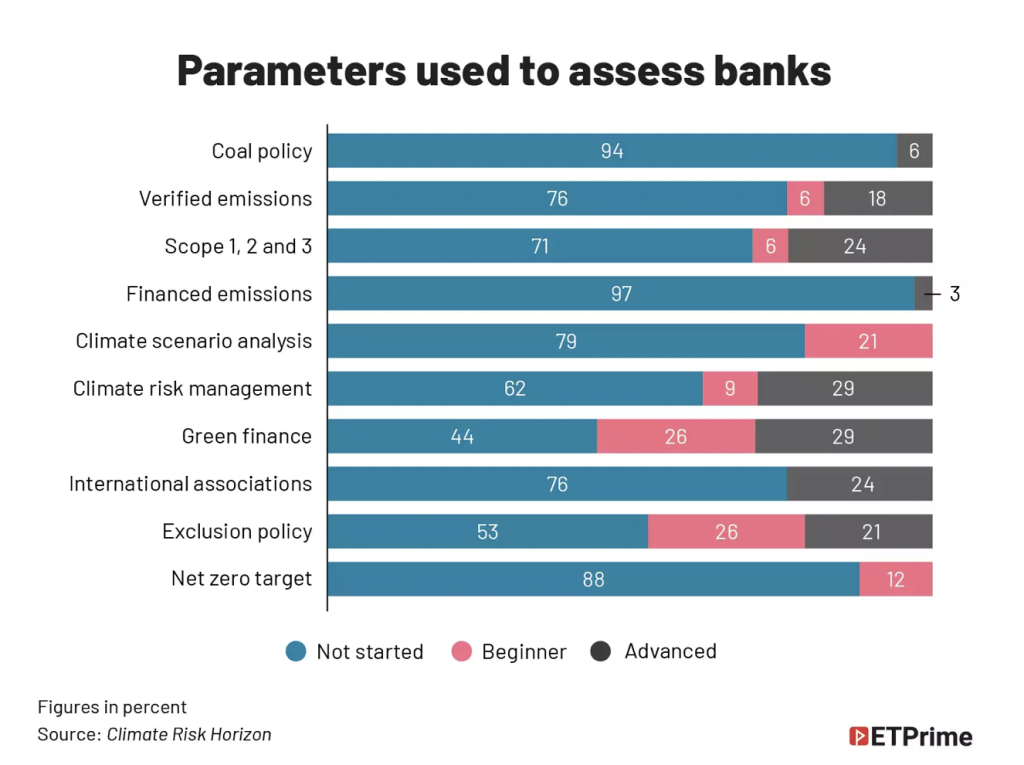
Still Unprepared: India’s big banks move slowly in the face of climate crisis: Climate Risk Horizon’s August 2023 assessment of 34 major banks in the country found that the banks’ progress in the face of the climate crisis has been too slow, and that on some key parameters, there has been almost no meaningful change since the previous assessment in 2021-22. Related news report here.
Did you know that using energy-efficient ceiling fans can help reduce emissions? So why do only 3% of Indian households use these fans? Find out in Mongabay India’s two-part series – here and here.
Fishy Waters is a fortnightly newsletter by independent journalist Supriya Vohra about all things related to coasts, coastal and marine ecosystems, communities and livelihoods. The editions so far have examined the cost of cyclones, port development, unabated aquaculture and the country’s shrimp policy.
Also listen to the Riverside Tales podcast which recounts the real life anecdotes and tales of the wild as experienced by the members of the Wildlife Association of South India.
Field trials for India’s first hydrogen-powered bus for roadworthiness tests and other procedures are ongoing in Leh. The hydrogen-powered buses are an initiative by the National Thermal Power Corporation (NTPC). The fuel cell buses are designed for operation in sub-zero temperatures in a rarefied atmosphere, which is typical for high altitude locations.
Human-elephant conflicts & women’s health: When entire fields and homes are flattened by elephant movement, it is the women, as primary caregivers, who deal with acute anxiety and deprivation, writes journalist Aatreyee Dhar. In none of her interviews “did the women blame the elephants for their condition. They seemed resigned to their fate, describing their tragedies as “God’s will”. At times, they blamed humans for destroying forests and forcing the pachyderms out of their habitats in search of food.”
The OASIS Summit seeks to bring together civil society and technology organisations to learn, network and demonstrate FOSS-for-social-good efforts i.e. technology especially curated for social development use cases. Register here for the summit, which will be held at the Bangalore International Centre on 14th September.
Millet photo contest: Send in your entry for the Food and Agriculture Organisation’s International Year of Millets Photo Contest. The first prize winner will be invited to the official closing ceremony of the International Year of Millets in 2024. Submit your entry here.
Pledge: Material gifts have an environmental cost. Consider giving to a cause.
Parting shot I Want a Better Catastrophe Author and humourist Andrew Body’s invitation is a wonderful flowchart to navigate the “impossible news” of climate breakdown.
Until next time, may your roads be auspicious śubhāste panthānaḥ santu
Team Rainmatter Foundation
Guntā guṇṭ – July news digest from the Rainmatter Foundation
गुंतागुंत
(Marathi: Guntā guṇṭī; entanglement)
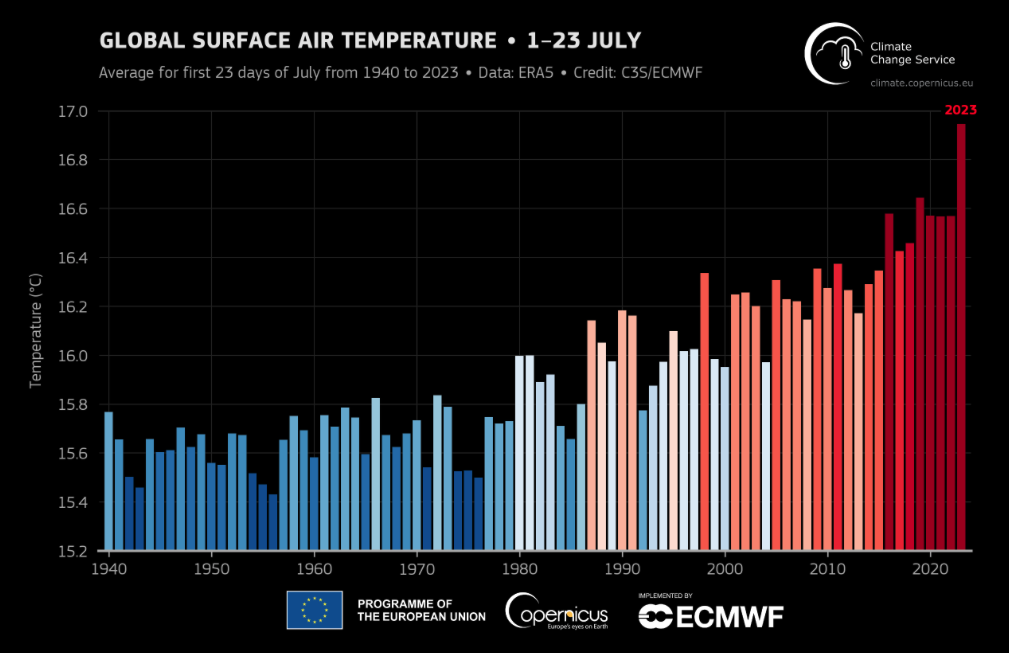
Globally averaged surface air temperature for 1-23 July for all months of July from 1940 to 2023. Shades of blue indicate cooler-than-average years, while red show years that were warmer than average. Data: ERA5. Credit: C3S/ECMWF.
It’s been a while… The jumbled forces that move our world and interconnected systems are beginning to unravel our tangled lives. The summer of 2023 has brought heatwaves, wildfires, floods and landslides. After the hottest June on record, July turned out to be the hottest month in at least 120,000 years! Sea surface temperatures across the world were higher than in any previous May on record, with temperatures in the North Atlantic ocean being off the charts. The sea ice around Antarctica is 17% below the average for this time of year and the ‘winter’ in the southern hemisphere has witnessed heatwaves in Chile and Argentina. Erratic weather has several implications, but immediately manifests in food. In India, it has meant a spike in vegetable and fruit prices, a ban on the export of non-Basmati rice and the area under sowing for rice and pulses is lower compared to last year. From El Nino to environmental justice, we are entangled in this all.
At the Rainmatter Foundation, untangling the knots is what we set out to do as we stepped into our second year in 2023. We have revisited the part we play in this space. We will continue to support meaningful efforts on the ground, but we are also laying emphasis on responding to communities’ needs that prioritise the well-being of the place along with its people. This is partly why we are engaging in fewer new conversations compared to last year even as we cobble together partners or deepen the work with networks. Some of this is reflected in The Climate Conversations, a long chat that our founding directors, Nithin and Kailash and CEO Sameer had with mediator Hansi Mehrotra. Going by the indications of the past few months, it seems like this is going to be a slower ride. 2023 has also been bittersweet for the team. We’ve welcomed new teammates (Abhishek, Tanmayi, Aishwarya, Mandeep, Siddharth, Abhinav, Mudassir and Akhileshwari), parted ways with some of our earliest companions (Divya and Rishabh Lalani) and are coming to terms with Shashank’s passing.
From the Community Thanks to your participation, Grove is shaping into a vibrant platform. There are now more than a thousand people on Grove, talking about everything from textile waste and carbon robotics to green finance and EVs. While it is exciting to learn and discover opportunities there, we hope that Grove eventually becomes the go-to public forum for all-things climate and sustainability. If you aren’t on Grove yet, here’s a short guide to get you started, and follow the work of all the partner organisations here.
Veditum will host a public launch of its sand mining monitoring platform online on Zoom on Thursday, 10 August 2023. India Sand Watch is an open-data project enabling collection, annotation and archiving of data related to sand mining in India. The first-of-its-kind platform hopes to: act as a public facing archive of all sand mining related activity in India – news articles, survey reports, guidelines, tender documents, legal proceedings, and offer a platform and format to document instances of sand mining across India in the form of case files, link the case files to the different documents mentioned above and more. Register here to attend or email Siddharth: [email protected]
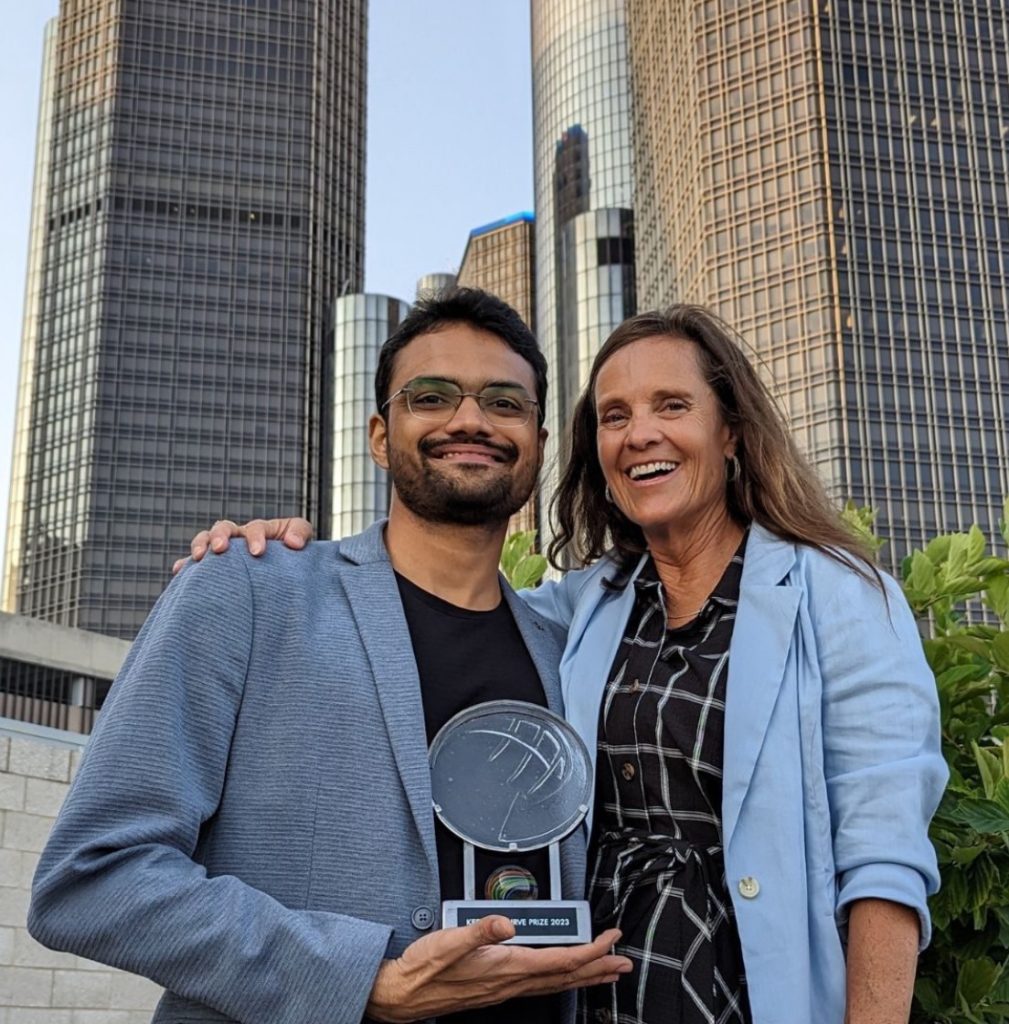
Waste Warrior’s Vishal Kumar with Jacquelyn Francis of the Global Warming Mitigation Project. Source: Waste Warriors
Waste Warriors has received the Keeling Curve Prize 2023 in the social and cultural pathways category for their participatory solution-building approach to waste management in the Himalayan Region. Kudos to the entire team for their efforts in the fragile ecosystem! PS: if you are keen to join the award-winning team, this is an opportune time – Waste warriors is hiring for a few positions.
Farmers for Forests is one of the 10 organisations globally to have been selected to be a part of the Henry Arnhold Fellowship by the Mulago Foundation. The Fellowship recognises leaders for promising conservation and climate solutions, and enables them to scale.
Civis launched Climate Voices, a go-to guide for anyone who wants to participate and make a difference in environmental law-making. The guide is available in five languages (English, Hindi, Marathi, Tamil and Kannada) and can be downloaded via WhatsApp as well. We hope individuals, organisations and media personnel will turn to Climate Voices for a deeper engagement around environmental regulation in light of the confidence-busting developments around the hasty passage of the Biological Diversity and Forest Conservation amendment bills. Do send us your feedback on the guide ([email protected] or [email protected]) and spread the word!
Vidhi Centre for Legal Policy along with several other stakeholders have been advocating for changes to the Forest Conservation (Amendment) Bill 2023. Their submission to the joint parliamentary committee is here, and views here. Related news report by The Morning Context here. The Vidhi team also put together an interesting report, The Green Hour, that analyses all the environment discussions that came up in the Parliament during the Budget Session 2023. The government responded to a total of 10,371 questions related to the environment during the session; most of the questions came from Parliamentarians in Maharashtra (76), Uttar Pradesh (68) and Andhra Pradesh (51). The Vidhi team categorised these questions into 10 themes, including climate change, pertaining to which 74 questions were discussed.
Water, Environment, Land and Livelihoods (WELL) Labs (formerly the Centre for Social and Environmental Innovation at ATREE) is now a research and innovation centre at the Institute for Financial Management and Research (IFMR). The team will focus its efforts on issues related to land degradation, rural livelihoods and water management. More here.
Buzz Women conducted a 4,333-household ‘basket of needs’ survey in 172 villages of Kolar district earlier this year. The survey was a set of questions to get participants to pay attention to their local natural assets such as trees, soil, water bodies, to understand their own consumption needs be it water or food/consumables etc and the relationship between the two. As an outcome of this survey, one woman, Nagamani, an anganwadi teacher from Srinivasapura Taluk, started a Naati Kozhi (desi poultry) farm last month. This is a tiny, but heartening and directionally significant step towards local production-consumption.
2023 has been designated as the International Year of Millets. The Locavore has been leveraging this opportunity for millet-based climate action by enabling urban restaurants and residents to include millets in their diet through recipes, workshops, stories and partnerships. A short video here and more details here.
Noticeboard Climate-Parent Fellowship: Our Kids’ Climate is inviting applications to support their 2024 cohort for parent-led, intergenerational, and family-centred climate engagement work. Apply for the year-long program before 22nd September here.
Transit fellowships: Karnataka’s Directorate of Urban Land Transport (DULT) is inviting candidates to apply for its Fellowships and Associateship Program for Hubballi-Dharwad. Last date to apply is 15th August. Details here.
Check out Earth Exponential, a platform launched by the India Climate Collaborative, to channelise catalytic funding for community-first climate solutions.
Need climate data? The folks at Climateworks Foundation have a helpful tool to allow users to navigate the many open climate data platforms.
The Case Against Engagement Rings by writer-editor Belinda Luscombe is by far the best romantic idea we’ve come across in recent times! Take this further this online sale season by going on a #FashionFast. Textile waste is an invisible MtEverest in the waste landscape. Here are suggestions for the questions we should be asking all clothing brands.
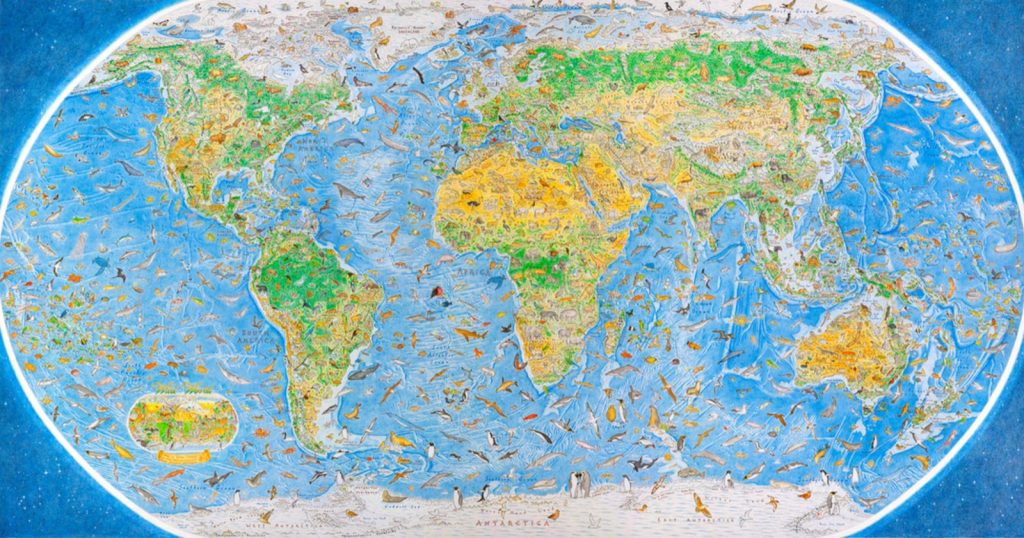
Indian Institute for Human Settlements is accepting paper submissions for its journal Urbanisation. Submission information here. Check out this world map of nature by cartographer Anton Thomas. Anton has been working on the pen- and pencil-map since 2020, and it features over 1,600 animals!
The Slow Bake of Our Infrastructure: “…Most standards for climate risks are still based on historical data from past climate conditions that appear increasingly obsolete. As environmental extremes worsen, we must confront the reality that our infrastructures were designed for past conditions that no longer exist. With tremendous uncertainty about the future climate, how do we engineer our way out of the challenge?”
Parting shot “Hope is not happiness or confidence or inner peace; it’s a commitment to search for possibilities,” writes Rebecca Solnit about why we cannot afford to be climate doomers.
Until next time, may your roads be auspicious śubhāste panthānaḥ santu
Team Rainmatter Foundation
Remembering Shashank: A Comrade in Conservation
From left: Technology for Wildlife Foundation team members Aditi Ramchiary, Sravanthi Mopati, Shashank Srinivasan, Nandini Mehrotra and Nancy Alice. (Photo: TfW)
His generous smile went with him everywhere.
I recall meeting Shashank Srinivasan the first time. I had reached out to him to learn about Technology for Wildlife Foundation’s efforts in an attempt to explore conservation-related opportunities. I had not expected that the founder of a niche organisation would have time to spare but Shashank was more than willing to meet over a cuppa even as Goa was emerging from the pall of Covid’s second wave. We met at a cafe close to the Campal grounds in Panjim in early 2021. He was big and beamed his generous smile as we first shook hands. Instead of a conversation about gizmos, drone software and my tech proficiency, we spoke about where we had each grown up, how we ended up in Goa, where was ‘home’, and how most of our life stories are really maps.
Maps. Map-making. And how the effort of making maps makes us. Shapes us. And remakes the world we live in.
Shashank spoke about being a map-maker at heart. He spoke about how maps help us make sense of the world around us; of remote and unnavigable terrains; of others who inhabit these spaces besides us; how we, humans, navigate spaces, or rather how we ought to… these were the conversations we meandered through that January afternoon.
He told me about Technology for Wildlife (TfW) Foundation’s efforts in aiding researchers for population studies of various species, of the shortcomings of the drone insurance in the market, of his personal interest in drone photography to map heritage homes or a larger call to document the critical role that maps play in clearances for big-budget infrastructure projects.
Shashank considered drones, satellites and satellite data as tools in the conservation project. He deeply understood the value of such imagery, and leveraged these instruments with enthusiasm and commitment to conservation. All the same, he did not believe that the tools held all the answers to conservation challenges. And yet Shashank and the TfW team have been ardent champions who have conducted drone workshops with forest departments and nurtured drone enthusiasts.
I am able to recall that first conversation because Shashank spoke with a steady, soft voice, but mostly because our chat was laced with his humour and laughter. From that first conversation to the last one, earlier this month as part of the Rainmatter Foundation team, what I’ll miss the most about Shashank are his affable demeanour and his generous smile.
We hope for strength for his family and the TfW team.
From harvesting to sorting, our crops undergo a lot of change before reaching us as food. A lack of mechanisation at the farm level means much of this work is done manually
Farming in India involves back-breaking labour, much of which is done by women. Investments in contextual tools and equipment is needed to reduce this drudgery. Photo: Unsplash/Deepak Kumar
Farm-to-fork is a marvellous idea. What’s not to like about cultivating one’s own food and having a stable supply of fresh, healthy and aromatic ingredients at the snap of a twig! While this works for fruits, vegetables, herbs and greens, it fails to apply to the anaj we eat. This is because grains and cereals need to be processed after being harvested. Little do we realise that this processing involves multiple steps, all of which are labour-intensive activities largely undertaken by women.
This is antithetical to the image we tend to have of farmers: worn, middle-aged men toiling away under a baking sun. This is a myth. Farming in India is a female-dominated industry. Nearly 63% workers in agriculture are women. In fact, in the production of major crops, participation of women is as high as 75% according to the Indian Council of Agricultural Research (ICAR). Much of this agricultural work entails toiling away for hours in threshing (separating the grain from the straw/stalks), hulling and dehusking (removing the covering or coating of grain/cereal), cleaning (removing undesirable material such as specks and pebbles), grading, polishing, milling into flour and storing. These tasks are often carried out in groups as a communal activity. Women have turned to verse to alleviate the drudgery and to vent about the back-breaking work. Listen to Savitra Ubhe as she sings: दळता कांडता, चोळी भिजूनी पदर वला, चोळी भिजूनी पदर वला, निवत्या दुधाला कढं आला (Grinding, pounding grain, my blouse is drenched and sari pallu is wet. My blouse is drenched and sari pallu is wet, like cool milk heated to boil); this is one of the many verses about farm labour that are part of the grindmill songs project.
Tools and machines do exist to ease these tasks. Modern agriculture is large-scale production centric. In the developed world, vast tracts of farmlands are managed by a handful of people thanks to mechanised equipment such as seed planters, manure handlers, sprayers, combined harvesters and so on. These machines and equipment are viable and relevant for large land-holdings, which is not the case in our country. The average landholding for Indian farmers ranges from 1 to 3 acres, and hence they require an altogether different set of tools and equipment.
While our farmers have invested in tractors thanks to the Green Revolution, we need to pay serious and significant attention to contextualise farm mechanisation to the Indian reality. Our farm machinery sector is a mere 0.6% of the overall manufacturing sector. Tractors occupy 70% of this share. Nearly 4.4% agricultural households own tractors and 5.3% cultivator households own one of the following non-tractor farm equipment: power tillers/power-driven ploughs, crop harvesters, threshers, other power-driven machinery and laser land leveller.
[WATCH: Unlike bulk/industrial threshers, this thresher caters to the needs of farmers with yields of smaller quantities]
A lack of R&D in equipment and machinery, need for crop-specific, operation-specific and region-specific machines, lack of reliable electricity supply in farmlands, and sometimes even a lack of transportation infrastructure are factors that have contributed to a lack of farm mechanisation, and the persistence of manual farm labour. This is leading to awkward and debilitating consequences for farmers in many regions: they are having to turn to the markets and pay a premium to procure food for self-consumption… ironically often including the very crops that they cultivate. This is true in large parts for farmers growing paddy, who end up buying rice from the PDS or those cultivating sugarcane buying sugar from the market and those growing millets having to travel long distances to process them.
Second-order effects of lack of on-farm or near-farm processing facilities include loss of nutritious cattle fodder, over-polishing of grains and to a certain extent, stubble burning, which exacerbates air pollution.
The retail store of Manyam Grains, a women-operated social enterprise that procures, processes and markets naturally grown millets in Thummapala Village, Visakhapatnam, Andhra Pradesh. Photo: Rainmatter Foundation
These are compelling reasons to focus on eliminating and reducing drudgery in farm activities. Stakeholders, be they farmers’ groups, innovators, funders and Agtech companies, academic institutions and students, as well as government administrators must align to promote contextual tools and equipment for cultivation, harvest and post-harvest processing. The contours of such innovation and investment should account for the ground reality of the small farmer for maximum payoff. Some of the factors to be mindful of are (i) size of land holding, (ii) easy-to-operate and women-friendly machines (iii) convenience of repair with easy availability of replacement parts, (iv) power efficient and (v) replicable for multiple contexts.
This kind of value chain development is something that even champion farmers have been seeking. Only if we take baby steps in this direction today, will we be closer to achieving some sort of farm-to-fork reality for farmers and rural residents tomorrow.
(With inputs from Vikas Hosoor and learnings from a field visit organised by WASSAN)
Turning two on a planetary timescale
Farmer-poet Thimmayya and many others adopted agro-forestry approaches as part of BAIF’s community-driven water conservation initiative in Mylanahalli and surrounding villages in Karnataka several decades ago. Photo: Rainmatter Foundation.
Two years is but a blip in the history of our planet. The Rainmatter Foundation is past the two-year mark. That day came and went, and we were unsure if we ought to make an announcement or do something special.
“What’s there to celebrate? An entire Himalayan town has been sinking, there’s been only one snow day in Shimla throughout this winter and there were floods in California and Auckland. There is nothing to suggest that 2023 will be better,” Sameer would say.
“That’s too much gloom-and-doom. We must be hopeful!” I’d likely retort.
It’s been that kind of a journey. Ups, downs, questions, debates, discussions, more questions, and very few answers. One of the reasons we missed the ‘anniversary’ is because we are in the midst of a deep, long relook at our processes, our partnerships, our investments, our thesis – everything. We stepped back and took a pause.
When we started out in January 2021, we had full pockets, a lot of goodwill, some very generous volunteers, a CEO and a fuzzy map for multiple directions. We were in the spotlight. We had to start “moving the needles,” as Sameer often puts it. But what precisely are the needles and where does the ‘doing’ really begin?
Should we be funding technological innovations that might possibly make trees grow faster, or magical engineering for carbon capture? Would more EVs be better for urban ecology and is human intervention in the wilderness meaningful for forest health? What could we really do with all the waste that we generate? Should we be looking at environmental legislation or focus on making ecological data available to all? Do we back individual heroes who’ve set up seed banks and restored ponds, or do we support calls for industry to cap growth? Do we commit resources to organisations with large farmer networks or pour money into research? More importantly, how do we narrate and share learnings and best-practises, and move towards more environmentally-sensitive behaviour?
We did not have many answers, and we were also unsure if these were the right questions to start with. After all, where does the climate crisis begin? Does it start when we use fertilisers and irrigation for higher crop yield needed to feed millions? Does it start when we trade-off jowar rotis for rice dosas and quinoa salads? Or does it start when the beehives and birds disappear after trees are logged for four-lane highways? Or perhaps it starts when our brain-function surrenders to the 70% online sale or when we are unable to tell the difference between the convenience of plastic packaging and the cost to the environment. Much depends on who we put the question to.
Prosopis juliflora (gando baval i.e. mad babul to the locals) was introduced to prevent saline incursion from the Rann of Kutch into the Banni grasslands. Over the last four decades, Prosopis has become a threat to Banni, invading more than 50% of the grassland ecosystem. Large solar and wind energy farms too are imperilling biodiversity in the grasslands. Photo: Rainmatter Foundation
So we started by doing a bit of everything. Aware that there is no one-size-fits-all solution, we adopted a loose framework; questions around community-stake and involvement, long-term resilience versus project outcomes, potential and ability to scale and sustain, collaborator mindset, open-access principles, solutions that plugged gaps such as in market connects and policy or broke barriers to data and information. These aspects tethered our approach and decision-making. Much of what we did in the early months can be characterised as throwing “darts-in-the-dark” or supporting “good-people-doing-good-work”. This was partly because of the above-mentioned challenges and partly due to circumstantial constraints; Many in the team and at Zerodha were responding to the urgent needs that the Covid wave brought with it across the country.
In the break between the pandemic waves, we started to travel to meet people and practitioners; some had been in the field for decades. We observed. We asked questions. We listened. We had our myths dispelled (a cloth bag is good for the planet only if we use it for at least three years, else it leads to additional textile waste), beliefs challenged (what is knowledge and insight, and who has access to these, what are the missing resources) and opinions changed (around how gender and caste issues intersect with climate). This learning came from partner organisations as well as from organisations that reached out for funding support. We have also been fortunate to hear from other funders their outlook and methodology not just to grant-making but more critically to understand how to start effecting change at scale.
By the end of 2021, the Rainmatter Foundation had committed about Rs75 crore to 27 organisations whose efforts ranged from conservation research and practise (Centre for Wildlife Studies, Nature Conservation Foundation, Dakshin, Centre for Social and Environmental Innovation) to policy framing and advocacy (Vidhi Legal, Janaagraha, CSTEP, Fields of View) and from community waste management (Waste Warriors) to restoration via plantation or payment-for-ecosystem services (SayTrees, Farmers for Forests). We had also sprouted a team: Divya was borrowed from Zerodha, and Santhosh (farm systems), Ganeshram (ecological wealth and biodiversity), Akshay (technology fellow), Marisha (narratives and outreach), Rishabh Lalani (the social network & change-makers), Varun (EBTL) and Rishabh Verma (data as commons) came onboard. Vikas (food and farm systems & waste), Abhishek (playbooks) and Tanmayi (communications and outreach) have since joined the team. Santhosh and Akshay have moved on to find their own niche. The bracketed labels are inadequate, and fail to encompass all that this team has been doing.. and sometimes fails to do; they are (or were) all here because they are passionate folks who care about something beyond just a “job”, and because of a common belief around the need to solve the biggest crisis the planet has ever faced, and around the pathways to them that matter to communities, their places and their commons.
From left to right: Abhishek, Santhosh, Rishabh Lalani, Rishabh Verma, Ganeshram, Gagan Sethi, Vikas, Sameer. Seated: Marisha and Divya. Photo: Rainmatter Foundation
It was in 2022 that we were able to arrive at a lens for looking at the environment and the climate challenge in a slightly more holistic manner. This was not the proverbial “the-apple-dropped” moment. It came from a distillation of hundreds of conversations and anecdotes, practices, information and lived-knowledge from dozens of people and partner organisations over a period of several months. For instance, people in a vand (small hamlet) in the Little Rann of Kutch told us they were procuring much of their food and household supplies from the city i.e. from Morbi; that the fields were not being tilled because the men now worked in the Ceramic City’s factories (Morbi produces 90% of the country’s ceramic products); that the port expansions along the coast was making their soil more saline. Degraded lands, disappearing biodiversity, stressed agriculture, manufacturing-centric livelihoods and emissions and the lengthening of food supply-chains is the thread that stitches much of India’s environmental distress, leading to migration and consequently urban chaos. “But what about the place,” someone asked us in another conversation in another part of the country, referring to the place of departure.
One approach we feel strongly about, and for which we are seeking critical feedback, is place-based. The climate crisis is a place problem. We experience it differently in different places. As erosion and declining fish stock in coastal areas, as severe heat in the hinterlands, as glacial-melt and flooding in the mountains. The response to it must therefore be rooted in the local context and needs. There are limitations to this lens, and we are open to explore and engage on this with others; do reach out ([email protected]) if you can navigate this with us.
We are trying to make sense of all the work we’ve supported so far with this approach. The hope is that with these core principles and some long shots, the right responses will start to emerge if we keep doing the right things for the right reasons in the right directions. And make a habit out of periodic introspection. As of January 2023, we have nearly 65 organisations and committed individuals doing amazing things on the ground. They are working with communities to co-imagine and bring change, crafting solutions that can help with solving problems, engaging in research and ideas that can inform solutions, and supporting policy and governance to become sharper tools for climate positive change.
Another 2022 milestone has been the constitution of a Board of Directors. This Board is enabling us to refine our processes, streamline our operations and strengthen our organisational structure. We’ve slowed down to pause and put the house in order.
We owe much gratitude to multiple individuals and dozens of organisations who’ve shared perspectives and insights, bounced ideas with us, guided us or walked with us through situations we did not fully comprehend or pushed us to do more/do better. Thank you, for enabling us to walk this far. There’s a long way to go to help undo the planetary damage, and we request you to keep giving us your love as we take baby steps in this journey.
We are passing through a period of transition. As the Southwest monsoon takes leave from the Indian subcontinent, the kharif harvest sets in. The crop, especially rice, is associated with abundance. India is estimated to have produced a record 127.93 million tonnes of rice in 2021-22. That it is the grain of choice for a newborn’s annaprashan is testimony to its cultural cachet.
On the subject of footprints, we’ve been adding to ours. The team has been on the move throughout October. We participated in a gathering by the VartaLeap Coalition, which focuses on issues of youth. We conversed about climate and local livelihoods as a cross-cutting theme as opposed to these being thematic interventions. At the agri startup conclave in New Delhi, we met several organisations in the waste-to-wealth vertical who are looking for partners to collaborate with. We brainstormed with a network of grassroots organisations in Bhubaneshwar and found ourselves stirred at a conservation workshop in Mysore. We were also a part of a collective effort to set the vision of a Public Library of Data. FES, Fields of View, CSEI & CommonGround were a part of it too. Sameer was invited to talk about the localisation of the economy from a climate lens.
The festive season got us thinking about the environmental impact of sending and receiving corporate gift boxes. We are channelling our effort, energy and money into supporting a cause instead. We urge you too to consider taking the No-Corporate-Gift-Box Pledge.
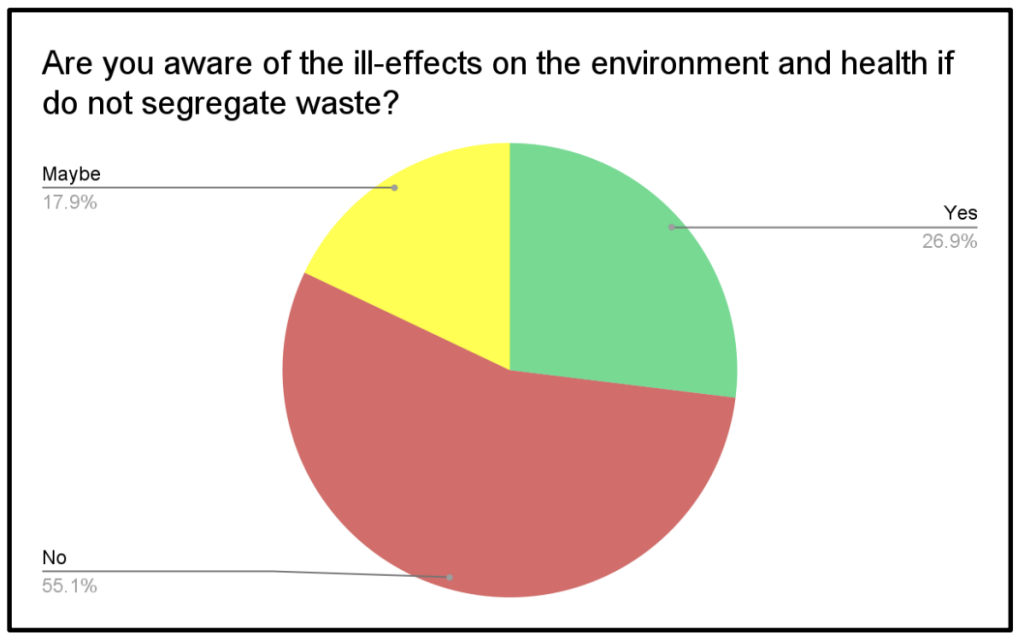
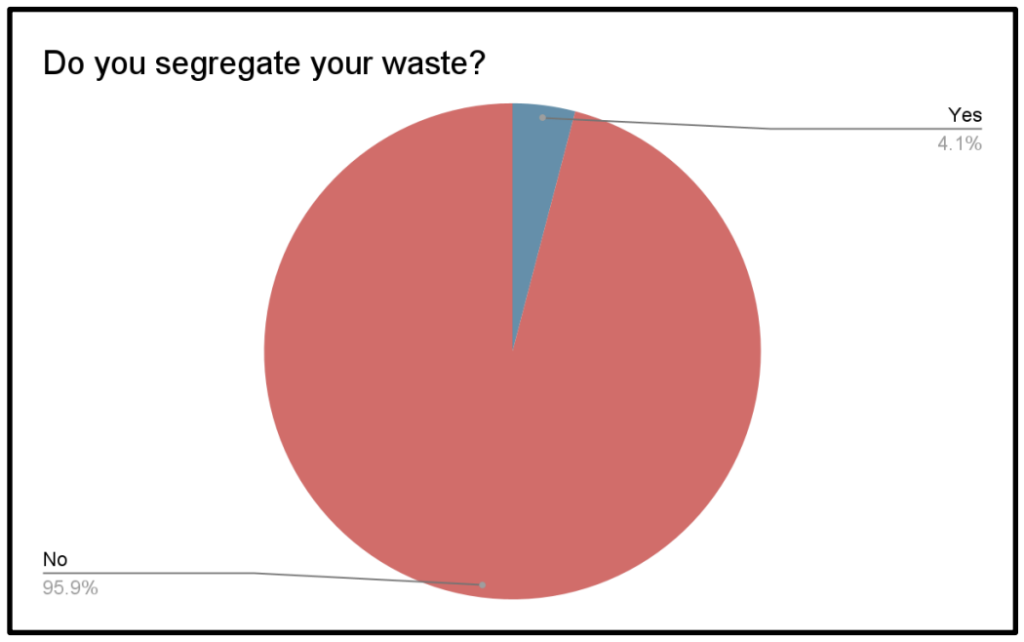
From the Community Saahas surveyed 64 scrap dealers in Yadgir and Kalburgi districts in Karnataka in order to understand what kind of dry waste finds value in the market and can be potential avenues of income for solid waste management workers. The team also got a glimpse of the challenge at hand in both the districts based on responses from a household survey of 1,745 houses:
Source: Saahas
TheCenter for Environment Concerns has been recognised for its irrigation innovation, and also received on-campus validation by ICAR Krishi Vigyan Kendra in Andhra Pradesh. Co-created with farmers, the System of Water for Agriculture Rejuvenation or SWAR reduces applied water per kilogram of produce by 60 to 70%, tackles plant moisture stress, promotes an ecosystem for biologically richer soil and rations water in the summer to help mature trees recoup. A portable moisture probe or embedded sensors give moisture data on the phone to plan the quantum of irrigation and schedule to save water and avoid root diseases. SWAR is adopted for horticulture crops of fruit, forestry, vegetables and flowers by farmers facing severe groundwater shortage.
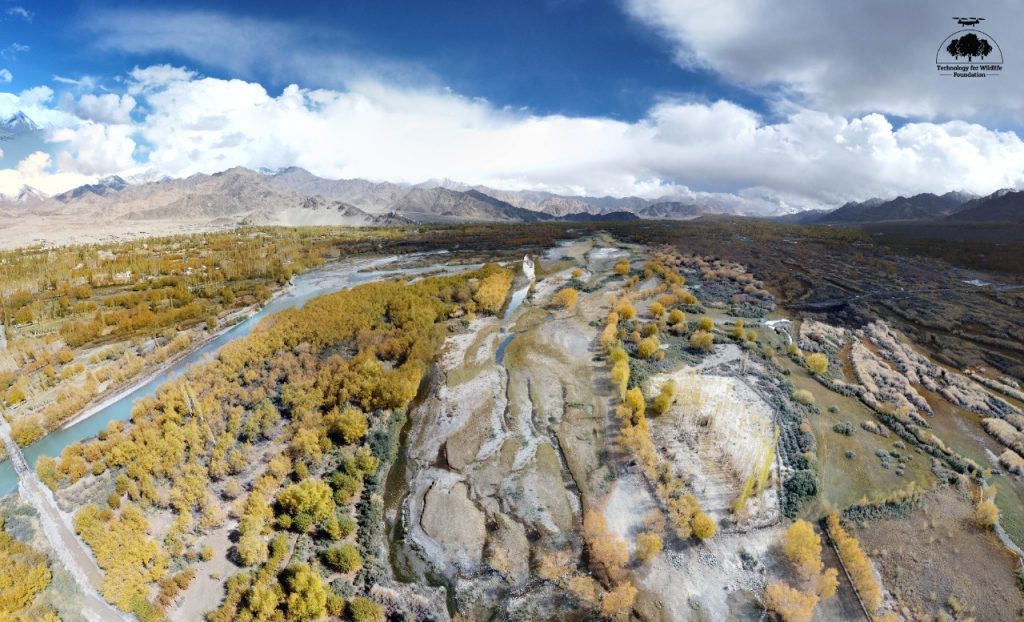
Technology for Wildlife Foundation has been making a lot of friends. The team has been collaborating with the Scuirid Lab at IISER-Tirupati as well as with IISER-Bhopal. With the Scuirid Lab, TfW conducted high-altitude UAV mapping missions in Ladakh to assess whether UAVs can effectively map the habitat and population distribution of marmots and pikas. With IISER-Bhopal, the team is working on the use of computer vision for wildlife detection in UAV imagery and video. In addition, the maps that TfW created for the Goa Foundation, which depict the proposed highway expansion through Mollem National Park in Goa, have been submitted in the Supreme Court. More updates here.
Source: TfW
Noticeboard Why do we think of wilderness as a natural landscape devoid of people? Why do all national parks in the UK, and many in Europe, have people living in them, but not in the ones in Africa and much of Asia? What is the difference between ‘bushmeat’ and ‘game’? This guide to decolonize language in conservation has answers that will make you pause.
The CoExistence Fund of the British Asian Trust is inviting proposals from organisations in India for three types of grants: Large grants (£100,000 – £150,000), Medium grants (£50,000 – £100,000) and Small grants (£10,000 – £50,000). Apply before 11 November 2022.
This graphic series by Orijit Sen, Vidyun Sabhaney and Harsho Mohan Chattoraj, in collaboration with Rosa Luxemburg Stiftung, dives into the complexities of India’s food and agriculture systems.
Watch Vidhi Centre for Legal Policy’s session about the Reserve Bank of India’s discussion paper on Climate Risk and Sustainable Finance
Slam Out Loud is hiring for several positions including for curriculum and outreach managers, program associates and a creative producer. Details here.
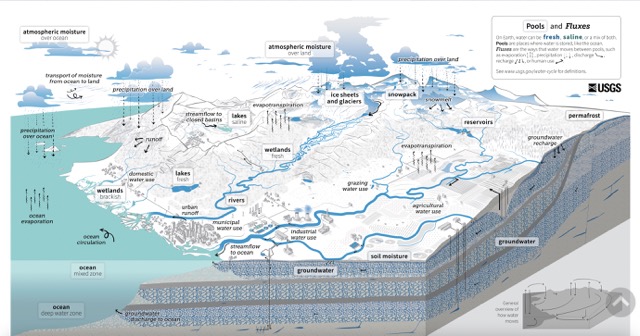
Remember the water cycle we learnt about in school? A completely new diagram now depicts how human water use affects where water is stored, how it moves, and how clean it is.
Early Bird hosts online events on bird and nature education in the 3rd week of every month. Register if you are interested in upcoming events.
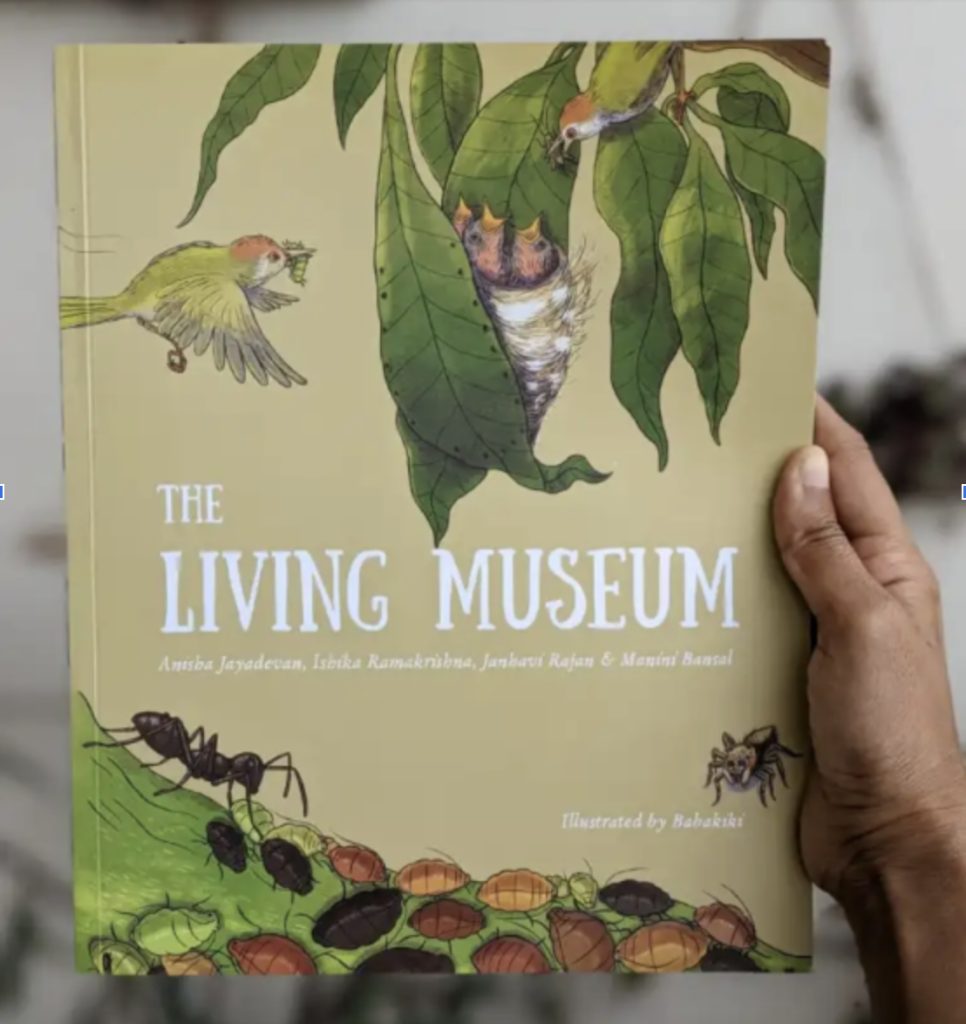
The Living Museum is an ode to urban biodiversity, featuring nuggets of information on the behaviour and ecology of plants, animals and insects in Indian cities! The book is created by Anisha Jayadevan, Ishika Ramakrishna, Manini Bansal and Janhavi Rajan, and illustrated by Babakiki.
Check out COP27 Climate Hub for daily live broadcasts as the Egyptian resort town of Sharm El Sheikh, and Coca Cola, host COP27 from 6th to 18th November.
Parting Shot We all have a part to play. Maybe this quiz can help you decide yours.
Until next time, may your roads be auspicious, śubhāste panthānaḥ santu
-Team Rainmatter Foundation
Shaharee paaristhitikee – News digest for September 2022
शहरी पारिस्थितिकी
(Shaharee paaristhitikee, Hindi) Urban ecology
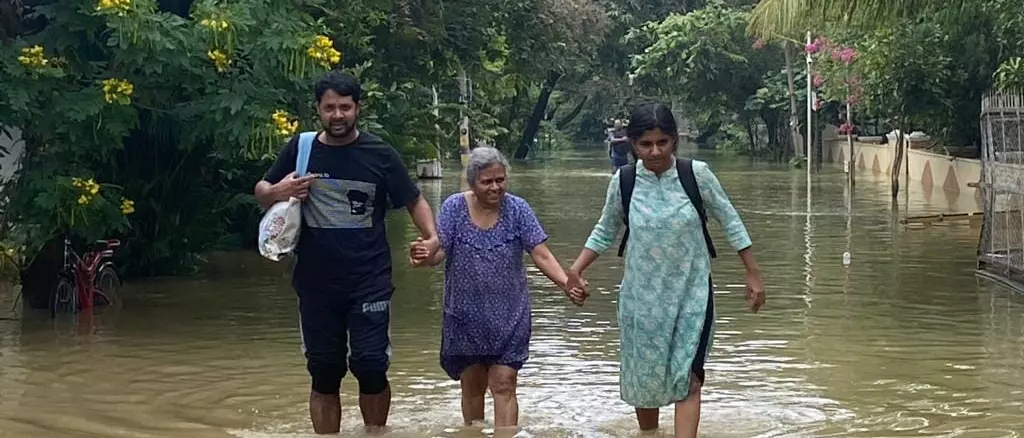
Rainbow Drive layout in Bangalore was one of the flood-affected areas this August and September. Photo by KP Singh via Citizen Matters
Water has been the cornerstone of civilization. Cities have sprawled themselves into existence along river banks and sea coasts for thousands of years. Over time, we’ve choked up lakes and wetlands, poured concrete on streams and covered up wells. Our concrete ambitions are now past the boundaries of urban ecology.
Among the many things we learnt in the month of September was the notion of a non-violent economy: a collective reimagination of our economy by integrating it with local, place-based ecology. This was possible because of the efforts of PV Rajagopal, Jill Carr-Harris and Rann Singh Parmar, of the Jai Jagat International Movement, who held an Ahimsa Santhai in Madurai, Tamil Nadu, between the 22nd and 26th. Nearly 10,000 people attended the santhai, including personalities such as former prime minister of Bhutan Jigmi Thinley, Tamil Nadu’s finance minister PTR Palanivel Thiyagarajan and Gandhian Krishnammal Jagannathan. Watch a glimpse of the event here and read more here.
Before visiting Madurai, we were in Jodhpur for the launch of the Ecological Restoration Alliance. We met researchers, who represented the underrepresented – forests and the open natural ecosystems – and folks who work with communities for restoration while being true to the communities’ needs and traditions. We also met people who linked restoration and the ecosystem with geology and with genetics, and who took us on amazing journeys both in the conference sessions and on field trips. Most of us learned about biocrusts for the first time, and about natural ecosystems that exist in places other than our own geographies. The ERA represents a hope for a realised need to protect what is left of nature, and work together to claw back more space for natural ecosystems. On a related note, our restoration initiative got its own website. Check out all that is happening at a place we call ‘Elephants by the Lake’.
From the Community Slam Out Loud’s Project Avaza trains teachers to implement about 20 hours of arts based education in their classrooms with elements of gender equity and climate action in government schools in Punjab. The team plans to conduct a two-day, non-residential teacher training as well as begin program assessments and the first online learning circle for teachers. The work from this program will impact 4,000 children across the state.
CSEI participated in the World Water Week 2022, and wrote about four key learnings in order to understand how enhanced ecosystem services can be valued, financed and scaled.
450,000 tonnes Is the amount of plastic waste that the European Union sent to Turkey in 2020. The country is the single largest recipient of EU’s plastic waste. The exposure to toxic fumes and harmful chemicals during the recycling process puts workers and residents at risk of developing life-long health conditions, including cancer and reproductive system harms, documents Human Rights Watch.
Noticeboard Ecological Wealth: A handy guide to help you make bio enzyme cleaners. Start with the detergent and go all the way to pet and car wash solutions. Do let us know if there is something missing that you’d like to include in the guide ([email protected]).
Raza Kazmi’s Twitter thread on the rhino’s name in Ho adivasi language is a fascinating read at the intersection of language and colonialism. His earlier thread, on natural history lessons from the movie Zanjeer, is also a must-read.
Corporate veil: Shell’s director’s could face personal liability for failing to meet court-mandated emission’s targets even as the oil giant is arguing that their consumers are the ones responsible for the climate disaster.
This repository of over 30 bio-inputs can help farmers practice natural farming. The manual is created by the National Coalition for Natural Farming with support from the India Climate Collaborative and Edelgive Foundation. Source: Brent Toderian via Twitter
Listen to 99% Invisible’s episode on the Rights of Rice and Future of Nature about the importance of wild rice in Ojibwe cultures, and how the grain has become a plaintiff in a much-followed legal case.
Veditum is looking to organise screenings for its documentary, MovingUpstream: Ganga, in Bengaluru in end-October or early-November. Mail Siddharth ([email protected]) if you can help host the screening or have leads for spaces.
Parting Shot
Roger Federer bid a tearful adieu to the world of tennis in September. Even if you are not into tennis, David Foster Wallace’s 2006 essay on Roger Federer as Religious Experience is worth a leisurely read. You can even close your eyes, and listen to it.
Until next time, may your roads be auspicious, śubhāste panthānaḥ santu -Team Rainmatter Foundation
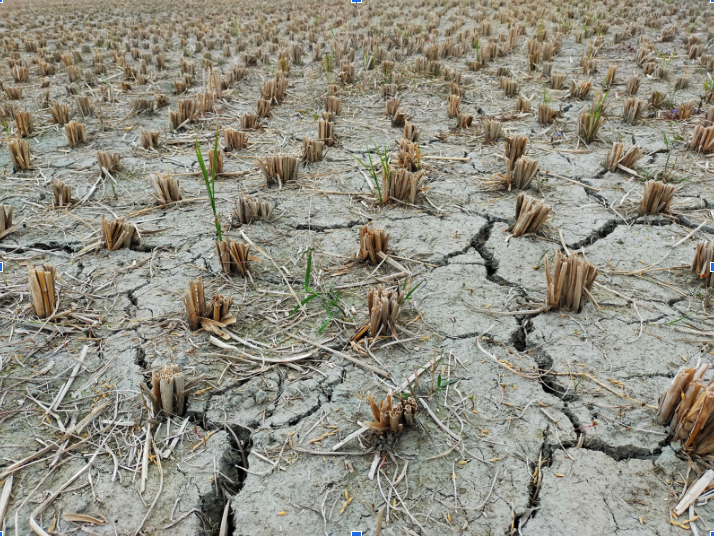
From heatwaves and shrinking rivers to parchedfields and monstrous floods, the world witnessed extreme events throughout August. The flooding in Pakistan, compounded by glacial lake outbursts, is yet another reminder of how vulnerable we are in the face of the climate crisis. Everything is interconnected; the consequences of these global events, especially with respect to water and food security, will impact us all in the coming months.
At the Rainmatter Foundation, the month was chock-a-block with long conversations, deep engagements and multiple events. We met folks from the Balipara Foundation to learn about their restoration efforts and linkages of ecological outcomes with economic and social ones; this is captured in their Rural Futures Index. This resonates with our notion of Place Indicators that not only captures the holistic sense of the house for any place, but can also help make better tradeoffs. We got a preview of CEEW’s work on the Place Indicators at their new office, which is an inspiring space with 100% biodegradable flooring in the lobby and recycled flooring elsewhere, an optimal use of lights and many such examples of energy and material efficiency on display.
At the Indiaspora Event, we discussed how philanthropy has been changing in India especially in the context of Covid and the now evident climate crisis. Thanks to Anshu Gupta of Goonj, a strong consensus emerged around the need for the solutions to be community-led. We also met a few organisations working in the Himalayas to understand what a mainstream push for solutions, which would also account for the climate crisis, might need. Apart from this, we also discussed alliances for large scale restoration linked with livelihoods, a larger consensus on an India View around climate that goes beyond the temperature and carbon framing of it, and the need for scaled efforts even at the government level, with various partners and stakeholders.
People’s Archive of Rural India (PARI) became a part of the Rainmatter network. We also embarked on a partnership with P. Srinivas Vasu, better known as Soil Vasu. With him, we hope to create an army of grassroots practitioners who can help heal India’s soils. An immediate task at hand is to find farmers and practitioners passionate about soil and then gradually build their capacity. We also want to create a database of farmer-reported soil health. Do email us ([email protected]) if you can help and aid us in either of these chases.
We’ve held from the word go that organisations should chase their goals freely and be audacious given the urgency to respond to the climate problem. So our support to the partners we work with is non project specific, unfettered and flexible. Over the last year and a half, we have seen a few organisations use this flexibility really well. Farmers For Forests has iterated rapidly, learnt a variety of models both with individual farmers as well as with communities and collaborated with a variety of stakeholders. SayTrees has built capacity in the team to expand beyond Bangalore and its periphery, understand and scale agroforestry efforts and has even adopted natural regeneration in the right context.
The Center for Wildlife Studies has not only managed some regulatory landscape changes well, but also expanded focus to kick off restoration through agroforestry efforts among the communities they work with. We are working together to arrive at a broader set of goals about what conservation in the context of buffer zones implies.
Sauramandala Foundation had set their sights on expanding their fellowship model for social changemaking to more nodes while also discovering non-linear pathways for expanding this beyond their direct areas of operations. They have had some splendid success with the Government of Meghalaya to adopt the idea of changemaking through district fellowships to drive rural entrepreneurship.
Many other partners are also starting to think and push at a much bigger scale. We are amazed how partnerships across the network are starting to emerge to help with this. Just like feedback loops accelerated climate change, we believe all these actions will start to add up to something much bigger than any single effort or organisation would otherwise be able to achieve. Godspeed!
From the Community
Socratus Foundation conducted a Citizen Jury process on ‘Dignified Income for Agricultural Households‘ in mid-August. A Citizen Jury is a concept that offers regular citizens an opportunity to participate as full citizens, deliberate on themes relevant to them and contribute to the policy dialogue. This time the jury comprised 20 diverse farmers from 13 states. The jury was selected to capture the diversity in agro-climatic zones, landholding sizes, crops cultivated, gender and market experience. ‘Expert Witnesses’ and leaders from bureaucracy, civil society and academia, who are deeply involved in the lives of farmers and farming systems, presented their policies, entitlement provisions and perspectives to the jury.
The jury deliberated on the presentations and directly cross-examined the presentations. The themes include the Future of farming (new technology and practices), Prices (MSP, NTFP, market/mandi, inflation, global trade), and Expenditure (seeds, fertiliser, labour, health, nutrition and education). After a few rounds of deliberations, the jury announced a set of recommendations on what they felt were important for farmers’ dignified income. The recommendations covered the following points:
Legal guarantee of MSP linked to district-wise area production plan which considers the district’s PDS needs and local ecology.
Expanded insurance coverage in order to deal with the increasing impact of climate change.
Horticulture and forest produce should be encouraged. Local vegetables and fruits should be given in anganwadis and mid-day meals to improve nutrition and farmer incomes.
Farmers and governments need to innovate to adapt to climate change. Farmers should be given carbon credits for agroforestry and other carbon-friendly farming practices.
The government needs to increase training, research and infrastructure for technology and marketing. Farmers need subsidies on machines, and the subsidy process needs to be simplified and improved.
Reap Benefit partnered with Delhi’s Ministry of Environment to launch Paryavaran Mitra, an initiative to engage citizens in environmental and civic problem-solving. Within two weeks of the launch, more than 3,000 Paryavaran Mitras took 1,123 actions on waste management, pollution control and improving green cover in their communities. If you are in Delhi, you can simply give a missed call to 8448441758 and start getting nudges, knowledge, and toolkits to take action.
The Ecological Restoration Alliance India is off-the-ground. The alliance comprises restoration practitioners and ecologists, who have come together to foster collective efforts to support and sustain ecological restoration in India. It seeks to identify geographical areas and threatened sites that urgently need active ecological restoration as well as enable individuals and groups to plan and responsibly execute ecological restoration. Check out their projects, resources and species from different ecoregions here.
Waste Warriors’ Vishal Kumar wrote about why the Himalayas are drowning in waste for IDR. The WW team also conducted a menstrual waste management workshop with the women from Bir panchayat; the discussion included sustainable alternatives to single-use pads and the team demonstrated how women can stitch their own cloth pads. More updates here.
Ants for kids: The Myrmecological News Blog demystifies ants for kids with helpful illustrations and guides to what is and is not an ant, the anatomy of an ant as well as an ant crossword!
Download Current Conservation’s latest edition for a deep dive into the ecology of killer whales and the need to protect swimways, the history of ambergris (whale vomit) and a tour of a marine research vessel that uses bioacoustics to track false killer whales.
Here’s a chance to nominate someone for their sustained effort to protect and conserve rivers. Bhagirath Prayaas Samman (BPS) wants to recognise unsung heroes who have been instrumental in protecting rivers. If you know someone who fits the description, let them know by 30th September.
Bangalore Sustainability Forum is inviting applications for its Small Grants Programme. Proposals should pertain to urban climate change and must be collaborative in nature with at least two individuals, organisations or institutions driving it. Apply before 18th September. Details here.
Download the Handbook for Nature Guides by naturalists Payal Mehta and Harsha Jayaramaiah, and illustrated by Manasa Murari. It encapsulates material and learnings from NCF’s Nature Guide Training Course, including guiding techniques and ethics in tourism that are essential for all responsible nature guides.
The National Portal for Rooftop Solar allows residents willing to install rooftop solar to apply for it online. The resident/consumer will have the option to select the vendor, solar panels, invertors, quality and efficiency as per his choice.
Digital Futures Lab’s report Towards Responsible Data Practices for Machine Learning in India: Health & Agriculture’ by Harsh Bajpai and Angelina Chamauh features a graphic short by Kshiraja Krishnan; the agriculture section focuses on farmers who are sidelined in private sector tech solutions that strive to solve their own problems, women and lower caste farmers whose specific contexts are often dismissed and policy researchers attempting to ask important questions about public-private partnerships in the space. Read the report and the graphic short here.
In the words of the Adi people, it is a river “that flows through our heart,” chronicles Aarti Kumar-Rao in an intimate and enlightening essay (which you can also listen to). The river, one of the longest in the world, changes course and washes away villages in the state of Assam every year. This year, the state has witnessed two devastating flood events. Singer Khagen Sanyasi lyrically alludes to its destructive power:
“Mad wind of a mad river, your madness didn’t go away until now… didn’t go away until now. Nobody has ever found happiness by living along your banks.”
His is among the many songs of lament – documented by Chandrani Sinha – about the river, which takes many names: the Yarlung Tsangpo, the Siang/Dihang or the Brahmaputra. It’s not just the Brahmaputra though. Given the spectre of climate change, a river by any other name, could be just as calamitous.
There’ve been several developments at the Rainmatter Foundation in the last few months. We’ve arrived at a lens or guiding principles to benchmark efforts and actions. The lens has two sets of dimensions: the first is the way in which climate change is framed i.e. carbon, emissions, waste & pollution and vulnerability. The other includes biodiversity, the commons, livelihoods, health & nutrition and income & equity. The hope is to see climate action account for both sets of dimensions.
We have also been immersed in a collective endeavour to kick-start a digital knowledge commons platform. It seeks to be a repository of environmental data and tools from diverse sources such as grassroots organisations, academia as well as government and administrative departments. The platform hopes to offer information and insights to enable users to undertake participatory environmental action. Learn more about this effort here. Write to knowledgecommons@rainmatter.org if you’d like to talk.
We roped in Jana USP in order to understand the ecological aspects of city building. Several urbanism practitioners, architects and academics spoke about the need for low-energy and carbon-neutral buildings, using site-specific materials, challenges in recycling construction waste debris and wastewater recycling as well as reimagining the urban commons. In another learning event, folks from Technology for Wildlife, Blue Sky Analytics and Parisar spoke about relying on tech tools for conservation practice. Besides, CSEI/ATREE and P Srinivas, better known as Soil Vasu, hosted a workshop on farmer-led approaches to assessing soil health.
Farmers for Forests has planted close to 100,000 trees as part of their reforestation & afforestation program since December 2019. The team is hoping to plant 300,000 trees across 750 acres of land in this financial year. In their experience, they’ve observed that seeds sowed in raised germination beds have a much higher germination rate at 32% compared to seeds sowed directly in sapling bags at 19%. Reach out ([email protected]) if you can help the team understand why this is the case. The team recently switched to using mulch bricks made from sugarcane waste as a way to deal with the wild growth of Congress or carrot grass (Parthenium hysterophorus) at their plantation sites in Maharashtra. These mulch bricks prevent weeds from forming, prevent soil moisture evaporation and turn into natural fertiliser upon decomposing for our saplings. Farmers for Forests has also collaborated with Climes to allow individuals to offset their carbon footprint from events like weddings or conferences, as well as the flights they take.
Centre for Wildlife Studies expanded their Wild Surakshe program to Kerala, hosting the first workshop at GP Nallepilly, Palakkad (Parambikulam Wildlife Sanctuary) in June. The Wild Surakshe team was also invited by the Maharashtra Forest Department to deliver sessions on Zoonotic Diseases and Human First Aid for promoted foresters.
Punarchith has been documenting the impact of environmental degradation and the impact of the changing climate in Karnataka’s Chamarajanagar district. Their team and volunteers, including Ganesh, Ratheesh Pischarody, Shreekanth Rao, Dheeraj Joshi and Vinay Kumar, put together this video, which shows the trend in rainfall and temperature as well as the state of water bodies, the groundwater and forests in the region. The Punarchith team wants to engage with the district and state administration to address climate related stresses. They are also keen on accessing data related to health conditions (linked to periodic outbreaks of epidemics and undiagnosed fevers) but have not been able to find reliable data sources for this. Reach out ([email protected]) if you can assist them in any of these efforts.
Did you know
12% of India’s emissions come from the steel industry. For every tonne of steel, we release close to 1.85 tonnes of CO2 into the atmosphere. The Energy and Resources Institute (TERI) noted that CO2 emissions from steel production are likely to soar 3.5 times in the next 30 years.
Noticeboard
Forest Street Consultants has created Comms Compass, a free, Do-It-Yourself guide to enable non-profits to streamline their marketing and communications functions. Download and do send the team feedback ([email protected]). Spread the word for good karma points
A paper on the lifetime cost of driving a car in Germany concludes that motorists underestimate the full private costs of car ownership, while policy makers and planners underestimate social costs.
Do our Parliamentarians talk about climate change? About 0.3% of all the unique Parliament Questions asked in a 20-year period till 2019 were related to climate change, reveals a study.
The Nature Conservancy India (TNC), the Foundation for Ecological Society (FES) and Ooloi Labs are seeking feedback on a national vision document for prioritising conservation of freshwater ecosystems. The document summary is here. Send feedback to Roshni ([email protected]) or Akshay ([email protected]).
Download the latest version of the SERPENT app. Not only does it have a reference guide for 200 snake species found in India, but it also offers information on the nearest hospitals for snakebite treatment. Be prepared for this emergency situation. And double karma points if you spread the word among vulnerable communities.
Energy Swaraj Foundation is offering a free course on energy literacy. The 5-hour course will explain how to avoid and minimise energy usage, how to become carbon neutral, clear misconceptions around solar energy and offer ways to adopt solar energy solutions.
कुमाऊँ के पक्षी is an aural treat and wonderful way to learn about the avian diversity of Kumaon.
Until next time, may your roads be auspicious, śubhāste panthānaḥ santu
-Team Rainmatter Foundation
Zemli – Digest for Feb 2022
Rohan Chakravarty
землі
(zemli, Ukrainian; land)
‘Take these seeds and put them in your pockets so at least sunflowers will grow when you all lie down here.’
The context for these words is what makes them particularly poignant and fierce. The words themselves are as much about angst, defiance, courage, resilience, hope, life, death, triumph and beauty as they are about how land sustains and nurtures us. And this in itself i.e. how to sustain and nurture (people, groups, dreams, goals, lives) merits imbibing, no?
At the Rainmatter Foundation, we spent the month of February exploring our context. We asked ourselves and one another various versions of some of the following (existential) questions: Where are we at? What are we doing here? Is this where we want to be? What would we rather do that is worth doing? The interrogation is ongoing even as a semblance of answers are beginning to sprout, notably, we would like to facilitate an increase in biodiversity, equality, commons, health and livelihoods while helping reduce waste, emissions/carbon, displacement and vulnerability.
Our day-to-day actions added up to what might be considered productive efforts. For instance the Communications 101 workshop (related slides) and this repository of ecological wealth, which documents indigenous knowledge on flora, food and medicine interconnected with research papers from modern science. Do get in touch with Ganeshram ([email protected]) if you would like to chat about this, offer feedback or want to better understand this effort.
We also onboarded Slam Out Loud, an organisation that engages with teachers and artists to create contextual curriculum resources. The team will integrate an arts-based climate action curriculum into their ongoing programs to enable children to understand the impact of climate change. If you engage with kids, do check out these free climate learning resources.
From the community
Sauramandala Foundation has been empaneled by the government of Meghalaya as a knowledge partner for its apiculture program, which aims to equip 100 master beekeepers and 5,000 amateur beekeepers with training and equipment to increase honey production. The team worked with over 50 beekeepers directly to equip them with beekeeping tools, training and colonies apart from conducting pilot training sessions on beeswax cosmetics to enhance their earnings from beekeeping.
Zerocircle harnesses seaweed to create alternatives to plastic bags and packaging. As they say, pictures speak louder than words:
Photos: Neha Jain/Zerocircle
CSEI/ATREE’s Urban Lakes Initiative has collated lake data from different sources to identify 1,350 lakes (777 lakes in Bengaluru urban and 573 in Bengaluru rural) in Bengaluru. CSEI/ATREE along with Biome and Friends of Lakes have also created Mira, an initiative to create common digital resources and tools to help citizens learn simple, science-based ways to nurture Bengaluru’s lakes. The Bangalore Citizen’s Lakes Dashboard is now also available as a smartphone app, Mira: Your Urban Nature Guide. Good karma points if you use the app and let them know how it can be improved.
The Rotary Club Of Bangalore has been working with locals along the Palar river, especially in Guttahalli, to revive a natural spring. The local community has planted about 30,000 native trees on the 60 hectares adjoining the Palar river as part of a larger eco-restoration initiative.
Photo: Rotary Club of Bangalore
Noticeboard
A crowdsourcing request to help build a trustworthy directory of various kinds of service providers. Please add and spread the word on the freelancers and/or organisations you know who work with non-profit organisations for legal, accounting, human resources and technology functions.
(Retd) IFS Giridhar Kinhal and Vidhi Centre for Legal Policy’s Mridhu Tandon will talk about the Biological Diversity Act and the amendments that have been proposed for it, on Friday, March 11 at 4pm. Register here.
SUNO (सुनो) is a virtual exhibit from the Serendipity Arts Festival which asks that we listen deeply to engage, empathise and discover a hidden landscape.
Green Artha is looking for a climate fellow. Details here.
Want to engage with children about nature and climate? Here are some free resources by the good folks at Slam Out Loud.
The best $540 we ever spent: A reflection on how an indoor garden made a couple feel connected to one another and to the Earth.
Parting Shot
Carl Sagan’s sagely words are a beacon for our times: “In our obscurity, in all this vastness, there is no hint that help will come from elsewhere to save us from ourselves.”
Until next time, may your roads be auspicious, śubhāste panthānaḥ santu -Team Rainmatter Foundation
Chatrāka – Digest for January 2022
Why did the mushroom walk into the bar?
To expand its network!
Jokes aside, fungi networks are so vital that they are termed the “circulatory system of the planet”. Fungi can colonise, multiply and survive in air, water, dung and even on foam. These microorganisms–neither plants, nor animals–are widely prevalent, and are present in everyday things such as bread, beer and medicine (penicillin). The Society for the Protection of Underground Networks (no, we did not make up this name) is mapping the world’s fungi network. The GlobalFungi database will have a collection of 10,000 samples from hotspots including the Canadian tundra, the western Sahara, the steppes of Kazakhstan and the grasslands of Tibet. Scientists hope to use the maps to pinpoint the ecosystems facing the most urgent threats so as to create “conservation corridors” for the underground ecosystems.
It’s all interconnected.
This is a statement we, at Rainmatter, keep reminding ourselves of. We spent a better part of January examining the interconnections within our own ecosystem to better understand the network. The reflection is shaping our outlook and helping the team define crisper goals. We made progress on a couple of collaborations, notably on data commons and Hasiru ‘Uru. We are hopeful the baby steps on both these initiatives will turn into larger strides soon. This also applies to the GROW Fund, which announced its cohort of 100.
On the not-so-bright side, some of us came down with Covid-19. What is weighing us down more is the absence of our tech genie. Akshay is moving on to focus his energies on knowledge mapping (more on this in the Noticeboard section).
We had a rewarding visit to Chikkaballapur in January. We were visiting Samaagama with 10 children from Chhattisgarh-based Sahodaya and Imli-Mahua alternative schools. The kids taught us a Gond tradition: to listen to trees for their signature sound. Photo by Ganeshram/Rainmatter.
From the community
Waste Warriors and Reap Benefit were chosen to be a part of the GROW Fund’s Cohort of 100 grassroots organisations.
The Reap Benefit team has been keeping busy. Their #WeWantCorporator campaign for Bangalore, in response to the much-delayed civic body (BBMP) elections, drew wide support from the city’s residents and institutions. The team is planning to convert this experience into a toolkit so that citizens can initiate and drive similar campaigns in the future.
Reap Benefit’s third Solve Ninja Leadership Accelerator program ended in January. The cohort had 17 civic leaders working on several civic and engagement issues. Among them were two young girls, Shriya and Ananya; Under the umbrella of Project Sitara, they facilitate students from under-resourced backgrounds to perform better academically. The engineering students plan to release a Class 10 YouTube science series in English and Kannada next.
Researcher and Rainmatter fellow DP Srivastava has been studying tigers in the urban setting. Watch the trailer of his documentary, The Secret Life of Bhopal’s Tigers.
Uttarayan Wildlife has been laying the ground for its elephant corridor conservation initiative in south Bengal. The team recently completed stakeholder and biodiversity surveys in Dhatal and Tung Charar. They have dug rainwater harvesting pits in Bamanadanga and Dhatal, and are in the process of setting up a six-acre nursery in Ranibund, a highly degraded elephant corridor. The nursery will support local communities’ agroforestry efforts as part of the conservation project.
A portable solar pump has been installed at the nursery site in Ranibund. Photo: Uttarayan
Noticeboard
📌 This crowd-sourced public directory lists writers, graphic artists, photographers, website developers, editors, illustrators and other communication professionals. Take a look if your non-profit needs skilled folks for its annual report or a videographer to record an important event.
📌 Bharathi is a platform worth checking out if you’ve found yourself down in a rabbit hole in search of a specific government department. You can use Bharathi to browse over 10,000 Central and state government organisations and administrative regions. The best part is that the organisations and departments are classified as per sectors and sub-sectors. Watch a demo here … and see Akshay in action!
📌 Calling journalists: The Earth Journalism Network is offering reporting grants to indigenous journalists. Deadline: 7 February 2022. The Centre for Climate Change and Sustainability, Ashoka University, is offering support to journalists from underserved communities for its inaugural 3CS Media Fellowship – Climate Journalism from Marginalised Communities. Deadline: 28 February 2022.
📌 Indian Alien Flora Information Database (ILORA) provides ecological, socio-economic and geographic attributes for more than 1700 alien plant species reported from India. Reach the team for contributions or read their paper about the database.
📌 Consumer footfalls dropped by 33% in response to pollution levels increasing by 25% in Karol Bagh, Delhi, according to a report by Blue Sky Analytics and Near.
📌 Scientific knowledge is seldom “practice-ready”. ATREE’s Dr Veena Srinivasan writes about how sustainability science needs a whole new approach i.e. it needs to step out from the ivory towers of academia.
📌 Reach out to Bangalore resident Vinodkumar N Saxena (92434-60550; [email protected]) if you want guidance on how to conserve residential water and power. He has been saving thousands on utility bills by using greywater and solar power.
📌 Rebecca Altman pens a wonderful narrative on plastics, an unchecked driver of climate change: How bad are plastics, really?
Until next time, may your roads be auspicious, śubhāste panthānaḥ santu
-Team Rainmatter Foundation
(Featured photo by James Wainscoat/Unsplash)
Hyun – Digest for Dec 2021
हयों
(Garhwali: Hyun; Snow)
A huge shout out to the Waste Warriors and Linger teams for this digest’s title. There are dozens of words for snow and snowflakes: Qanik (snow falling; Inuit/Yupik), nysnö (new snow; Norwegian), feefle (snow swirling around a corner; Scots), snjómugga (a small snowfall; Icelandic), kramsnö (snow that can be easily shaped into snowballs; Swedish)…. the sheer diversity of words for this winter phenomenon is bewildering. As is the fact that close to 80% of the world’s fresh water comes from snow and ice!
Snowflakes are nothing but a collection of ice crystals, and the person to whom we owe this knowledge was an American farmer!
Wilson ‘Snowflake’ Bentley invented the technique of microphotography of snowflakes, and became the first person to photograph a single snow crystal in January 1885. Throughout his life (1865-1931), Bentley took thousands of
snowflake photographs, some of which form part of his collection (including this letter offering the photos) at the Smithsonian Institution Archive.
In keeping with the season, the Rainmatter team slipped into semi-hibernation mode. We tied-up a few ongoing threads, caught up with some of the first grantees, ceased new conversations, paused funding and retreated to comfortable caves to recoup our energies. And yes, we requested Glific and Reap Benefit to demonstrate the WhatsApp tool that can be used for data collection, helplines and chatbot. In case you missed attending, view the Glific demo here. (Thanks Akshay, Abhishek, Gautam & Divya).
From the community
Farmers For Forests has had an eventful year. The team collaborated with Mitti Collective (farmer survey on regenerative agriculture practices) and are in-talks with Tech for Wildlife (mangrove restoration) and the Maharashtra State Rural Livelihoods Mission (to market and sell value-added forest produce in Gadchiroli). Co-founders Krutika Ravishankar and Arti Dhar received the Mary E. Woolley Fellowship from their alma mater, Mount Holyoke College in Massachusetts, United States of America. They plan to channel the funding towards FFF’s Gadchiroli Project i.e. 10,000-hectare reforestation and deforestation prevention project on community forest land. Given a lot of forestland comes under government ownership, the team would love to be an on-ground implementation partner for governmental efforts to meet the country’s Nationally Determined Contributions.
Zerocircle Alternatives was announced as one of the three winners in the start-up category of the India Plastic Challenge 2021, a Union government platform to showcase solutions aimed at reducing Single Use Plastics (SUPs), leading towards a circular economy. Zerocircle is pioneering the use of seaweed as a biodegradable packaging material.
Centre for Wildlife Studies wants to implement conservation and research efforts across the entire Western Ghats in 69 Protected Areas. To this end, the team extended their on-ground efforts to three new Western Ghats range states, with programs now in Goa, Tamil Nadu and Kerala. Despite losing several Indian CSR donors owing to the pandemic, CWS was able to launch the Adopt-a-PHC program (delivery of medical aid and supplies to primary health centres in rural Western Ghats) in May 2021; the team completed deliveries to over 600 PHCs in Goa, Karnataka and Tamil Nadu by December 2021.
Blue Sky Analytics has been on a hiring and building spree this pandemic year. It launched Zuri (datasets on greenhouse gas emissions from biomass fires across the world) and SpaceTime (multi-dataset mapper that visualises datasets in a spatial and temporal context). Blue Sky Analytics is now a 20+ team, and is looking to add more talent.
📌 Saathi Re is an online database of over 56,000 social impact organisations in India. This is a valuable crowd-sourced initiative, and the team organises and analyses data from social enterprises, NGOs, Section 8 companies and even informal social impact groups. Go explore – no login required! Muchas gracias and bumper karma points to Bindi and Pramit of CSIP, Ashoka University, for alerting us to this.
📌 ATREE-CSEI is seeking to recruit a senior research associate (Green Cities initiative) and a project manager (REAL-Water project). Details on their website.
📌 Mongabay is inviting diverse and talented folks to join their newsroom. Check this for information on the positions, including for reporting, graphics, video production and more.
📌 Samanvay Foundation’s open-source AVNI platform can be used for diverse kinds of use-cases, including surveys, data collection, monitoring and updates and offline stock management. Check out their webinar series or schedule a demo.
📌 NCF’s Hornbill Nest Adoption Program was featured on the NatGeo series, On The Brink. It captures the roles and emotions of the nest protectors and the excitement of the annual hornbill breeding season. Watch it here.
📌 iThink Biology is a supplement to textbooks for students (and aren’t we all learners in the school of life) to study biology through an interdisciplinary lens with examples from the Indian context. This is a labour of love by the folks at Azim Premji University.
Parting Shot
A treat for trivia junkies: The visualisation and research wizards at Information is Beautiful “roved the data web for something positive, progressive or awesome for every single country*. The first to do something beautiful. The most excellent. Or just the world leader for something “nice!”. Guess which country has the most scrabble players and which nation has very good cashews!
Until next time, may your roads be auspicious śubhāste panthānaḥ santu Team Rainmatter Foundation
Cover photo: Sven Piek on Unsplash
Bhimbhori – Digest for Nov 2021
ڀنڀوري
(Sindhi: Bhimbhori; Dragonfly)
Migrations make for spellbinding stories and compelling heroes. November started with a bird setting the record for thelongest recorded flight by a land bird. An Eastern bar-tailed godwit, identified as4BYWW, journeyed from Alaska to New Zealand, covering a distance of 12,200km, flying for more than eight days straight! Her fellow godwit,
4BWRB, also had an incredible flight. This male had failed to make the journey on three earlier occasions. His fourth attempt appeared to be just as jinxed. After 57 hours of constant flying, 4BWRB had to make a U-turn to return to his starting point in Alaska. He took off yet again, andmade itto New Zealand! Epic, right?
Now, meet the globe skimmer dragonfly, an insect that’s 5cm long, weighs less than a single Parle-G biscuit and crosses the Indian ocean. Y-e-s, the Indian Ocean. Let this sink in while you listen to thissix-minute podcast, in which Dr Sam Illingworth explains thesciencewith apoetic odeto these magical, delicately winged creatures that chomp on mosquitoes in-flight. We love Michael Phelps, but there are other heroes to pay attention to.
It has been inspiring to see the wide spectrum of organisations working to drive local economies and ecological wealth. For instance,
Goonj’s work extends much beyond ensuring clothes and other material surpluses reach those in need. They use clothes as an alternate form of currency to inculcate an attitude in individuals to address their own issues. Instead of providing the clothes as charity, partner organisations work with respective communities to inspire the people to solve problems. Clothes are then given as a barter for this work. They’ve observed this approach builds resilience among the communities even as participatory work has resulted in the cleaning up of lakes, tank bunds being built and common land being used to produce vegetables.
Participants at the Social Impact Sprint at Tehri, Uttarakhand. Photo: ColoredCow
At theSocial Impact Sprintin Tehri, Uttarakhand, we debated and discussed the role that software plays in the social impact space even as we heard stories about technology shaping ground efforts. For instance,Shelter Associatesuses a combination of satellite dataand on-ground community members to track municipal plumbing networks in slums thus helping their vision of getting toilets installed in every house. And (while we feel a tinge of envy), we doff our hats to ColoredCow for demonstrating that a high-performing tech team can operate from the Himalayas!
From the community
Uttarayan shared their experience from a 95-day agroforestry pilot. They conducted a trial with mangoes and the leguminous, black gram cropon a one-acre plot at their nursery in Arambagh, West Bengal. The plot was earlier used only for mangoes. The cultivation of nitrogen-fixing black gram resulted in a 100% profit from the ground crop. The added benefit was that the ground crop reduced erosion of the exposed soil while serving as a shelter for several reptiles, amphibians and insects, which likely provided ecological benefits. Related videohere.
Lantana pencils. Photo: CSEI-ATREE
CSEI-ATREE’s designer in residence program has led to a wonderful collaborationbetween two urban designers and the local, forest-dwelling community. It wasn’t always smooth-sailing, but the designers and the local artisans found an equal working relationship at ATREE’s field station in the MM Hills, and together transformed the wild, invasive species Lantana camara into meaningful objects, such as pencils and furniture.
CSEI-ATREE also launched Jaltol, an open-source digital tool for water accounting. This tool is significant because, despite a number of perennial rivers, India is a water-stressed nation. The tool plugs a gap into how we collect and use data in the water sector to help address water security. You’ll find everything you need to know about Jaltol
here.
Photo: Korah Abraham/Citizen Matters Chennai
Citizen Matters reported extensively on the devastating flooding in Chennai in November: Read their analysis of the city’s mapsand how it reveal flaws in the design of stormwater drains in Chennai; how T Nagar residents raised questions over the quality of work on stormwater drains and how basic gaps in governance and disregard for natural infrastructurecause flooding. CM also hosted an online discussionon possible ways to prevent flooding in the city, and a report on recommended steps for a flood-proof Chennai.
Block your calendars
Glific demo: Glificis an open source tool designed for NGOs to leverage WhatsApp for their stakeholder communication. It supports use-cases such as helplines, chatbot or for awareness building. Jointhe wonderful folks at Glific and Reap Benefit, who have agreed to host a demonstration on Friday, December 10 at 4PM. Reach out to Akshay ([email protected]) if you have questions.
Communication 101: The CSEI-ATREE team has graciously offered to host a Communications 101 workshop for partner non-profits. This workshop will offer small/constrained teams an overview of communication strategy (how will communications help achieve the organisation’s goals? define the communication goal, etc), communication plan (who is your audience? how will you reach this audience?), implementation plan (what will you say to the chosen audience? how will you say this to them? how often will you communicate with them?), templates and contact databases. The workshop will be held on Monday, 17 January 2022. To participate, please fill this form, and we will get in touch.
📌 Watershed Support Services and Activities Network(WASSAN) is hiring people for several positions including for regional coordinator for the Odisha Millet Mission, program coordinators and capacity building coordinators. Check their careers pagefor deadlines and details.
📌 Wildlife Trust of Indiais looking for marketing professionals, sociologists, ecologists, human resources, finance and many others. Check out their jobs pagefor details.
📌 Subscribe to The Flock, a monthly newsletter, if you or friends would like to discover more about birds and nature in India. We were overjoyed when we stumbled upon the feather library of Indian birdsvia their last edition.
📌 ZeroCircleis on the lookout for a seaweed scientist, coating specialist and a food tech specialist. Details here.
When there’s a nip in the air, when there’s a cold breeze blowing, when some of the birds begin to leave, when the trees switch to a riotous wardrobe and when the leaves desert the branches to kiss the ground… can you resist the seduction of autumn?
India is mostly tropical but we are blessed to have landscapes that this season fills with inescapable magic, if only to signal that it’s time to pause, to conserve and to replenish.
We inadvertently synched-up with nature’s clock this October, slowing down and taking stock. We had conversations about the practise and goals of conservation, how the national mission on biodiversity and human well-being is shaping up and how VC funders would like to make sense of the climate action landscape. We engaged with individuals doggedly trying to address challenges such as illegal sand mining and gaps in the organic cotton ecosystem. We learnt about springsheds, how water scarcity is altering Dehradun and how Goonj weaves in circularity into the re-use and re-purposing of clothes and materials. And as the uproar over Sri Lanka’s shift to organic gathered steam, there were counterviews to the narrative. Read this twitter thread by Zerodha founder Nithin Kamath on Rainmatter’s investments and position on organic agriculture.
Terra.do has launched, in the last six months, five new programs, including one on EVs. They also held two job fairs, which had participation from 1,300 software professionals and 35 climate technology companies.
Nature Conservation Foundation (NCF) marked its 25th year with a series of talks on subjects ranging from the gangetic dolphin to the threats that imperil the Lakshadweep islands. The Partners Principles training programme, for which NCFs High Altitude team is a collaborator, was recognised as among the 20 outstanding global conservation practices at the 15th meeting of the Conference of Parties (CoP) to the Convention on Biological Diversity, held in Kunming, China in October.
Photo: Ishaan Khot & Abhilasha Sharma/Dakshin
Dakshin’s team conducted a scoping study on dried fish, fish meal sectors and their value chains in Mumbai in October, visiting major landing centres and koliwadas (fisher colonies), and speaking with fisheries experts.
Noticeboard
📌 We have partnered with Blue Sky Analytics to help make satellite data more accessible for non-profits to use. As part of this initiative, a non-profit can get one year of free access to Blue Sky’s APIs covering datasets such as historical, high-resolution Air Quality measurements as well as real time GHG estimates from fires. If this is valuable to your non-profit, check out Blue Sky Analytics’ offerings and read about how Parisar is leveraging this program for air quality advocacy in Pune. Mail: [email protected]
📌 The Tech4Dev community is scheduled to meet for a tech sprint in Tehri, Uttarakhand from November 14-20. Our tech genie Akshay Kanthi will be in Tehri. Tell us if you have ideas on what and how tech can potentially ease your efforts: [email protected]
📌 The Center for Wildlife Studies is crowd-sourcing funds for several projects, including for elephant acoustics and elephant research. Do consider contributing and spread the word (and get good karma points).
📌 ATREE’s Centre For Social & Environmental Innovation will raise the curtain on an open-source tool to make water balance estimation easy. The tool, called Jaltol, will be launched on November 30. RSVP here.
What might you expect from a story of two men behind prison walls? That perhaps it’s about violence? Is bleak? Even tragic?
The Shawshank Redemption is all of that. It is also an account of an unlikely friendship between two people from starkly different maps… a tale that encompasses music, resolve, corruption and confinement. Exceptionally though, The Shawshank Redemption is about hope.
“Remember, Red, hope is a good thing, maybe the best of things, and no good thing ever dies. I will be hoping that this letter finds you, and finds you well.”
These are Andy’s words to ‘Red’, hopeful that not only will his prison mate one day exit the penitentiary but also find this letter which he has left in a box buried in an open field under an Oak tree.
Hope is something we, at the Rainmatter Foundation, try to live with and bring to, to each of our interactions. And in September, we had a healthy dose of this optimism (or is it a fool’s paradise?). Dots joined, doors opened and a handful of partnerships started to get broader contours. Our belief in the idea of getting existing solutions and efforts to collaboratively go mainstream found resonance.
We engaged with state officials on agroforestry and community management of the commons in Anantapur district and we ideated on an easy-to-use information repository-cum-app for farmers. There were also grim conversations about how chemical farming may be directly contributing to increased incidences of cancer. We began experiments to build water pumps that pump themselves
(without fuel) and are considering the use of flowforms to recycle grey water. A slow crawl on an as-yet-unnamed initiative got off-the-ground even as Dakshin, Nrityagram and Fields of View became a part of our circle.
We’d like to doff our hats to Krutika, Vaibhav, Pravin and Arti. The Farmers For Forests #AMA
(ask-me-anything) elicited much engagement. If you were unable to attend and have questions about plantation drives, afforestation and reforestation efforts, chances are you’ll find some answers here.
From the community
Community mobilisers conducted awareness drives in schools and with households before starting the door-to-door dry waste collection in Doni and Satta villages in Uttarakhand. Photo: Waste Warriors
Door-to-door dry waste collection in remote Uttarkashi villages
Waste Warriors has engaged two community mobilizers and four safai sathis, i.e. people who go door-to-door to collect waste, in two remote villages in Uttarkashi, Govind Wildlife Sanctuary and National Park. This is a first since there is no organised door-to-door waste collection mechanism in the villages of Doni and Satta. Nearly 800kg of dry waste has been collected from 260 participating households in the last five months (since May). This is trash which would have otherwise been left by the roadside, in landfills or down the mountain slopes, eventually finding its way into streams and rivers. This is part of a program funded by GEF, SECURE Himalaya under the Ministry of Environment Forests and Climate Change in association with the UNDP.
Reap Benefit
and its growing tribe of Solve Ninjas have been very active. Their third cohort of the Solve Ninja Leadership Accelerator program, a six-month initiative to groom young, civic problem-solvers, kicked-off in July. Twenty-two people, including 14 women — from places ranging from Guwahati to Kanpur and Faridkot to Hosur — are working on addressing matters such as solid waste segregation, village development plans and inclusive and accessible education for underserved children. In Bangalore, they are perfecting the art of blackspot fixing i.e. cleaning up public spaces where litter and trash pile up even as they have roped in local elected representatives in different parts of the country to test their Solve Ninja chatbot to engage with citizens in their constituencies. Click here to see what else they’ve been up to.
Asks
Stop the amendments to the Forest Conservation Act:
Civis is an organisation that makes it super easy to participate in the process of law-making i.e. the ‘by the
people’ part of democracy. They do this by facilitating the public consultation — i.e. responding, commenting or objecting to new laws, rules and regulations — process. And we urge you to submit a response on the proposed amendments to the Forest (Conservation) Act, 1980. Here’s what’s at stake and an easy-peasy way to make yourself heard.
Nudge expert:
Reap Benefit is looking for someone to help devise and execute nudge-based behaviour communication on their Solve Ninja Chatbot to motivate youth and citizens to take small, environment and civic actions in their neighbourhood. Email Gautam: [email protected]
Noticeboard
📌 #ICYMI scientist Dhriti Banerjee became the first woman to head the Zoological Survey of India.
“We, in our country, have been made aware of the value of biodiversity through culture, mythology and
religion, but understanding the economic value of biodiversity will make people more aware of it and that we need to protect it,” she tells Mongabay in an interview.
📌 Blue Sky Analytics has multiple vacancies, including for web developers, frontend developers and data scientists. Check them out, apply, refer or simply spread the word.
📌 T4GLabs, is looking to hear from change-makers with an idea to leverage tech in their efforts or a funder looking to invest in impact tech.
📌 Nearly 60 endemic and rare species of flora and fauna feature on Andhra Pradesh’s biodiversity map by graphic designer and artist Sudarshan Shaw.
Perhaps we can derive hope in knowing this: Five months into World War I, thousands of British and German troops on the Western Front decided to put down their weapons, rise from the trenches, and greet each other peacefully on Christmas Eve. This letter captures the extraordinary day on which enemies turned fellowmen to bury the dead and exchange gifts of cigars and smokes.
Until next time, may your roads be auspicious,
śubhāste panthānaḥ santu
Team Rainmatter Foundation
Taapa – Digest for August 2021
ತಾಪ (Kannada: taapa; heat, fire)
August was the month of warnings and wildfires. The IPCC released its “most up-to-date physical understanding of the climate system” as part of its Sixth Assessment Report (AR6). The Physical Science Basis is the first of the multi-part AR6. Explore it through the many datasets on this interactive atlas. And do listen to this 6-minute podcast–two parts poetry, one part science paper–about how wildfires change plumage, testosterone and breeding in one bird species.
Despite the bleak events, August turned out to be a memorable month for all of us at the Rainmatter Foundation. One of our colleagues got engaged, we met one another in-person for the very first time and we walked through lush fields that were once wastelands. We learnt about efforts to treat cattle diseases through better nutrition and homeopathy, how games and simulations can inform and enable better policy-making and got a glimpse into what the path to carbon/environment disclosures for companies entails. We also started to onboard two new partners: Janaagraha and Uttarayan Wildlife. One thing that we now hope to do more of is to document and share best practices and solutions from across the network.
From the community
Forest First Samithi has been involved in eco-restoration efforts around the Kabini river basin in Wayanad district in Kerala. Degradation of the Wayanad forests means floods during heavy rains and droughts during summer in the downstream regions of the river Cauvery. FFS roped in local residents to eliminate the two main invasives in the forests. Here’s a quick look at the Lantana and Sennna removal efforts and the terrain six months later. They’ve also planted 6,160 saplings of 80 species and plan to add another 2,000 riverine saplings in the coming weeks.
Campsite at Timbaktu collective. Photo courtesy: Timbaktu collective
Say Trees has set up a one-acre nursery in Kolar where they are raising 85,000 saplings of 27 varieties of native species.
The Timbaktu Collective boosted its community conservation works with the development of a responsible-eco-tourism campsite that now has eco-friendly bed facilities and a community dining space.
DP Srivastava with students during a day-long outing to the village forest area close to Bhopal on International Tiger Day on July 29. Photo courtesy: DP Srivastava
Fellow DP Srivastava has been studying human-tiger interaction around Bhopal and in the Ratapani Wildlife Sanctuary (RWLS). He spent the last few weeks training 80 forest guards, foresters and rangers of four ranges of RWLS in using camera traps as well as in identifying tracks and signs of mammals. He has also been engaging with children to educate them about the importance of tigers in the forest.
Millet ecosystem: Ashis Panda’s map of the various actors and stakeholders in the millet space is a handy overview of the existing millet ecosystem. It is based on lessons drawn from multiple millet programs running across the country, such as from the Orissa Millets Mission program, Karnataka’s minimum price support mechanism, initiatives by organisations like DDS, Timbaktu Collective, WASSAN, Earth 360 Ecoventures, Manyam Foods etc. The idea is to use this map as a guide and a template to build collaborations across the value chain in the months leading to the year 2023, which the United Nations has designated as the International Year of Millets.
📌 Flying Elephants is a poignant, 6-minute film on the threats faced by the Asian elephant. The black-and-white short, narrated in the betta kuruba tribal language, is a visual delight!
📌 Glific is an open source, two-way communication platform that allows NGOs to chat with lakhs of people simultaneously. While the Glific platform itself is free, there is a small cost involved with sending and receiving messages via WhatsApp Business API. Have questions? Mail the tech genie: [email protected]
📌 Down To Earth reports that 114 urban local bodies in Odisha cancelled all on-going tenders that were not in line with decentralised micro-composting or material recovery in order to move towards a decentralised waste management plan. Turns out this decentralising has been a roaring success.
📌 The latest edition of 36,The Morning Context’s weekly environment newsletter, notes that the Union government has agreed to translate the draft environment impact assessment notification 2020, or EIA 2020, into all the 22 official languages of India. The government had been resolutely avoiding wider consultations on the draft, which proposes controversial and problematic amendments to India’s main law for environment clearance. The recent development now implies that there is a possibility of a wider and more inclusive public consultation on the draft EIA 2020.
📌 Can you host a public screening for short films about the practical aspects of implementing environment-related court rulings and decisions? Get in touch with Debadityo: [email protected]
📌 Akshay has put together a quick and dirty jobs list for the sustainability space. Apply, add, amplify. Dhanyawad.
Parting shot
Humanity may or may not escape the effects of a warming planet, but guess what might survive the heat for well over a 1,000 years? “Two leaves that cannot die”. Read about the genetic mysteries that enable the Welwitschia plant to last millennia in the harsh Namib desert.
Until next time, may your roads be auspicious,
śubhāste panthānaḥ santu
Team Rainmatter Foundation
PS: This is the third edition of the news digest. What can we do better? [email protected]
Dhaara – Digest for July 2021
धारा (dhaara; stream)
Greetings for a new month!
Rain is one of the things that sets a dhaara, a stream, in motion. Record rainfall in July triggered streams and rivers to flood many regions across the country.
It’s rarely possible to tame the forces of nature. Have a go at this simulation game by the UN Office for Disaster Risk Reduction to see just how tricky flood-mitigation measures can prove to be. We can, at best, buffer ourselves if we act in time.
At the Rainmatter Foundation, we spent the month tying up the loose ends of ongoing discussions and plans. This included grant support for the Ashoka Trust for Research in Ecology and the Environment (ATREE) to carry out an assessment of the water situation across six locations in Maharashtra, Karnataka and Tamil Nadu, and develop tools with the local communities so they can identify and implement solutions as per their needs.
Our sapling giveaway initiative is slowly gaining pace. Five organisations and three individuals have taken 10,000 saplings thus far. Akshayakalpa is the latest organisation to plant 500 saplings along a one-kilometer stretch of the road in Tiptur, Karnataka. A lot more saplings remain in the nursery. If you can help us find permanent spots for them, please email Divya, who can assist on available species, number of saplings as well as coordinate logistics: [email protected]
Saplings being planted near Akshayakalpa’s dairy factory in Tiptur, Karnataka. Photo courtesy: Akshayakalpa
About the proposed Social Stock Exchange
We also spent considerable time attempting to understand the proposed Social Stock Exchange (SSE) being mooted by the stock market regulator, Securities and Exchange Board of India (SEBI).
India has at least 31 lakh non-profit organisations (NPOs), more than double the number of schools and 250 times the number of government hospitals, according to an estimate in this report by SEBI’s SSE technical group. Broadly, the idea behind the Exchange is to allow these lakhs of NPOs to raise money from the market as well as for donors/investors to be able to access information and measure the impact of their contributions.
Here are some observations:
The good: Some of the proposals are likely to encourage individuals and organisations to donate to NPOs. For instance, the technical group has proposed that first time retail investors be allowed to avail a 100% tax exemption on a maximum investment of Rs 1 lakh in the SSE Mutual Fund structure. It has also proposed doing away with the 10% cap on income eligible for deduction under 80G, for donations to all NPOs that benefit from the SSE.
The bad: Apart from NPOs, the SSE is also meant for for-profit social enterprises (FPEs) wanting to raise funds. The technical group has not defined, for now, what constitutes an FPE. The group’s logic is that enterprises should be able to “choose whether they want to be categorised as a social enterprise, and consequently commit to additional reporting on social impact”. This is a grey area and may not augur well for the Exchange and NPOs in the long-term.
The ugly: The Exchange seeks to bring in transparency in the NPO sector by mandating increased reporting (financial, social and governance). While transparency in itself is good to aim for, mechanisms that are dependent on information risk leaving out the smallest of NPOs from the SSE’s ambit. The Exchange also risks alienating organisations whose effort and/or impact may not render itself to being adequately captured/reported. For instance, organisations involved in prison reform, environmental justice, digital rights and other areas wherein existing systems and processes are stacked against them.
In addition, the proposals ask that NPOs furnish “more refined statements of intent, more rigorous assessments of the social impact, shift towards outcomes-oriented measurement, granular disclosures of governance mechanisms and financial operations”. It notes that “difficulties of measuring outcomes have, in practice, been overcome to some extent by funding platforms such as GiveIndia and GuideStar”. At the same time, it places emphasis on “social auditors” that “can be required to do independent verification of such reporting”. The worry with these proposals is that it might lead to the creation of middlemen agencies. This can turn out to be problematic, and run counter to the spirit of the entire endeavour. Such agencies may gain unchecked power and influence upon the NPO-donor-Exchange ecosystem, especially since no counter-balancing mechanisms have been proposed to regulate them.
As of now, the Social Stock Exchange is a concept that exists on paper. It’s a worthy idea, and one that needs deep and deliberate consultations with all stakeholders. Its realisation and eventual value to these stakeholders, especially to the NPOs, will depend on some of these critical, early choices that are made.
From the community
Waste warriors is partnering with the NCR-based Architecture for Dialogue to design Dharamshala’s first material recovery facility. Waste Warriors wants the space to be more inclusive as well as educational for waste workers who will come there to deposit collected dry waste. You can read more about Waste Warriors’ recent work here.
The Nature Conservation Foundation‘s (NCF) scientists and researcher Chayant Gonsalves studied how rainforest birds fare in different kinds of tea plantations (conventional tea with agrochemical use, organic tea, tea with mixed native shade) compared to in rainforest fragments and continuous forests. They note in their research paper that while all tea plantations are poorer than rainforests for birds, incorporating native shade tree species in tea plantations can help aid in bird conservation at the landscape level (Authors’ note: Table 2 in the paper is incorrect and will shortly be corrected by an Erratum in the journal).
NCF planted about 5,530 saplings of around 130 rainforest tree species at seven sites in the Valparai Plateau during May, June and early July. The plantation is part of their rainforest restoration efforts in the Anamalai Hills, Tamil Nadu, now in its 21st year. Photo courtesy: NCF
📌 Bengaluru tree census app: The Karnataka Forest Department and Bengaluru’s civic body, the Bruhat Bengaluru Mahanagara Palike (BBMP), launched an app to crowd-source information for the city’s tree census. Residents can download the Tree Census app (for Android and Apple users) to start uploading photos, GPS coordinates and other details of trees standing on private lands. Do note that a tree is defined as one which has a minimum girth of 27.5cms. Once uploaded, Forest officials will verify the details.
📌 Watch Mongabay India editor S Gopikrishna Warrier talk about the next significant report about climate change, the Intergovernmental Panel on Climate Change’s (IPCC) Assessment Report 6, and its relevance to India.
📌 Karma points if you can help Waste Warriors find a funding partner for its solid waste management project for rural villages near Ramnagar outside the Corbett Tiger Reserve in Uttarakhand. Get in touch with Vishal: [email protected]
📌 CWS is recruiting for several positions including environment economist, animator, outreach coordinator and geospatial analyst. All positions, job descriptions and application information is here. Apply, recommend or spread the word (bonus karma points).
📌 The directory of services focusing on environment and sustainability is off to a good start. Much gratitude for your suggestions. And do keep them coming – shukran!
Trivia
We learnt that Vepanapalli village in Tamil Nadu’s Krishnagiri district, where we are developing a permaculture farm, likely derives its name from the neem tree; Vepa maram is Tamil for neem tree. Villagers pick neem seeds and sell them in Vepanapalli for approx Rs30/kg. The seeds are then transported to be processed into oil, which, in turn, is used as an ingredient in ayurvedic medicines, for pesticides and for other applications.
A resident in Vepanapalli village shows some neem seeds. Photo courtesy: Ganeshram/Rainmatter Foundation
Parting shot
Ever paused to think about why we buy so much stuff? Sociologist Juliet Schor says it’s not just advertisements, but societal factors too play a role in consumerism. Money, displayed in terms of consumer goods, becomes a measure of worth, and that’s really important to people. To meet climate targets, we will need to consume differently and consume less. #insightful #long #totally-worth-it