Vaphasa (वाफसा) – July Roundup from Rainmatter Foundation
Vaphasa – Creating Conditions for Growth
In Marathi, Vaphasa (वाफसा) describes a very specific moment in the soil – not wet, not dry, but perfectly balanced to hold a seed and let its roots take. Farmers don’t rush this but instead they wait; sowing too early or too late into soil that isn’t ready wastes the seed.
Much of what our ecosystem does works the same way – not the sowing itself, but the patient work of getting the soil right: building partnerships, listening to communities, supporting local leadership, so that when the moment comes, people, place, and nature can actually take root.
July’s work follows that similar process of cultivation. As relationships are built and ideas take shape, the foundations are strengthening for what can grow next.
This month’s digest brings together updates from the Rainmatter Foundation team, our partner ecosystem, and the fellowships we support.
From the Rainmatter Team
A New Chapter for the Ecosystem Messaging Thesis
.
After leading the focus area for Ecosystem Messaging at the Foundation for the past two years, Sailee Rane is moving on from her current role. She worked on building the infrastructure (the base layer) to take climate narratives emerging from different places and make them a part of mainstream conversations. This kind of infrastructure is the first step to strengthening the ecosystem of climate storytelling in India. Sailee will continue to work on the YouTube channel – The Climate Brief by Rainmatter.
As Sailee embarks on her next chapter, we are delighted to welcome Divya Narayanan, who will now lead the Ecosystem Messaging thesis. Divya brings in over a decade of experience at the intersection of democracy, climate justice, and citizen participation. Her most recent work spans ten years at Jhatkaa.org, working with citizens, campaigners, and technologists to build people-powered campaigns on climate, gender, public health, and social justice across India. We’re investing in the cultural conditions that make change last, focusing on place, nature and public imagination. The work is about shifting what people believe is possible about India’s relationship with nature.
We look forward to this next chapter as the Messaging thesis continues to strengthen how climate stories are told, shared, and experienced across places.
From Better Buildings to Better Systems
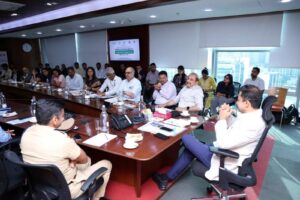
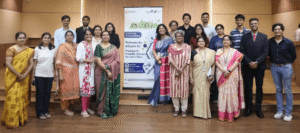
Rainmatter Foundation attended the Building Futures Forum, hosted by GBPN (Global Buildings Performance Network) in Bengaluru. The forum brought together developers, government, architects, philanthropy and civil society to push the built environment conversation toward systemic change.
The forum worked across two lenses: designing healthy, climate-resilient buildings leading to healthy neighbourhoods, and mainstreaming the adoption of green materials. Discussions on day one centred on environmental health being inseparable from human health. Sathya (CEO – Rainmatter Foundation) joined the panel on institutionalising healthy buildings and cities. Day two turned to GBPN’s new Market-Readiness Toolkit, built to help innovators navigate demand-side frictions.
This aligns with our Build Shift work – redefining what a good building means, and building the ecosystem consensus that helps that definition stick. As Akshatha Narayana (Thesis Lead – Built Environment) says, “Forums like this help us see the ecosystem’s thinking and figure out where we can add value. It’s less about doing work in parallel, and more about finding the right collaborations – because materials shape buildings, and buildings shape places.“
Mapping Our Connection to Nature
Most urban growth treats nature as an afterthought, often cutting off the natural connections that keep ecosystems alive. But if we are to build resilient cities, we have to look beyond isolated patches of green. We have to restore the functional relationships between people, species, and the physical environment.
Adavi Trust, with support from the Zerodha Rewilding Fund and Rainmatter Foundation, has been building the Nature Network Atlas. It’s a practical tool designed to map out urban ecological nodes such as wetlands, parks, lakes, and home gardens, to help conservation groups and citizens make informed decisions about local restoration.
Siddharth Rao (Thesis Lead – Conservation & Restoration) and Nayantara Lakshman (Partner Manager – Conservation & Restoration) were also part of the team. They recently wrapped up the first pilot test with Farmers for Forests, using the feedback to see how the tool holds up on the ground and where it needs tuning.
Building water-resilience in Jodhpur
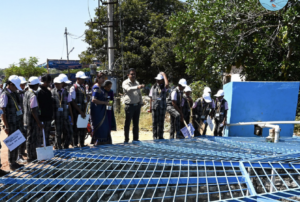
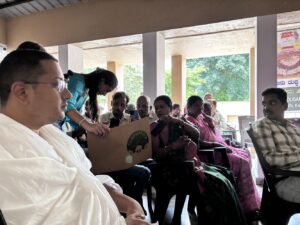
Sandilya Mutluru Venkata (Strategy Head – Rainmatter Foundation) along with EdelGive Foundation team visited 2 villages in Jodhpur, to learn about the grassroots work supported by the GROW+ initiative.
They visited a village in Kalyanpur block, Ram Devpura where there was equal participation in the Village Development Committee by both men and women. Vasundhara Seva Samithi (VSS) has been working in this block restoring 3200 tankas (household storage tanks) benefitting 15,000 families over the years. Beyond water security, the people of Ram Devpura had a strong sense of community, voiced by women who helped reduce village expenses and create common emergency savings.
In Bhakri village, Gramin Vikas Vigyan Samiti (GRAVIS), works alongside the Bishnoi community to strengthen farmer producer organizations, promote natural farming, and protect sacred groves (orans) using traditional water harvesting structures.
These field visits show how people of the place can become custodians of their commons, social structures and livelihoods when grassroots organizations work alongside them.
Envisioning the Future of Rural Livelihoods
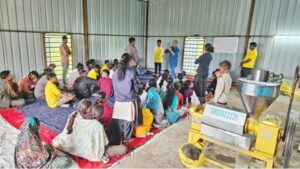
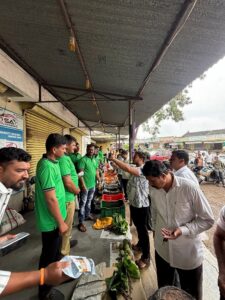
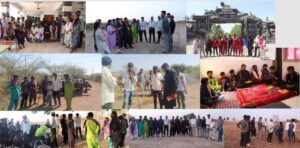
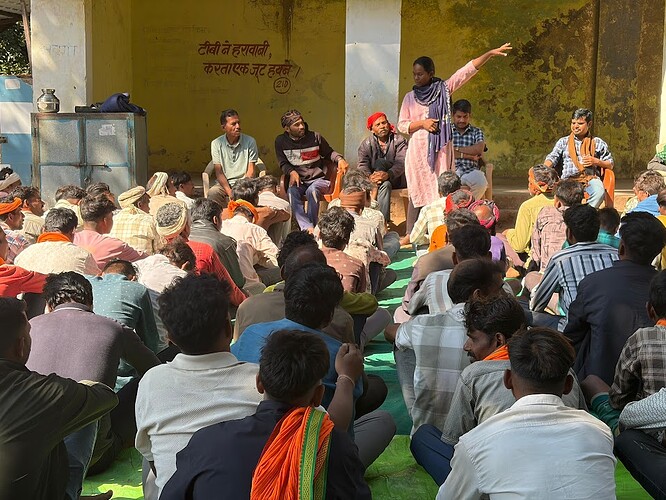
Tanmay Mukherji (Strategy Lead – Entrepreneurship) collaborated with Green Chakra and Pragati Grameen Vikas Sanstha for a Local Economy workshop in Bhimpur, Madhya Pradesh.
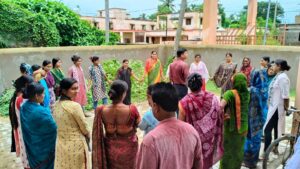
Around 50 young people from five tribal villages came together to build a future vision for their villages around local resources, natural farming, and migration challenges. The workshop enabled them to shape enterprise ideas rooted in nature and local ways of living. The initiative and its emerging enterprises are supported by Rang De, an organization that provides affordable credit to underserved rural entrepreneurs.
Listening to Our Places and People
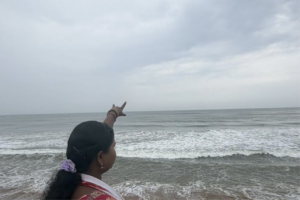
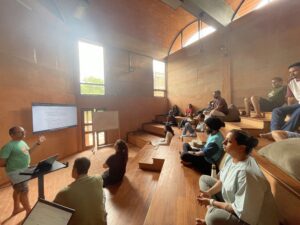
Pankaj Mishra, founder of Factor Daily and mentor for the Jagah Fellowship, recently facilitated a listening and sharing session with the Rainmatter Foundation team and a few partner organisations. He told stories of the first few places (jagah) where he visited the fellows from across the country spanning 10,000 kms.
One story stayed with many in the room: a fellow had submitted her Jagah application from a coastal village that no longer exists because it got engulfed by the sea. As Pankaj reflected, “To the people of this place, it’s not ‘climate change’; it’s pure loss – of livelihood, of home, of everything they’ve ever known.”
The Jagah Fellowship supports storytellers in their own landscapes to document climate in the languages and experiences of the communities they belong to – it is an invitation for places to speak for themselves.
Partner Updates
Climate Trends – Enhancing Public Knowledge of Climate Impacts
Climate knowledge is most useful when people can understand and relate to it.
The changing patterns in monsoon and heat are more than seasonal events. Climate Trends continued to center the focus on climate change impacts on people and urban planning. Through research briefings, media engagement, and discussions with creators, they connected everyday experiences to these larger systems. Their analysis linking record electricity demand to rising cooling needs also informed discussions within the Ministry of New and Renewable Energy, helping bring climate science into future energy planning.
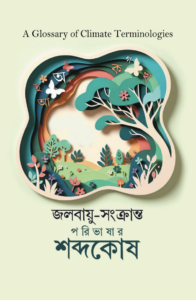
They launched the Climate Glossary in Bengali, following earlier editions in Tamil and Marathi, to help journalists report on climate in regional languages.
They engaged creators and young storytellers through labs and collectives equipping them with knowledge and tools. They were encouraged to look beyond the event itself and tell the bigger story behind it with greater clarity, confidence, and scientific accuracy.
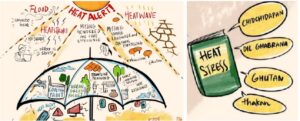
Asar – Shaping Narratives on Rising Heat
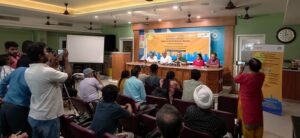
Asar hosted the seventh workshop in its National Heatwave Workshop series in Kolkata, bringing together journalists, researchers, health experts, and civil society to strengthen reporting on extreme heat.
The workshop shed light on several important insights such as –
the growing health risks of combined heat and humidity
the disproportionate impact of extreme heat on women and their livelihoods
the need to translate climate data into stories rooted in lived experience
the importance of making climate science more accessible for journalists
Asar has also been exploring storytelling, music, comedy, and satire as a way to bring climate conversations into everyday life. Through plays like Fever Dream and The Great Indian Ukada, they use art and culture to make the impacts of rising heat easier to understand for mainstream audiences.
SHIFT Transport – Moving Cities Towards Public Transport
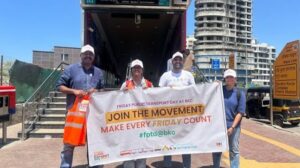
If you’ve ever visited Bandra Kurla Complex (BKC) in Mumbai, even if just for a meeting, you would know its traffic congestion woes. SHIFT Transport worked with MMRDA, to launch a ‘Friday Public Transport Day’ initiative. The initiative urges people to go car-free every Friday and choose the extensive public transport network from metros and locals to buses. As an added bonus, the campaign ended up sparking conversations about last-mile connectivity. Commuters found it difficult to walk or find an auto to and from their bus stops or train stations. MMRDA introduced feeder buses to manage the interim situation so that the Public Transport Day continues.
Climate Narrative Hub collaborated to amplify the initiative. They worked with Mumbai-based creators to tell stories about public transport in their own voice.
WRI India also presented the SHIFT Transport Framework at the London Climate Action Week. They showcased how open data, cross-sector collaboration, and AI can support effective transport planning for cities to respond to people’s everyday commute.
Common Ground – 100 Stories of Commons
A promise between two villages in Lahaul to protect old trees. A 3,000-year-old farming tradition from Goa. River Guardians from Kashmir.
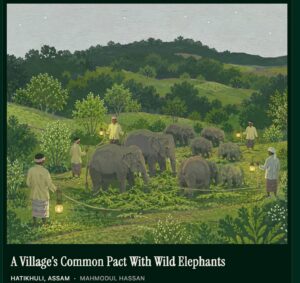
These are some of the stories featured in 100 Stories of Commons – a public archive documenting how communities across India care for shared places like forests, wetlands, grazing lands, and village commons.
Created by Common Ground in collaboration with Land Conflict Watch, the archive highlights how people use local knowledge and work together to protect nature and support their livelihoods. It also brings attention to stories and ideas that are often missing from mainstream conversations about development. Read the stories here.
CoRE Stack – Commons Connect
Where should a check dam be built? Which areas should be planted with trees? These decisions are often based on limited information.
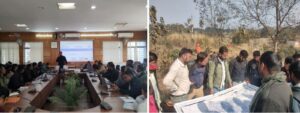
In Pali village, Jharkhand, villagers, the panchayat, district officials, and PRADAN walked the landscape together, using Commons Connect by CoRE Stack to combine local knowledge with satellite data and digital maps on a mobile screen. Together, they identified the best locations for water conservation and plantation, helping plan natural resource management with greater confidence. The approach proved so useful that it expanded from one village to 237 villages in Ramgarh district. What once took 10-15 days can now be completed in just 3-4 days.
Today, Commons Connect is being used across 45 districts in 9 states, making planning faster, more collaborative, and rooted in both community knowledge and data.
CoRE Stack also offers tools like Know Your Landscape, which helps communities explore their landscapes through geospatial data. Its APIs make this data available to other applications, allowing more people to build on these resources.
Data and Design Jams – Turning Data into Public Conversations
VisualSHIFT, a collaboration between Oorvani Foundation, OpenCity, and WRI India, explored new ways of communicating urban mobility data. The design jam brought together designers, planners, students, and technologists. They converted transport datasets into interactive maps, dashboards, and visual stories, integrating complex information into everyday decision-making. OpenCity also hosted an Air Quality data jam at Rainmatter Foundation’s office. Participants analysed air quality data from Jayanagar alongside traffic and seasonal trends, and explored its links to public health. Working with real-world datasets and collaborative analysis, the session showed how local data can help communities better understand the environmental challenges in their own neighbourhoods.
Janaagraha – A Historic Opportunity for India’s Cities
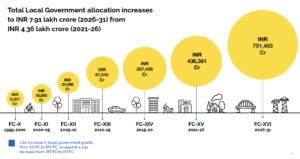
India’s cities could receive a record ₹3.56 lakh crore through the XVI Finance Commission – the largest-ever funding recommendation for Urban Local Bodies.
Janaagraha’s latest analysis highlights how this gives cities more freedom to address local needs and prepare for rapid urban growth. It also points out that funding alone is not enough. Strong local leadership, better planning, public participation, and transparent systems will be key to turning this opportunity into better services and more liveable cities that offer everyday quality of life.
Read Janaagraha’s analysis of the XVI Finance Commission recommendations here.
Praja Foundation – Strengthening the People and Systems Behind Cities
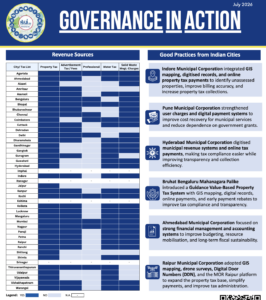
Praja Foundation has released the Fiscal Empowerment of City Governments 2026 publication that analyses how 43 city governments raise and manage their revenue.
At a time when most cities continue to depend heavily on state and central government financial transfers, the publication maps successful reforms that have helped municipal corporations strengthen their financial independence. Other local governments can adapt these practical lessons – from improving property tax systems to digitising revenue collection – and apply them to their own contexts. Read the Fiscal Empowerment publication here.
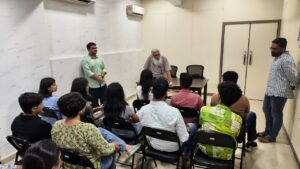
Alongside research, Praja Foundation engaged young people through Prajanubhav sessions and mentorship programmes, introducing students to urban governance through experiential learning, conversations with practitioners, and opportunities to participate more actively in shaping their cities.
WRI India – Strengthening Urban Governance for Climate Action
As extreme heat becomes an increasingly pressing urban challenge, the Government of India launched the “Building Heat Resilient Cities: A Strategic Pilot for Urban India” programmeunder AMRUT 2.0 scheme. It is a pilot programme for scientific assessment of urban heat mitigation in 12 cities, Bengaluru being one of them.
11 organisations came together to form the Bengaluru Heat Collective – WRI India, along with CSTEP, Socratus Foundation, Hasiru Dala, ARTPARK, Bengaluru Sustainability Forum, C40 Cities, HeatWatch, Jan Sahas, KHPT, and NIMHANS to build a coordinated response to rising heat.
Additionally, WRI India worked with the Mumbai municipality to release its third Climate Budget for Financial Year 2026–27. This year’s budget introduces ward-level climate budgeting for the first time, piloting the approach across four wards. Bringing climate planning closer to local decision-making has enabled departments to align investments with neighbourhood climate priorities, building accountability and ownership of climate action across the city.
Biome Environmental Trust – Expanding the Devanahalli Living Lab Pilot
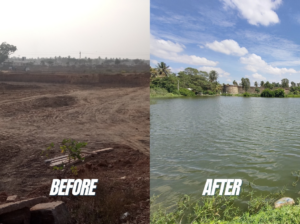
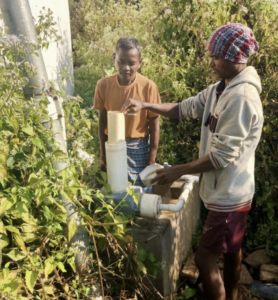
Cities often struggle to manage water as one connected system. Biome’s Devanahalli Living Lab demonstrates an integrated approach by bringing together rainwater harvesting, groundwater recharge, wastewater reuse, and local water governance in one place.
The pilot has now been approved to scale into a larger government-led water security project under AMRUT 2.0 scheme.Through a partnership with Indian Institute for Human Settlements (IIHS), Biome aims to replicate the model in Chikkaballapura. This is a testimony of how locally tested approaches can inform larger public investments.
Biome is also working with Bengaluru’s new City Corporations (North, South, and West) to strengthen water management in local action plans. Several of these ideas were taken up by the corporations, helping bring integrating water management into city planning. Biome is now identifying projects to take these ideas forward.
Resident Welfare Associations (RWAs) in Bengaluru South interested in reviving open wells can reach out to Biome to explore collaboration at [email protected] or by call on
+91 80 4167 2790 / 2364 4690
Sense of The House – Exploring SoTH approach Through Practice
Paani Foundation used a series of field anecdotes to reflect on how the Sense of the House (SoTH) approach takes shape on the ground. Drawing on experiences from Karmala, Maharashtra, the stories show how challenges such as water scarcity, declining soil health, rising input costs, and livelihoods are deeply interconnected. They explained how addressing one issue in isolation can create bad trade-offs elsewhere.
The anecdotes also highlight the value of collective action. By experimenting together on small portions of their land, farmers shared risks, learnt from one another, and looked beyond farm incomes towards healthier communities and landscapes.
Gram Vikas – Expanding the Water Secure Gram Panchayat Network
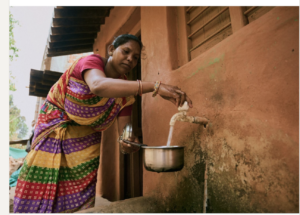
Gram Vikas has launched the network for the Water Secure Gram Panchayat (WSGP), bringing together seven grassroots organisations to expand the approach across Odisha and Jharkhand. The network, which has reached 21 Gram Panchayats and 405 habitations, has created a shared platform for community-led water governance, peer learning, and the exchange of local knowledge.
The initiative marks an important step towards scaling locally rooted approaches to water security across the region.
Socratus Foundation and Nature’s Club – Building a Place With Many Hands
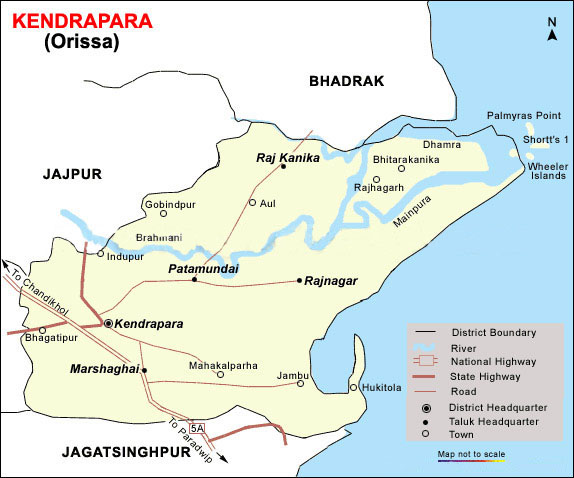
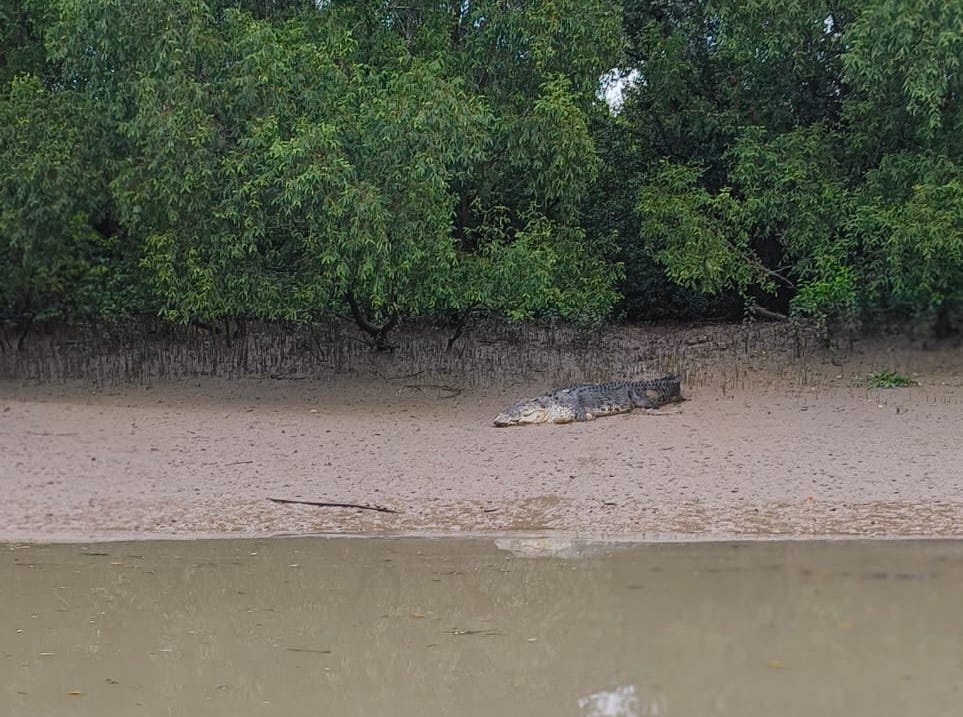
Socratus Foundation collaborated with a community-based NGO, Nature’s Club, and are together highlighting what it takes to build long-term, place-based change in Odisha’s Mahakalapada landscape. Through the Odisha Landscape Diary, they are documenting stories from one of India’s most ecologically significant coastal regions called Bhitarkanika. The stories bring out how ecology, livelihoods, industry, and community are deeply interconnected.
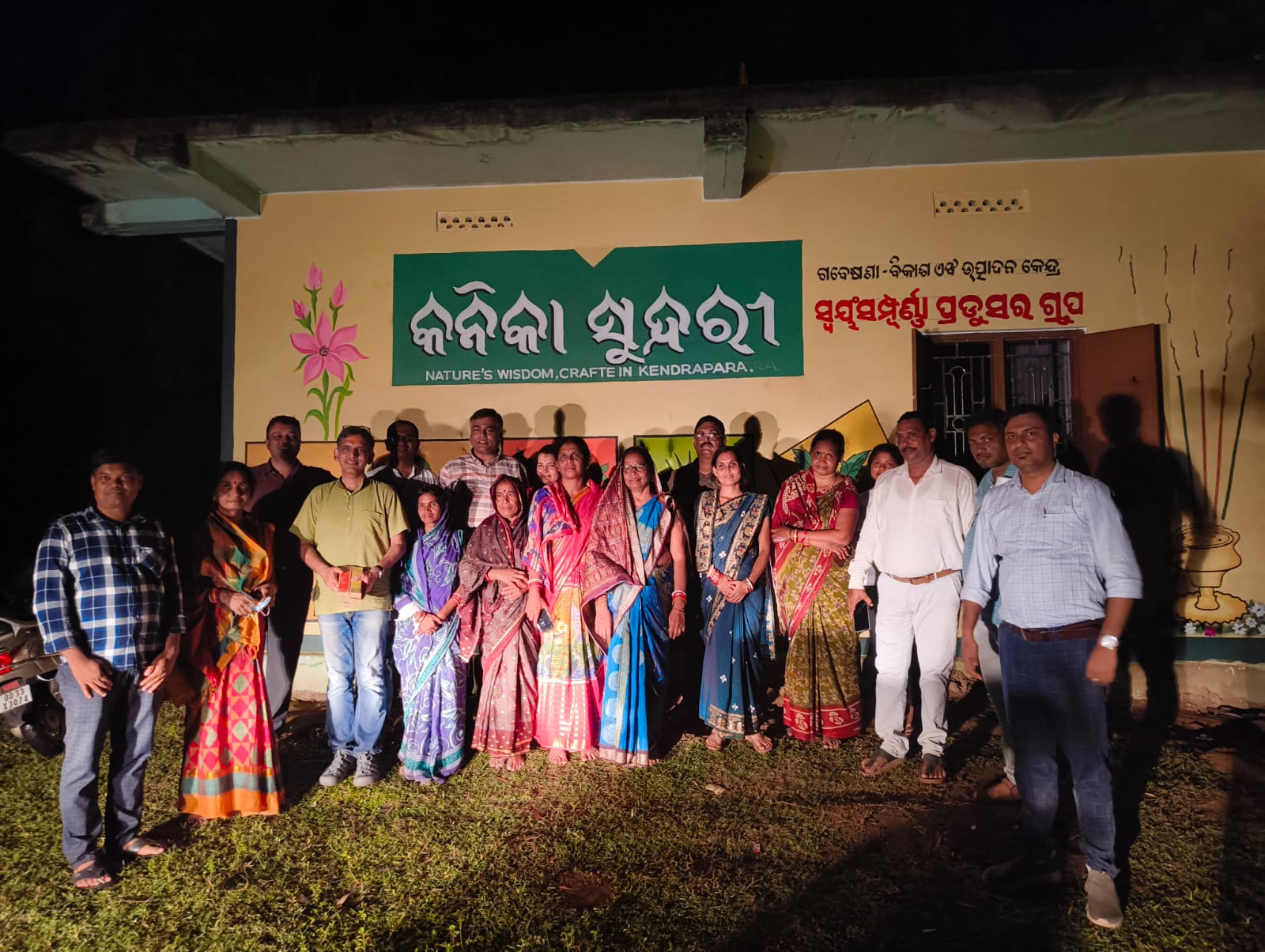
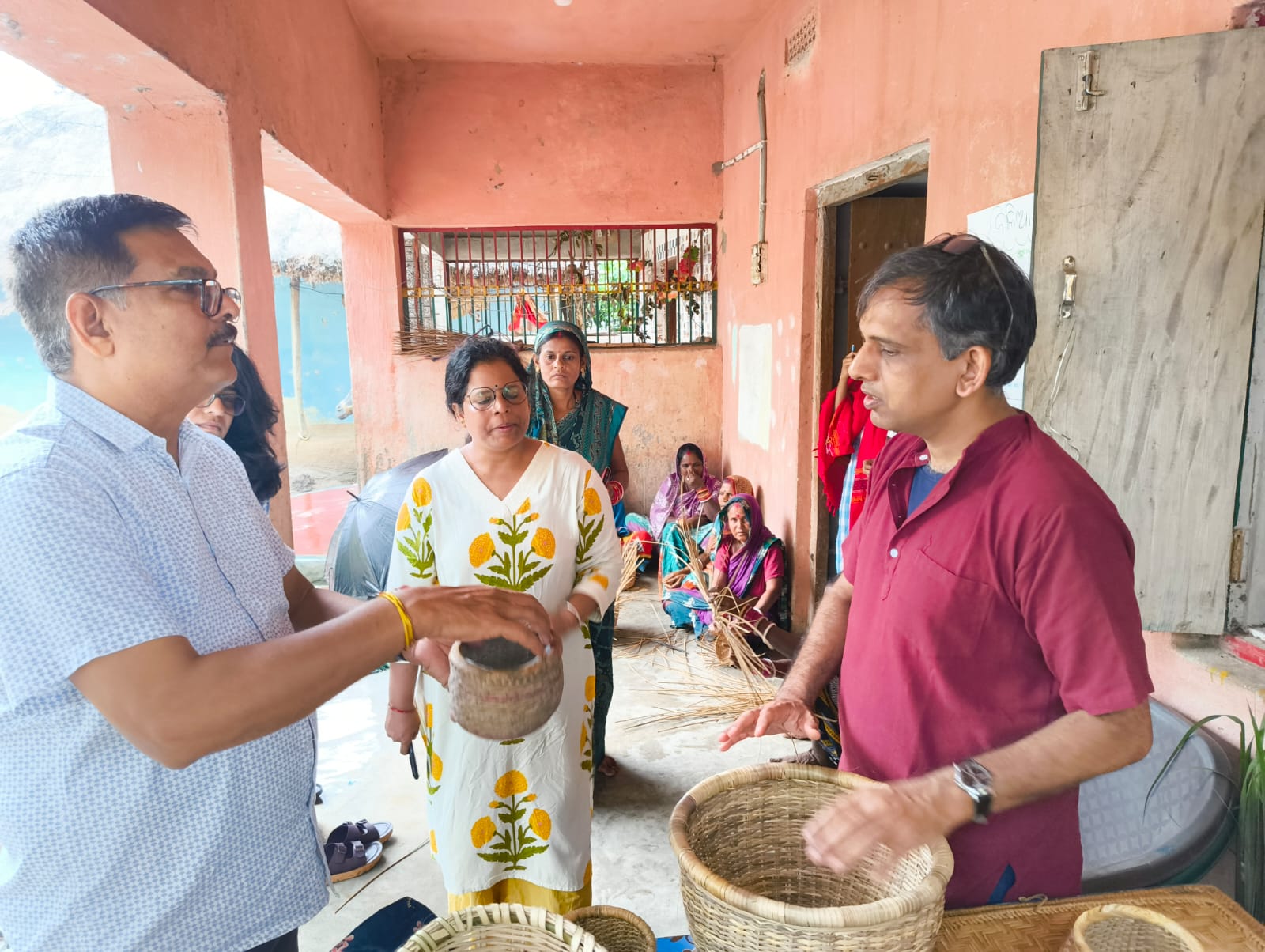
At the same time, 35 Climate Champions from Kendrapara participated in a six-day Entrepreneurship Development Programme under the Government of Odisha’s ECRICC project, implemented by Nature’s Club. The programme shows how different institutions can contribute at different stages of a Climate Champion’s journey, from community mobilisation and capacity building to entrepreneurship.
These efforts highlight the change that occurs when multiple actors work towards a shared vision for a place.
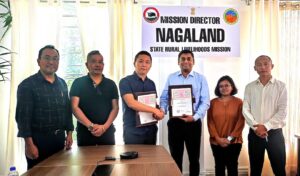
Industree Foundation – Building regenerative bamboo livelihoods in Nagaland
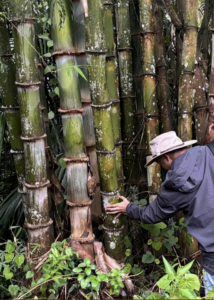
Industree Foundation is working with the Nagaland state to diversify and improve people’s income sources through bamboo. It grows quickly, restores degraded land, and provides a renewable source of income, making it a powerful resource for both people and nature.
The initiative aims to connect 30,000 smallholder women farmers to the bamboo value chain and support women-led collective enterprises. By improving everything from cultivation to market access, the partnership is building a stronger bamboo economy that benefits both local communities and the environment.
Common Ground – Bamboo Villages India
Bamboo Villages India, a Common Ground initiative, is showing how degraded natural landscapes can become thriving ecosystems that also support local economies.
A Bamboo Village is a 2,000-hectare landscape where around 500 households work together to restore biodiversity, soil and water systems, and build bamboo-based livelihoods.
The efforts are shared. Women lead nursery and production activities, while community-owned enterprises help ensure that most of the value created remains within the community. Already implemented across 25 villages in 6 countries, the initiative is gaining momentum in India and is creating the demand needed to grow at scale. As more villages adopt it, states are supporting its expansion by creating the conditions for commons, communities and markets to grow together.
Sahjeevan – Learning from the Place
Understanding the subtle interconnections in a landscape is the first step towards caring for it. Through the Salim Node Certificate Course, Sahjeevan is equipping pastoralist youth in Banni with a blend of local knowledge, science, and policy to strengthen community-led grassland conservation. An exposure visit to Chotila and Gir enabled participants to learn from other pastoral communities about grazing systems, native breeds, and grassland management.
By reconnecting young people with both their own places and those of other pastoral communities, the programme is nurturing future custodians of Banni grasslands of Gujarat.
Thicket Tales – Building capacity for place-based climate education
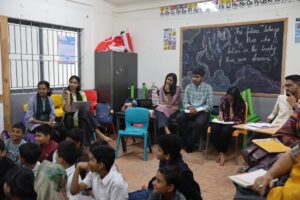
The Educator Incubation Program is a year-long initiative by Thicket Tales. It equips a growing community of educators who intend to bring climate learning into classrooms.
In May, Cohort 1 brought together teachers and after-school educators from 10 schools across Bengaluru, helping them design and test learning rooted in their local environment.
In July, Cohort 2 welcomed Masters in Education students from Azim Premji University, introducing future educators and curriculum designers to place-based learning and its potential to shape classrooms and curricula.
The program introduced participants to the principles and practices of place-based education through:
Immersive learning in the local landscape.
Designing lesson plans and curriculum projects across different subjects.
And a session on their flagship program, ‘Learn Around Nature’ to understand how hyperlocal learning is adapted in a real classroom.
The Climate Brief – Understanding the Systems Behind Our Cities
In July, The Climate Brief explored how everyday urban challenges are deeply connected to climate resilience. From Pune’s growing water crisis to the state of India’s footpaths, the series examined how decisions around water, mobility, waste, and urban planning shape the health and liveability of our cities.
Through stories of Panjim’s waste management system and the importance of clean rivers and walkable streets, the episodes unpacked complex urban and climate issues in accessible ways, encouraging viewers to look beyond symptoms and understand the systems behind them.
Explore the latest episodes @TheClimateBrief on YouTube and see how everyday urban issues connect to larger climate systems.
Welcoming New Partners to the Rainmatter Ecosystem
Swarathma: An Indian folk rock band uses the power of storytelling and live performance to inspire conversations and collective action around social and environmental issues.
Oorvani: A civic media organisation that strengthens citizen participation by making urban governance and public data more accessible through storytelling, community engagement, and technology.
Fellowships
Reap Benefit
Graduate Fellowships: Two early-career fellowships (Tech for Social Good and Data Innovation & Insights) for recent graduates and final-year students who want to build technology and data solutions that help young people and communities solve real-world civic and environmental challenges.
More details here:LinkedIn How to apply: Apply through the application form here.
Aav re varsaad – June roundup from Rainmatter Foundation
Aav re varsaad (આવ રે વરસાદ) is a Gujarati folk poem sung to welcome the rains. Yet this year, the monsoon has reminded us that no two places experience climate change in the same way. While some regions have seen intense rainfall, others continue to wait as El Niño reshapes weather patterns across the country.
As climate impacts become more uneven, the responses they demand become more local. Across our ecosystem this month, communities, practitioners, and governments responded in different ways – from translating research into regional languages and helping communities interpret local data, to reimagining public spaces as classrooms and strengthening local governance.
The work may look different from place to place, but it shares a common thread: responding to local realities while helping people better understand, adapt to, and shape the places they call home.
This month’s digest brings together updates from the Rainmatter Foundation team, our partner ecosystem, and the fellowships we support.
From the Rainmatter team
Standing in the middle of 70 acres being restored at Elephants by the Lake (EBTL) took us back to the origins of Rainmatter Foundation almost 6 years ago.
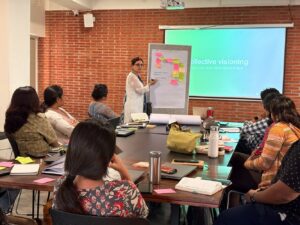
Through this visit, we navigated the gears of transition, reflected on our role as an ecosystem weaver, and discussed the role of design for our focus areas. A visioning exercise in the form of improv for our aspirations for 2036 (that had us in splits) also brought out our thoughts on balance between ecology, community, and self. We were deeply moved by the screening of My Otter Diary by wildlife filmmakers Sugandhi & Rana.
The 2-day visit also introduced us to the different gears in motion at EBTL. The rewilding efforts are being co-executed with the local communities and have resulted in a farmer’s collective, dedicated organic farming areas, and a space for research through the Center for Eastern Ghats Studies.
Forest Stewardship in BR Hills
The team visited ATREE’s Community Conservation Centre across BR Hills and MM Hills landscapes in Karnataka. In BR Hills, the Soliga community became the first in the country to secure Community Forest Rights over an entire tiger reserve, spanning 540 sq km. BRT stands as a living example of coexistence between indigenous communities and wildlife.
For decades, ATREE has supported this journey by combining research with community needs. Their newly launched GramaMitra chatbot in BR Hills brings together traditional knowledge and scientific research to strengthen livelihoods, conservation, and agro-ecosystems. We also visited craft centres in MM Hills where communities transform the invasive Lantana camara into furniture and murals to restore degraded landscapes.
“What stood out was how years of research had been translated into practical tools that communities can use to better govern their forests and strengthen livelihoods,” reflected Nayantara Lakshman (Partner Manager, Conservation & Restoration).
ATREE is currently seeking collaborators for market linkages, programme design, and field internships.
The Next Generation of Climate Designers & Buildings
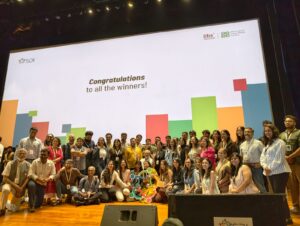
As climate change becomes more visible, concern among young people is growing. Platforms like Solar Decathlon India (SDI) play an important role in turning that concern into action where students gain practical experience, the industry gains fresh perspectives, and both work towards designing better buildings. At the SDI finals, students presented projects rooted in local climates, passive cooling, and natural materials, while startups showcased practical innovations for the construction sector.
What does it actually mean to design and build with the place you are building in? With it. This was the key focus at a conversation hosted by SHIFT (a global architecture movement) and Masons Ink. The architects and practitioners reflected on the importance of traditional knowledge and place-based design. They also launched an initiative to crowdsource documentation of regional building practices, organised by place.
Reflecting on both events, Akshatha Narayan (Thesis Lead – Buildings) shared, “This matters now because the construction boom happening across the Global South is not slowing down. It’s encouraging to see architects and builders prioritise site, climate, and material context over ratings and benchmarks. What gave me hope was seeing the same shift emerge at both ends – students learning to design with context from the start, and practitioners recognising the value of knowledge rooted in place.”
Collective Changemaking for Places
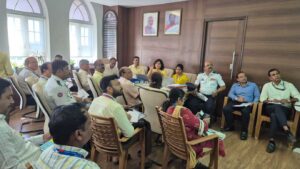
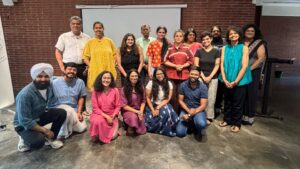
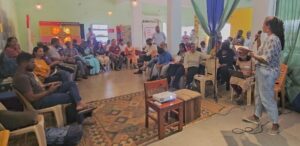
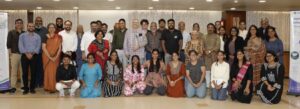
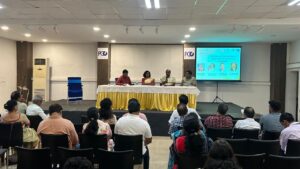
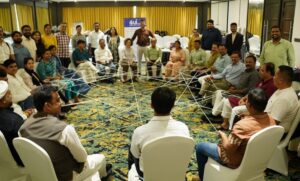
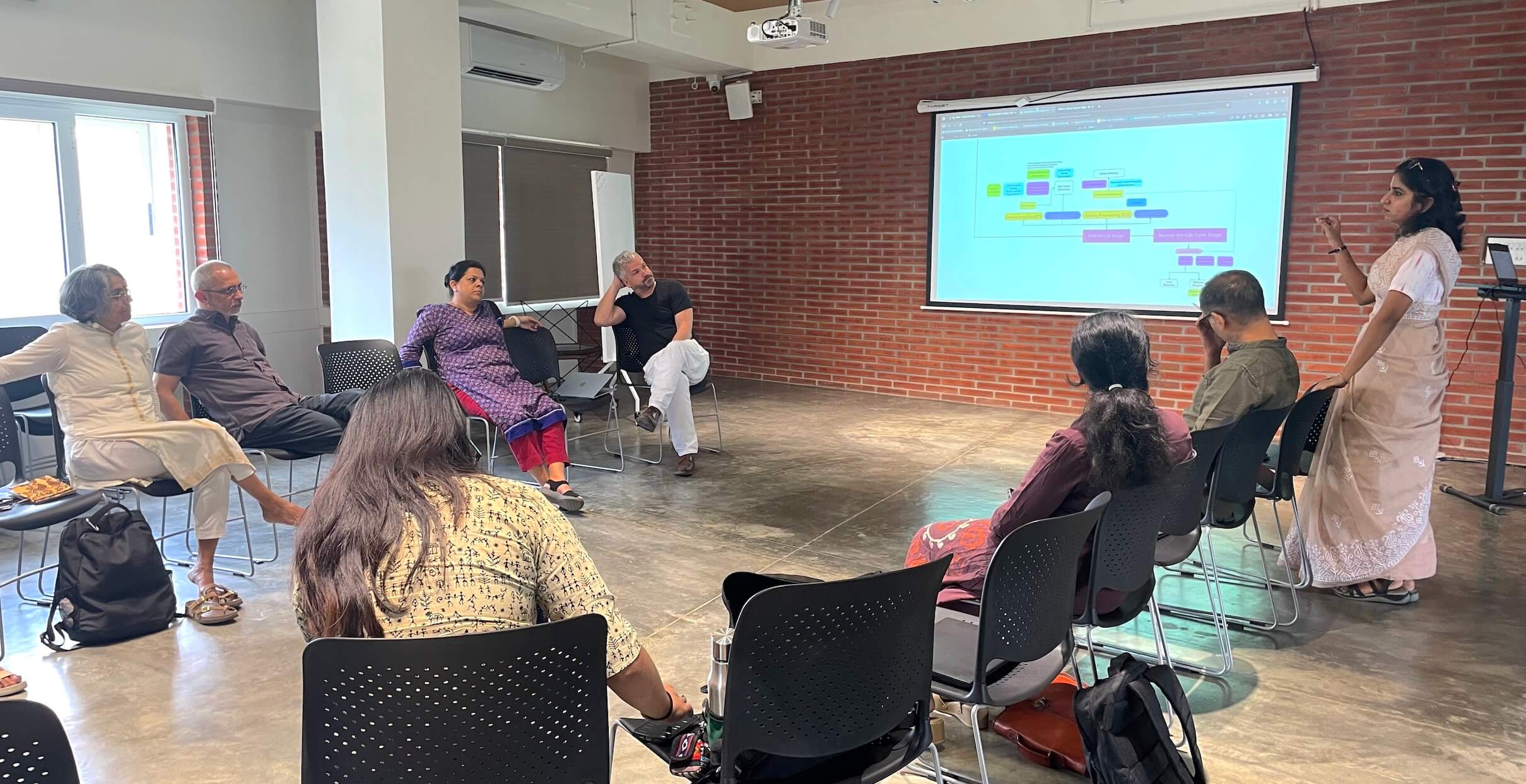
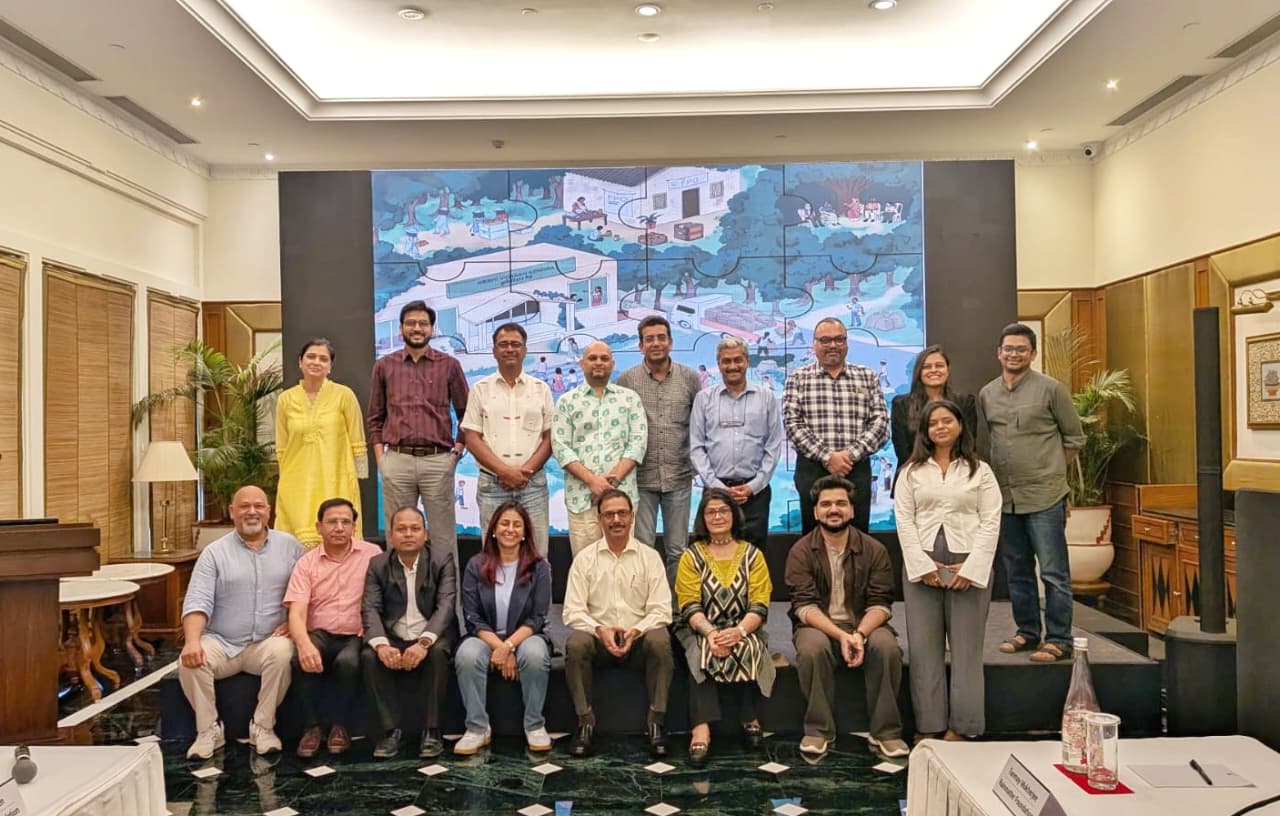
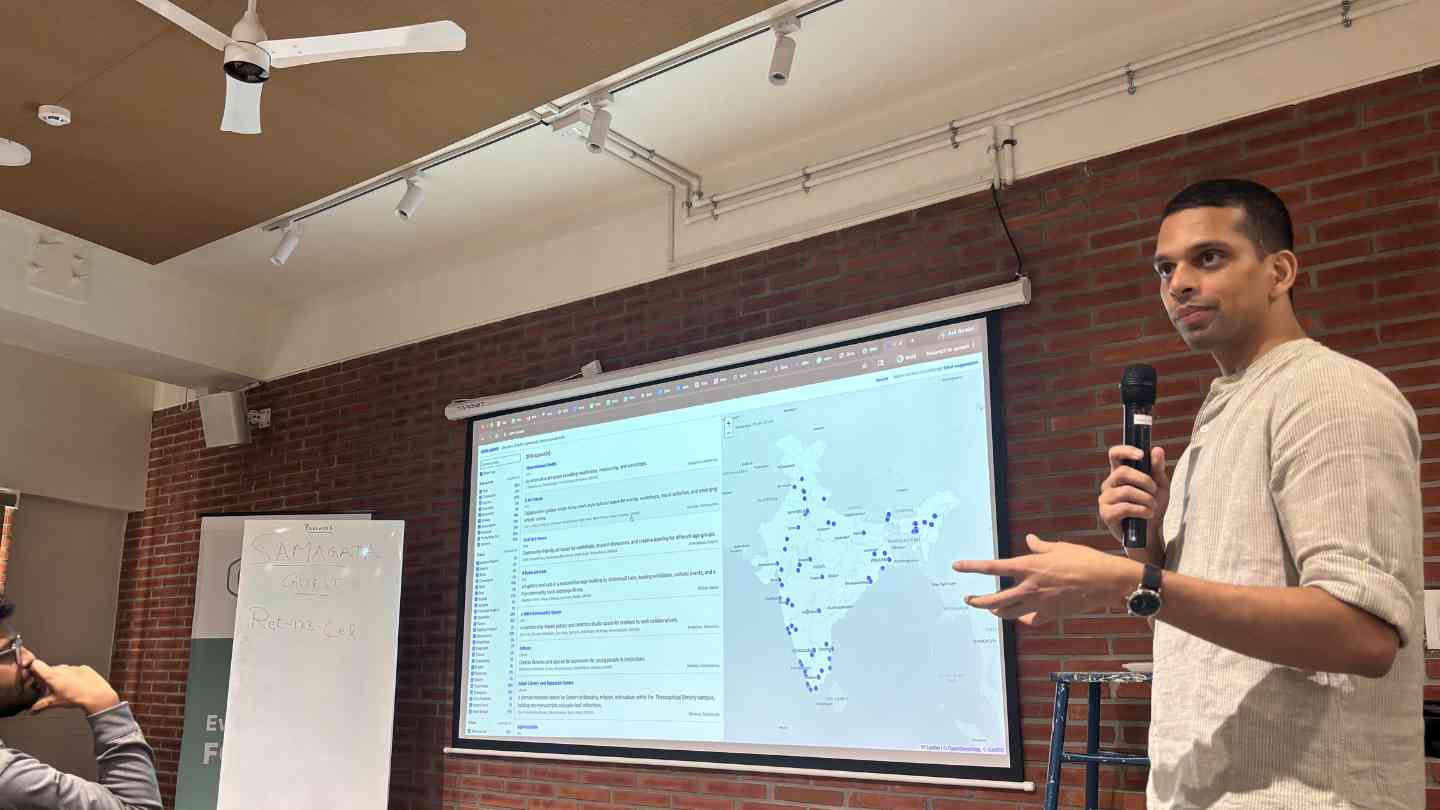
11 organisations working across conservation, community development, and systems change came together at the Samagata Space in Bengaluru to explore what it would take to enable collective changemaking for places.
Ripudaman Bevli (Thesis Lead – Changemaking) reflected that the discussion centred on a shift from supporting individual changemakers to enabling changemaking that is for, by, and of the place. They spoke about the common challenges: from getting communities involved to finding funding and the right partners. They also explored how working together could help everyone do more than they can alone.
The group will continue the conversation, inviting more organisations to strengthen this emerging ecosystem.
Reach out to Ripudaman if you’re exploring place-based changemaking.
Climate Communication in the Age of AI
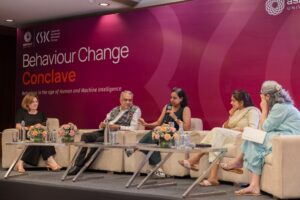
The Annual Behaviour Change Conclave, hosted by the CSBC at Ashoka University, brought together researchers, practitioners, and technologists to explore behaviour in the age of human and machine intelligence.
Kailash Nadh (CTO, Zerodha & Co-founder Rainmatter Foundation) and Sailee Rane (Thesis Lead, Ecosystem Messaging) joined the panel discussions exploring conversations across agency, accountability, and resilience in the age of AI.
Sailee reflected on how AI is reshaping the way people discover and consume information – While it makes climate knowledge more accessible and reveals hidden connections across complex systems, AI’s impact ultimately depends on the quality of the underlying data and research. It is creating both new opportunities and new challenges for climate communication.
Partner Updates
Neighbourhoods of the Future (NoTF)
NoTF aims to build neighbourhoods that are resilient to climate shocks and offer a better quality of life. It brings together citizens, governments and organisations at a very local level to transform the place. From South Bangalore with Socratus to Ahmedabad with Saath, the response to the first few meet-ups has been energising.
In South Bengaluru on 9th May, local community groups and Resident Welfare Associations (RWAs) working on neighbourhood action came together with experts in mobility, water, waste management, urban planning, and green spaces to exchange local challenges and explore pathways forward.
The conversations connected local context with practical expertise, giving way to new conversations for neighbourhood-led action.
In Ahmedabad on 21st June, Saath anchored the second convening of the Urban Resilience Collaborative for the Informal Sector (URC-IS). The discussions brought out lived experiences of community leaders and practitioners around climate adaptation, heat and flood resilience, youth engagement, finance, and scaling local innovations.
If you wish to bring the efforts of community champions and experts together in one room and be a part of Neighbourhoods of the Future, please reach out to us at [email protected].
Janagraha – Urban Reforms Collective
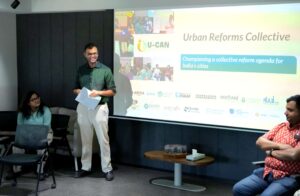
As cities evolve, strong urban local governments are essential for delivering services, managing infrastructure, and shaping more liveable neighbourhoods. To strengthen these institutions, Janaagraha has launched the Urban Reforms Collective (URC).
The URC brings together governments, political leadership, civil society partners, and organisations from across the country working in sectors such as urban development, governance and citizen engagement.
Together, they aim to build momentum for long-pending urban governance reforms and improving the quality of life for every citizen.
Praja – Policy to Implementation for Cleaner Cities
Praja Foundation organised workshops to help government officials and elected representatives build cleaner, healthier, and more climate-ready cities. One workshop introduced the new Solid Waste Management Rules, 2026, to councillors from Meerut, Varanasi, and Gorakhpur. Another brought together 105 officials and elected representatives from Dibrugarh to discuss waste segregation, better waste management, and practical solutions for their cities. Participants shared local challenges, exchanged ideas, and committed to encouraging waste segregation at source and greater public awareness in their communities.
These workshops were held soon after the Supreme Court’s new Solid Waste Management Rules, 2026 were notified. Helping local leaders understand the changes early and put them into practice. The new rules place a stronger focus on accountability and make waste segregation at source the starting point for better waste management.
B.PAC – Scaling Reuse Through Cutlery Banks
As events increasingly rely on single-use plastic, cutlery banks are offering a practical alternative by providing reusable plates, cups, glasses, and cutlery on a rental basis.
To explore how this model can be scaled across Bengaluru, B.PAC (Bangalore Political Action Committee), in collaboration with the Center for Sustainability, Ramaiah Institute of Management, brought together Cutlery Bank founders, students, researchers, and sustainability practitioners.
Through SWOT analyses and Business Model Canvas workshops, participants identified strategies and opportunities to strengthen the city’s cutlery bank ecosystem.
The insights will inform a research report with an actionable roadmap for increasing access to reusable cutlery services and making low-waste events easier to organise across Bengaluru.
Palluyir Trust – Noticing the Small Species That Sustain Cities
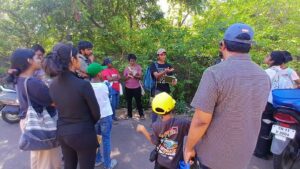
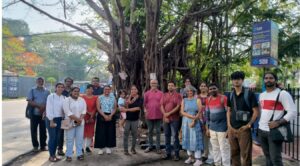
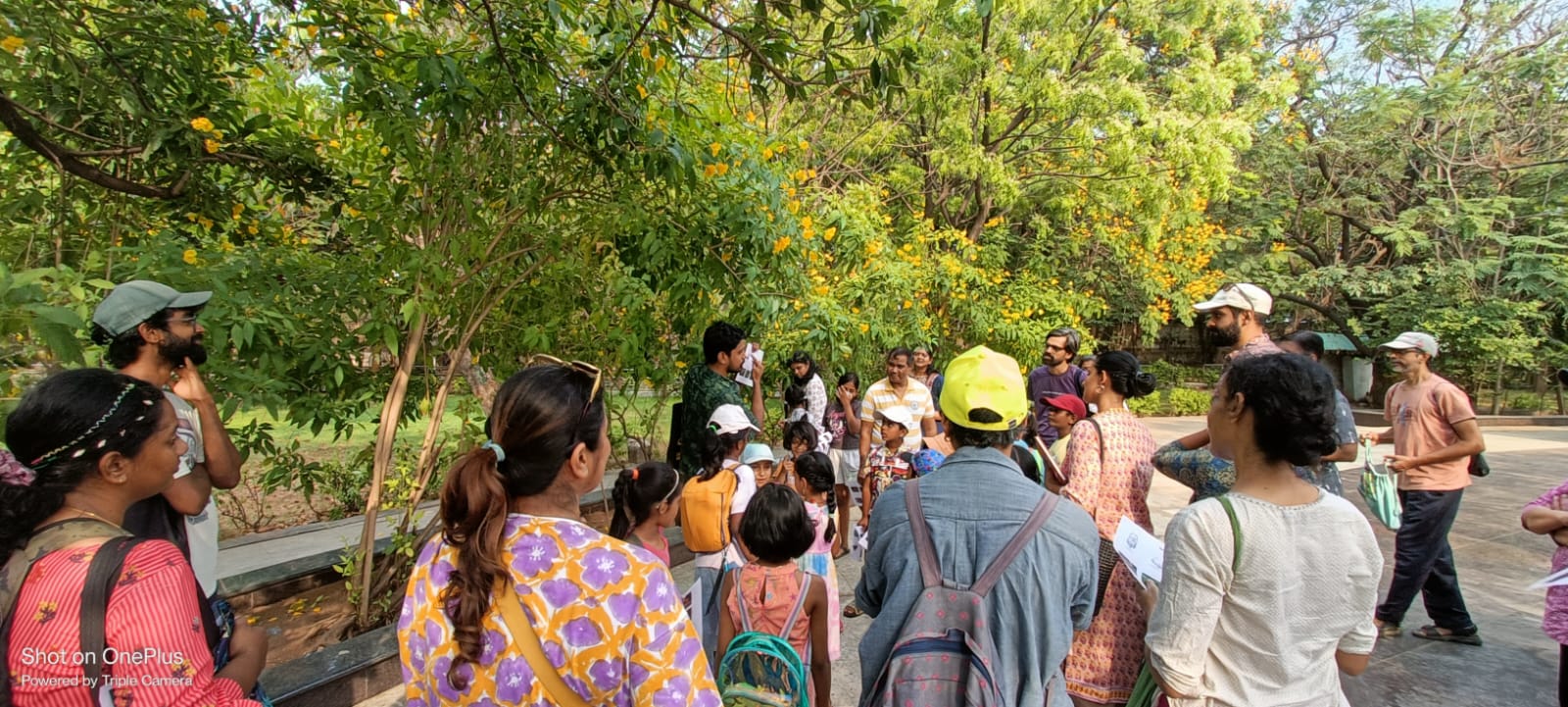
Many of the species that sustain urban ecosystems go unnoticed or are met with fear. Palluyir Trust’s recent pollinator walks and insect campaigns in the green spaces of Chennai invited people to slow down, look more closely, and rediscover the biodiversity around them.
Participants observed insects up close, explored the role they play in healthy ecosystems, and reflected on how widespread pesticide use is affecting local biodiversity. The conversations challenged common perceptions of insects while highlighting the connections between everyday choices and ecological health.
By creating opportunities for people to experience nature where they live, Palluyir Trust is deepening the connection between people, co-habitants, and the places they call home.
Jana Urban Space – Turning Urban Environments into Classrooms
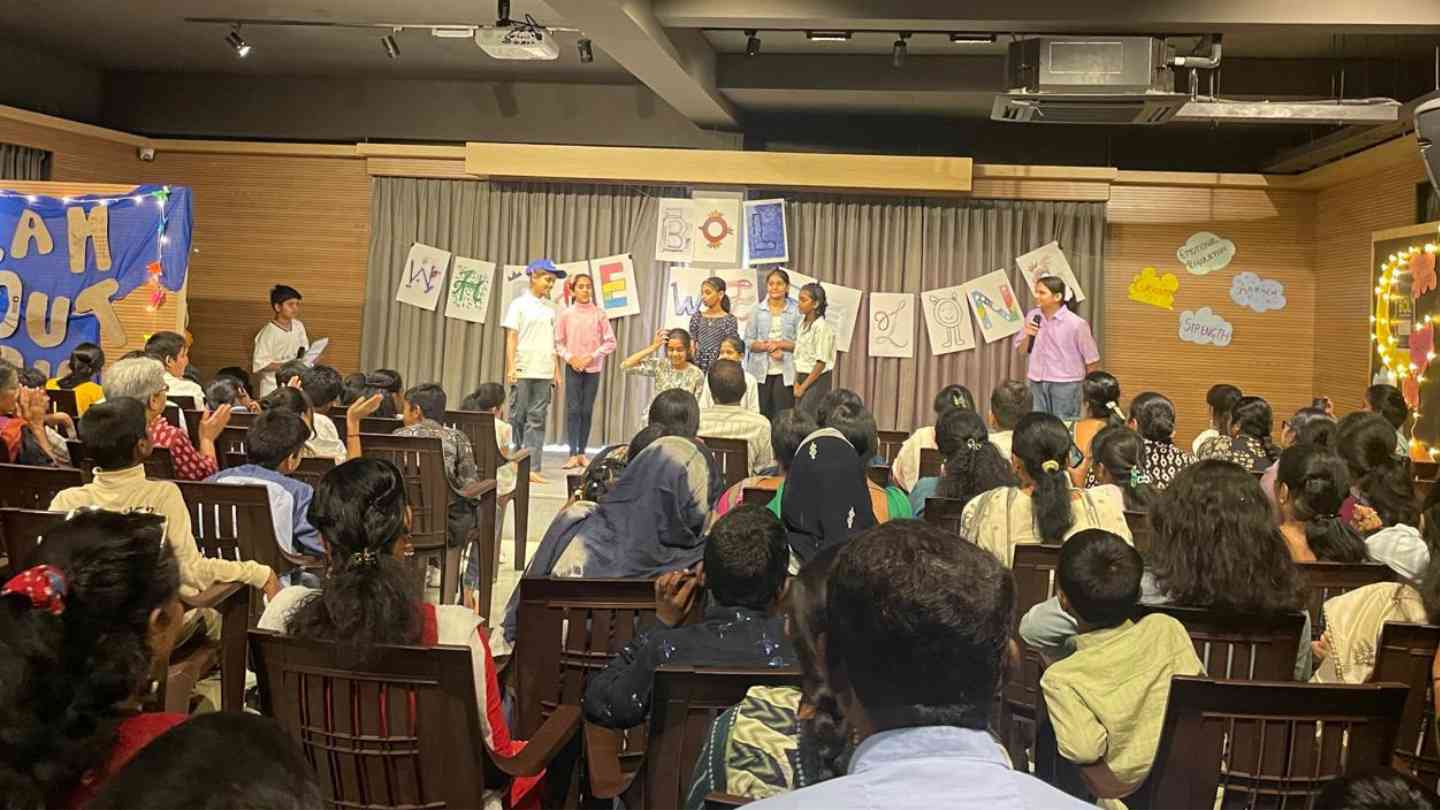
Following the ethos of Understand, Own, and Act, Jana Urban Space Foundation has been working to help young people build a stronger relationship with the places they live in. In collaboration with Mercedes-Benz Research and Development India (MBRDI), they engaged students in Bengaluru through place-based learning experiences.
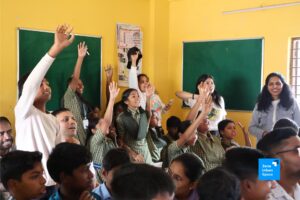
A visit to neighbourhood lakes and nallahs transformed familiar public spaces into living classrooms, where children observed urban ecosystems, discovered local biodiversity, and learned directly from their surroundings.
By taking learning outdoors, the initiative encouraged young people to better understand, connect with, and care for the systems that shape their city.
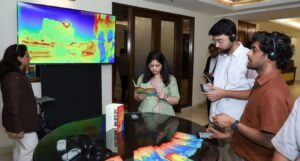
Socratus – Making Heat Visible Beyond Temperature
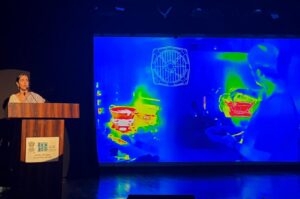
The Heat Experience Centre by Socratus Foundation for Collective Wisdom is emerging as a space that helps people understand heat not just as rising temperatures, but as an issue that shapes health, livelihoods, gender, and everyday life. Over the past month, the Sustainable Futures Collaborative and HeatWatch India explored indoor heat, unpaid care work, and women’s access to cooling. Restless Development and Swasti highlighted voices of young people across Karnataka and how extreme heat affects livelihoods.
Socratus also collaborated with Asar and the Odisha Environment Congress in Bhubaneswar to bring together journalists, researchers, public health experts, and practitioners to discuss how Heat Action Plans can become more community-driven, locally relevant, and rooted in lived experience.
Together, these conversations highlighted how rising heat affects far more than the weather, setting off ripple effects across health, livelihoods, care work, public systems, and who gets hit the hardest.
PRADAN – From Village Scorecards to Landscape Restoration
At a state-level programme organised by the Chhattisgarh Department of Forest & Climate Change, PRADAN’s approach to community-led restoration was recognised as a model for improving both stewardship and livelihoods.
Using the example of Silibahar village, the team showed how villagers use simple scorecards
to understand the health of their forests, farms, water, and livelihoods,
and plan improvements together with government departments.
This has helped Silibahar become an organic village, increase green cover, prevent forest fires, grow incomes through lac cultivation, and stop migration from the village over the past two years.
This is a powerful example of how community-led planning could build a working relationship between natural, social, and economic systems – a relationship that thrives by itself. And organisations such as PRADAN play an important role in supporting this.
CoRE Stack – Making Landscape Data Accessible
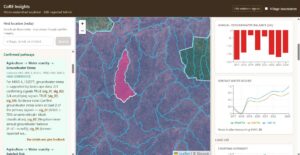
CoRE Stack is a digital public infrastructure and platform that brings information about local landscapes, integrated with community knowledge, directly to the people. This allows communities and other diverse stakeholders to co-create programs tailored to their ground reality.
CoRE Insights, the platform’s newest capability, converts complex landscape data into usable insights and analysis.
The vision is to embed this engine in community-facing tools, alongside Commons Connect. This would let place-based changemakers diagnose problems, discover solutions, connect with enabler organisations, and take collective action grounded in their own landscape data.
Know Your Landscape dashboard → CoRE Insights layer → Commons Connect tool More about CoRE Insights here: https://lnkd.in/grNPf_3g
Join the CoRE developer community and weekly open calls every Friday at 3 PM: https://lnkd.in/grZtJYw3
Climate Narrative Hub – From Community Voices to Public Narratives
How can the broader narrative of local economies (local production and consumption) be shown to wider audiences and also highlight the efforts of organisations who are enabling this?
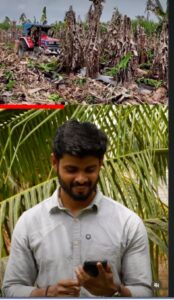
CNH has figured out a unique way of doing this – they identified the growing popularity of reels (short form videos) as an easy medium to amplify varied stories. As conversations around aatmanirbharta (self-reliance) gain momentum, they have been building a network of local content creators across Madhya Pradesh, Karnataka, Tamil Nadu, Rajasthan, and Uttar Pradesh.
Rooted in local languages and lived experience, these creators are documenting communities transforming banana stem waste into handcrafted products, producing naturally dyed textiles, and strengthening local economies through community-led enterprises.
Asar – ‘Simplifying Science’ on Air Pollution
Through Simplifying Science, Asar works with researchers and regional media to turn complex studies into easy-to-understand stories in multiple Indian languages.
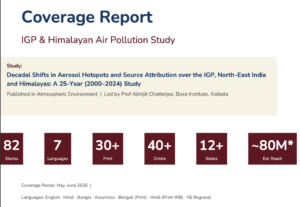
In June, they picked Prof. Abhijit Chatterjee’s 25-year satellite study on air pollution across the North and North-East India. They developed three research-based narratives tailored to different contexts: a national story, one focused on West Bengal and the Sundarbans, and another for the North-East.
Published in seven languages across national and regional media, Asar reached over ~75 million people in 12+ states, helping bring evidence-based climate conversations closer to the communities most affected.
By following how these stories are shared, discussed, and acted upon, Simplifying Science is helping climate research travel from academic papers to everyday conversations and policy decisions. Explore the coverage report here.
Smarter Dharma – Putting Better Building Choices Within Reach
As construction accelerates across Tier 2 and Tier 3 cities, making informed choices about environment-friendly building materials remains a key challenge for builders and homeowners.
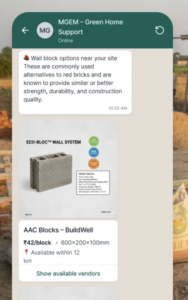
To address this gap, the International Finance Corporation (IFC), the Global Buildings Performance Network (GBPN), and Smarter Dharma have launched the Marketplace for Green Equipment and Materials (MGEM) . A multilingual, location-aware digital platform, MGEM gives easier access to reliable information on green building materials. By bringing verified information on product performance, certifications, costs, and local availability into one place, MGEM makes it easier for users to discover, compare, and choose better materials.
MGEM will be rolled out across select cities in 10 states, and a nationwide expansion expected by year-end. Smarter Dharma is currently inviting manufacturers and vendors of green building products to join the MGEM platform. Organisations interested in collaborating can reach out at [email protected] or call +91 6361 443 806.
The Climate Brief – Making climate impact visible in everyday life
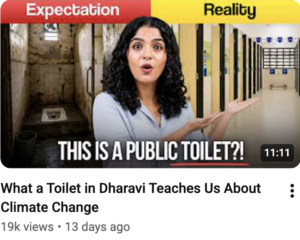
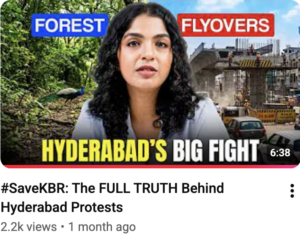
In June, The Climate Brief published four videos that uncovered the climate stories hidden in everyday life – from Dharavi’s public toilets and the science behind El Niño to the environmental cost of Indian weddings and Hyderabad’s movement to protect KBR Park.
Each episode connects familiar places, events, and decisions to larger climate systems, making complex topics easier to understand while encouraging viewers to see the links between climate, cities, public health, and everyday choices.
If you haven’t caught the latest episodes yet, head over to @TheClimateBrief on YouTube and join the conversation.
Fellowships
Sensing Local
Bengaluru Street Lab Fellowship 2026: A two-month, hands-on fellowship for students and young professionals to work on Bengaluru’s Street Atlas while gaining practical experience in walkability, climate action, AI-enabled street mapping, and data-driven urban planning alongside urban practitioners and government stakeholders. Apply by: 17 July 2026 Through the form: https://lnkd.in/dddcBA-M
YouCAN
The Rewilding Storytellers Fellowship: For young storytellers (18–40 years) passionate about ecology, climate, and people-nature relationships to tell untold stories rooted in their own communities. More details here: YouCAN Linkedin, Instagram How to apply: Write to [email protected] or WhatsApp 8310306073 to express your interest.
śubhāste panthānaḥ santu (May your roads be auspicious)
– Team Rainmatter Foundation
Teevra bisilu – May news digest from Rainmatter Foundation
Teevra bisilu (ತೀವ್ರ ಬಿಸಿಲು in Kannada; भीषण गर्मी in Hindi; intense heat): As May brings the peak of summer heat across India, the landscape braces for the arrival of the monsoon. Last month saw significant internal transition and external deepening, as we navigate the challenges of a super El Niño (that threatens to intensify further) while rooting our work in long-term community resilience.
Just like the changing seasons that demand adaptation, the ecosystem is constantly evolving to tackle the scale of the climate crisis and challenges ahead. We attempt to map out some of the movements and evolutions within our team and partners below.
Team updates
Different Roles for Different Phases of Ecosystem Building
Our internal structure is evolving to deepen our role as an ecosystem weaver and to enable more coordinated action towards shared goals.
Join us in welcoming Sathyanarayanan Sankaran as the new CEO of Rainmatter Foundation. Urban technologist, Co-Founder of Urban Morph, Bicycle Mayor of Bengaluru, author of Break the Block, host of the OoruLabs podcast – Sathya has worked at the intersections of technology, public policy and citizen action for nearly three decades.
From building data-driven platforms for mobility and urban governance to championing community-led change, his work has consistently focused on translating complex systems into practical action. Having led Rainmatter Foundation’s urban work over the last two years, he now steps into the role with a deep understanding of the ecosystems, partnerships, and long-term transitions required to build climate resilience in India.
Simultaneously, after 5.5 years of building the Foundation’s core guiding principles and strategies, Sameer Shisodia is moving into an Ecosystem Fellow role.
He will work with the wider ecosystem, our partners, and the internal team to reimagine the architecture for place-rooted systems change. His sole focus will be on helping build strategies that unlock ecosystem participation.
Onto more team updates.
Designing for Coexistence: Bird-Window Collisions
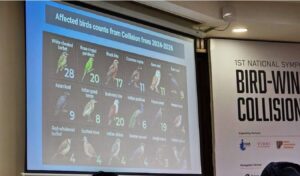
The 1st National Symposium on Bird-Window Collision in Delhi was co-organized by IISER Tirupati, Nature Conservation Foundation (NCF), Vidhi Centre for Legal Policy, and Feather Library. The symposium brought forward a first-of-its-kind dataset that made visible both the scale of wildlife loss and the systemic gaps in policy, standards, and data that perpetuate it.
Akshatha Narayan (Thesis Lead for Buildings) shared that the symposium was able to connect an invisible conservation crisis to multiple systems, including green building standards, developer and builder incentives, gaps in data infrastructure, and how ecology is valued. She emphasised that this is not a new area of focus but one that deepens the same systemic shifts that partners are working towards.
Experts also noted that a lack of local data and high costs for imported bird-safe films currently hinder adoption, calling for biodiversity to be integrated directly into architectural education and performance metrics. What we need is thoughtful facade, design, and landscape planning.
Weaving a Green Rural Economy
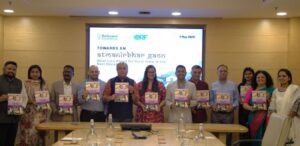
Reliance Foundation and Observer Research Foundation hosted a roundtable discussion on ‘Towards an Atmanirbhar Gaon: What Lies Ahead for Rural India in the Next Decade.’
A critical point of the discussion was: unless we eliminate the siloed approach towards livelihoods, the efforts end up in ‘program mode’ and often fail to achieve long-term goals. Tanmay Mukherji (Strategy Lead – Entrepreneurship and Platformisation), brought in a fitting example from the automotive world where 8000 parts from 400 suppliers come together just in time to make a vehicle. Similar to an automobile production line, an Atmanirbhar Gaon needs an ecosystem approach: integrating SHGs, FPOs, youth, institutes, innovators and markets, so places move beyond isolated programs into sustainable, community-led economic models.
The goal should be to move towards weaving together the strengths of various actors in the ecosystem to make a better whole.
If you would like to know more or want to contribute, do reach out to www.grameee.org where a consortium is coming together to build this.
Partner Updates
Climate Trends – Reframing Heat as an Economic Threat
At the 5th India Heat Summit, Climate Trends called for a policy and narrative shift in how we talk about extreme temperatures – moving from “adaptation” to recognizing it as a GDP-scale economic threat. Four research papers published through May grounded these discussions: on rising night temperatures as a silent killer, evening cooling demand as the energy system’s new breaking point, warming winters eroding wheat yields central to food security, and indoor heat as a function of built environment design. Together these surfaced narratives that remain outside mainstream Indian discourse: heat as a GDP-scale economic threat, the governance gap across India’s 300+ Heat Action Plans, the undercounting of heat-related deaths that keeps heat off budget lines and out of courtrooms, and the evidence that the most vulnerable are being failed indoors, not just outside.
Climate Narrative Hub (CNH) – Reframing Heat Messaging for Dignity
The Climate Narrative Hub (CNH) has designed the Cooling Futures Narrative & Messaging Guide for communicators, creators, researchers, practitioners, institutions, and ecosystem actors. The guide is intended as a practical resource for anyone working to make conversations around heat more relatable, grounded, and actionable. By changing the language around heat, the goal is to move beyond cooling solutions – and drive more equitable and proactive policy responses. Their analysis reveals that English-language coverage focuses heavily on data, alerts, and administration, while Marathi and Hindi media are more effective at surfacing ground-level reporting and public sentiment. To read the full report, please click here. https://climatenarrativehub.org
Socratus Foundation – Visualizing Urban Heat Shifts
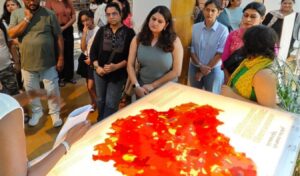
Socratus Foundation launched its 6th Experience Centre on Heat at the NGMA (National Gallery of Modern Art), running until June 30th. The exhibition uses historical maps from the 1970s to track how Bengaluru’s rapid urban growth and disappearing green cover have directly contributed to rising local temperatures. The curated walkthroughs at these centres help citizens and policymakers understand that rising heat is a result of decades of extractive land-use, weak governance and short-sighted urban growth. All of this is done while highlighting how contemporary choices by citizens are impacting heat in the city as well. Having an Experience Centre is almost like having a micro-museum in the neighbourhood, where one occasionally stops by to see what’s new. Socratus is hoping that beyond knowing one’s city and building a connection, the six Experience Centers also become spaces where people gather for learning experiences, activities, conversations, and discoveries across ages.
Ethos Foundation – Navigating Tidal Flooding in Kochi
Ethos Foundation, in collaboration with Equinoct, recently conducted “Arcause Spotlight 2.0” in Kochi, an immersive program designed to help neighbourhoods plan for the reality of tidal flooding. Participants utilized the SeaSight Resilience Model to visualize how rising tides impact specific neighbourhoods, and discussed the potential of Textile Reinforced Concrete (TRC) for flood-resilient construction. By bridging the gap between scientific modelling and practical architectural solutions, Ethos is empowering local communities to move beyond reactive measures toward science-backed, resilient designs.
Praja Foundation – Empowering Local Governance
Praja Foundation convened two consultations this May to examine the future of India’s cities.
At the national consultation, mayors and administrators from 15 cities discussed findings from Praja’s latest report, which showed that Indian cities still depend on state and central governments for nearly 60% of their revenues. The conversations focused on giving city governments greater financial autonomy, diversifying revenue sources, and linking funds to service outcomes. The Maharashtra consultation brought together over 60 delegates from 13 municipal corporations and revealed gaps in citizen participation and local decision-making processes, with many cities lacking basic conduct-of-business rules and effective digital grievance systems.
Together, the discussions reinforced that stronger cities need both empowered institutions and more meaningful public participation.
Janaagraha – Reimagining Municipal Accounting Systems
Janaagraha, in collaboration with the Comptroller and Auditor General of India (CAG), convened a workshop on reimagining and strengthening the National Municipal Accounting Manual (NMAM) 2.0.
The discussions explored what municipal finance systems need to become in order to better serve cities today and brought out gaps in the previous version. The focus was especially on how cities approach accounting, budgeting, reporting, and auditing as interconnected parts of a larger financial system, rather than isolated functions.
A key shift that emerged from the workshop was the move towards a differentiated, tiered approach for Urban Local Bodies (ULBs) to account for varied sizes and capacities.
PRADAN & SoTH Alliance – Community Stewardship for Places
The PRADAN-led exposure visit to the Rocho and Porha villages in Jharkhand brought alive the Sense of the House (SoTH) process for the alliance members.
The local communities talked about how they came together to have open discussions and analyse economic inflows and outflows of the village. They understood the interconnections between social, economic and ecological systems.
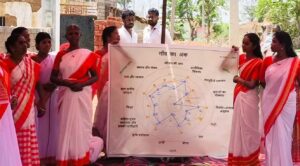
This self-knowledge gave way to their future aspirations, taking complete ownership of tracking and fulfilling their own targets. They created a village-level spider map measuring progress across 11 parameters.
Communities already hold the intelligence to shape their own pathways. PRADAN’s role was to reduce friction, enabling easy access to infrastructure and solutions for the stewards of the place. (Rather than the top-down approach of infrastructure being pushed to places that don’t need it or can’t use it.)
Industree Foundation – Local Enterprises and Sustainable Snacking
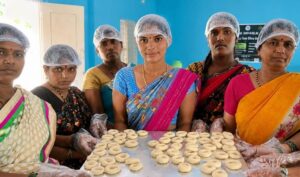
Industree Foundation is scaling a transformative model of local production for local consumption through its work with six Van Dhan Vikas Kendras in Karnataka to promote local snack production and creating jobs for women (VDVKs are a scheme by the central government to empower tribal communities through sustainable, forest produce-based entrepreneurship). The model combines training and tech tools to make community‑owned enterprises financially viable. In addition to training on production, they are helping with supply chain management through electric vehicles, route planning, and cost optimisation. The goal is to significantly reduce outside dependency on snacks, reducing “food miles”, avoiding harmful ingredients, and multilayered-plastic packaging. And create a community-owned enterprise model that will be fully replicable for adoption by other organisations within two years.
Dakshin Foundation – Education for Future Place-Stewards
Dakshin’s Andaman & Nicobar Environment Team (ANET) is focusing on building a new generation of place-stewards through immersive ecological education. This month, they conducted specialised training for local youth guides and tour operators, equipping them with the skills to lead intertidal walks that deepen the connection between tourists and the island’s unique coastal biodiversity.
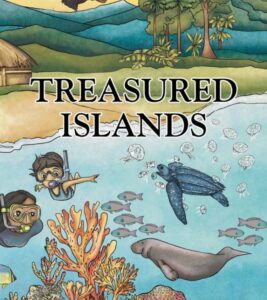
Simultaneously, they are working closely with school teachers to integrate environmental education into classrooms through the “Treasured Islands” resource book. The workshop helped build teacher confidence in using the resources and highlighted how island-specific examples can make learning more engaging for students.
The central idea being: ecosystems remain functional when people develop meaningful, informed, and reciprocal relationships with nature. A deeper connection between people and the places they call home.
WCS-India – Human-Wildlife Coexistence in Ratnagiri
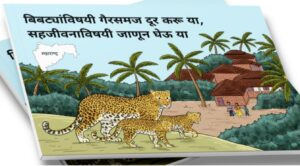
WCS-India is deepening its efforts in human-wildlife coexistence by launching culturally relevant resources and engaging future storytellers. Maharashtra has the second-highest leopard population among all states. Leopards are highly adaptable, apex predators that maintain the balance of prey populations and overall health of the ecosystems, and so their conservation is vital.
WCS-India partnered with local organisations in Ratnagiri to launch a leopard awareness guide and films in Marathi, the local language. While the district sees frequent human-leopard encounters and incidents of leopards falling into open wells, actual attacks on humans remain rare. By drawing on the “Mumbai model,” these resources provide simple “do’s and don’ts” to help communities prevent negative interactions and understand the meaning of sharedlandscapes.
WRI India – Celebrating the Changemakers of Bodoland
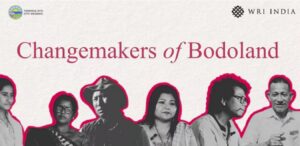
Through the Eco City-Regions Initiative, WRI India’s “Changemakers of Bodoland” video series is now live on YouTube. The series tells stories of local change-makers who are finding new ways to bring in innovation to support and celebrate their culture, livelihoods and environment. From the farmer experimenting with integrated farming practices or an artisan keeping indigenous crafts alive, the people of Bodoland are redefining livelihoods on their own terms. With around 25,000 MSMEs, 98% of them being micro-enterprises, grassroots entrepreneurship is thriving in Bodoland.
These stories showcase how protecting local ecology, re-evaluating land use and celebrating traditional knowledge can create sustainable pathways for resilient livelihoods. The latest episodes features individuals like Kirat Brahma, a toy maker and entrepreneur, and Sarbeshwar Basumtary, an agriculturist and teacher.
The Climate Brief – Connecting Climate Change to Everyday Life
In May, The Climate Brief published 5 videos, exploring a wide range of topics: from Mumbai’s BKC mobility crisis and what extreme heat does to our bodies to how parks can help us beat the heat. We also highlighted Puri’s successful drink-from-tap initiative and broke down Delhi’s EV policy.
Every episode tries to simplify the systems that shape our lives – water, mobility, heat and energy – helping viewers understand how climate change connects to their own choices.
If you haven’t caught our latest episodes yet, head over to @TheClimateBrief on YouTube to watch them!
śubhāste panthānaḥ santu (May your roads be auspicious)
– Team Rainmatter Foundation
Blooms of Spring – April News Digest from Rainmatter Foundation
These weeks of April witness the bloom of flowers. Konna (Cassia fistula) hangs like golden chandeliers across Kerala for Vishu, palash sets central India ablaze as the “flame of the forest”, and mahua begins its quiet predawn shower of flowers that tribes gather for food, drink, and income. In our ecosystem of partners, April has felt similar – different solutions coming into bloom at once, from climate data tools and reports to youth programmes and community-led conservation, bringing along silver linings of hope for our collective future.
Team updates
Built shift: Getting honest about how India builds
15 practitioners, researchers, architects, and policy thinkers from six organisations sat together for a “built shift” un-conference in Bengaluru to honestly dissect why India’s construction ecosystem is struggling to deliver regenerative buildings. Akshatha Narayan (Thesis Lead for Buildings at Rainmatter) shared that the group agreed to move beyond government enforcement, and work towards demonstrating what “good” looks like within existing work using levers like HVAC, ESG pressure, insurance risk, and consumer demand. The group aligned on creating an open, credible system that combines scientific datasets with validated case studies so that insights can feed into narratives, financial models, and policy tools. Four working groups – Data & Information, Activating Data, Building Process, and Governance – emerged to carry this agenda forward and turn shared diagnosis into coordinated action.
Get in touch with Akshatha if you are working around any of these focus areas.
Reimagining livelihoods in Bhimpur (MP)
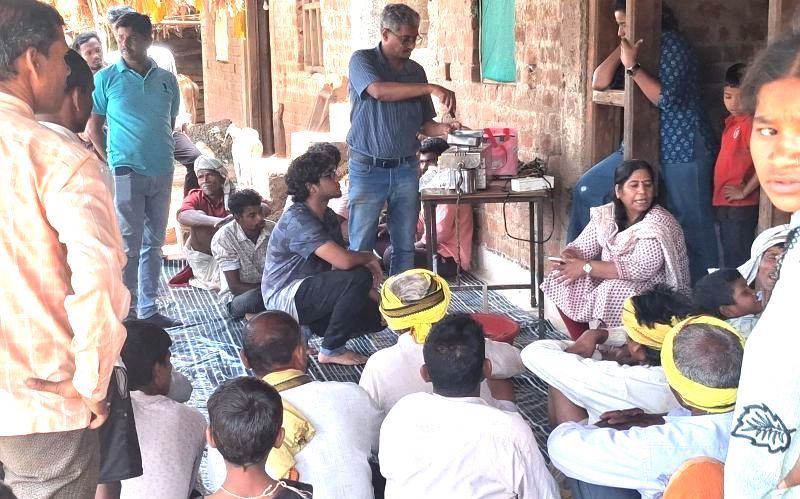
Tanmay Mukherjee (Strategy Lead – Entrepreneurship and Platformisation) spent two days in the Bhimpur block of Betul, deep in tribal Madhya Pradesh, with the NATURAL CAPITAL team and their Green Chakra initiative, which is helping farmers shift to natural farming through a for-profit model. Engaging with Korku and Gond communities, he observed how villages largely sell raw produce like millets, maize, niger (jagani), mahua, while traders capture most value by selling finished products at market rates. Through a demonstration of a portable oil expeller, he showed how local processing can reduce household oil spends (~₹15,000/year), create small enterprises (like soaps and snacks), and generate useful by-products (nutrition for children, cattle feed). The savings and earnings can recover the machine cost within 3-4 months. To learn more, check out Tanmay’s LinkedIn post here. Reach out to him if you are in the livelihoods and enterprise space and want to reimagine the approach for ‘Local Communities aligned to their Local Ecology’.
Hyperlocal climate governance
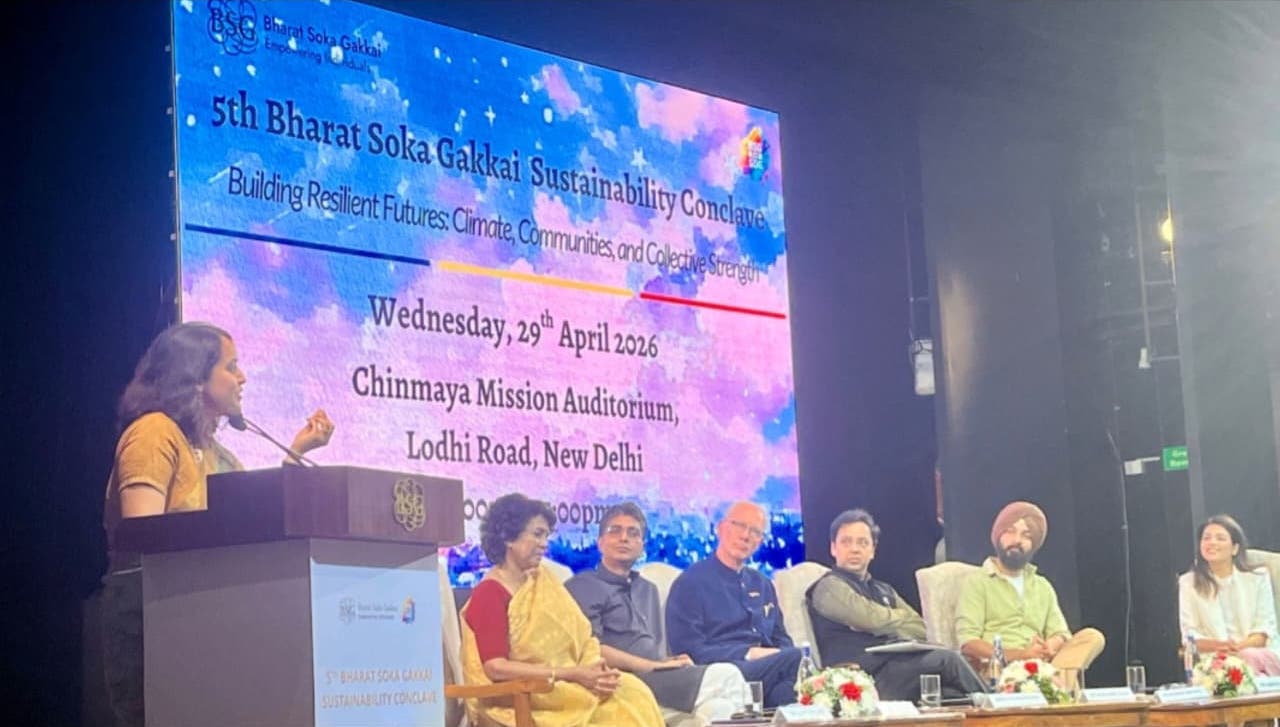
At the 5th Bharat Soka Gakkai (BSG) Sustainability Conclave, conversations explored how climate action must move beyond policy and become a shared societal effort.
As a panelist, Ripu Daman Singh (Thesis Lead – Changemaking) spoke about the importance of hyperlocal climate governance, where communities become active co-creators of resilience across issues like water, agriculture, waste, and livelihoods.
A key reflection from the conclave was that the climate crisis is now a social and behavioural issue in addition to environmental. And solving it will require trust, participation, and collective ownership.
Partner updates
Paani Foundation – Aligning with government for scaling rural resilience
Farmer Cup by Paani Foundation is a Maharashtra-wide competition where farmer collectives work towards economic and ecological prosperity, and it achieved an institutional breakthrough.
Building on years of groundwork, the efforts led to the Government of Maharashtra deputing 1,200 officials full-time for four months. The officials will undergo a 2-day residential training with a structured framework to consistently focus on farmer mobilisation, group formation, and sustained on-ground support across all talukas.
The ambition is bold but clear: enable 15,000 groups of farmers across Maharashtra and ensure at least 1.5 lakh farmers participate in this season’s Farmer Cup.
CEEW – Launching CRAVIS, an AI-powered climate risk platform
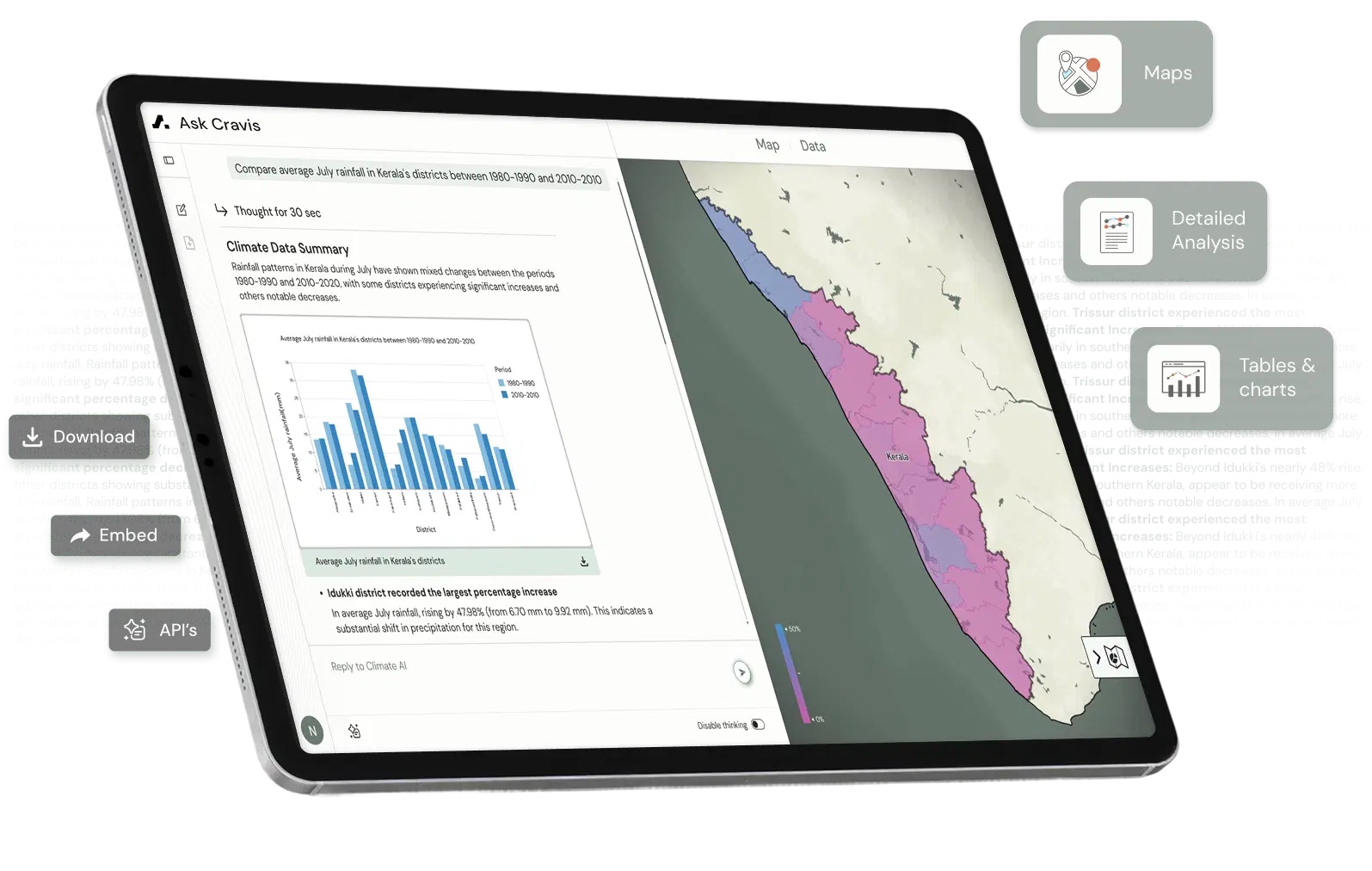
The Council on Energy, Environment and Water (CEEW) launched CRAVIS – the Climate Resilience Analytics and Visualisation Intelligence System – an AI-powered climate intelligence platform. The platform is designed as an open digital public good, aiming to bridge the gap between complex climate science and actionable, on-ground decision-making. CRAVIS brings together more than 40 years of climate data and future projections to map district-level risk across 279 indicators, from extreme heat and heavy rainfall to drought patterns. With an agentic AI layer, varied users like policymakers, planners, journalists, bankers, and citizens, can ask questions in conversational language and receive source-backed, district-specific insights within seconds.
Vidhi Centre for Legal Policy – Tracking Parliament through The Green Hour
Vidhi’s latest issue of The Green Hour analyses the Monsoon Session 2025 (21 July–21 August 2025), examining how Parliament engaged with environment and climate questions. It breaks down 303 MoEFCC questions out of 8,895, themes like pollution, wildlife, and forests/afforestation, and how the government acted on 12 Standing Committee recommendations. Also, a Green Hour Online Bulletin tracks key regulatory moves fortnightly. Policymakers, environmentalists, journalists and students of climate and environment studies can explore the full set of updates via the newsletter and subscribe to The Green Hour on Substack to receive regular briefings on environmental law and policy in India.
Asar – ‘Simplifying Science’ brings climate research to communities
The ‘Simplifying Science’ programme by Asar turns rigorous climate science and research into everyday language and narratives that connect it to the impact on the environment, health, and wellbeing.
They create multilingual stories that can be carried by regional media to reach communities most affected by climate change – agricultural workers, construction labourers, fisherfolk, urban poor, and more. The team works directly with researchers to produce long-form articles in English, commissions expert translations into regional languages, and then disseminates them via trusted regional media partners.
In April, they picked the study “Anatomy of Moist Heatwaves in India During the Summer Monsoon Season” by Dr Akshay Deoras and colleagues. In a span of 14 days, at the onset of harshest summer, they were able to garner 43 media coverages across 6 regional languages. It even drew attention of the former Chief Scientist of the WHO who reposted one of the coverage.
By tracking coverage, reactions, and policy uptake, Simplifying Science is building a model for how rigorous climate science can meaningfully enter public and policy discourse.
To deep dive into the coverage report, click here.
Palluyir Trust – People’s Biodiversity Register for Sirudavoor
Palluyir Trust, in collaboration with Madras Naturalists’ Society, completed the People’s Biodiversity Register (PBR)* for Sirudavoor, an ecologically rich but encroachment-threatened landscape near Chennai. Over the past year, the team worked closely with village youth to document biodiversity across seasons, building a living record of local species and ecological relationships. The completed PBR was handed over to Ms. Mita Banerjee, IFS, PCCF and Member Secretary, Tamil Nadu Biodiversity Board – a major milestone that anchors community knowledge within regulatory conservation processes. Palluyir is now working to initiate PBRs in four other eco-sensitive hotspots around Chennai, scaling this model of youth-led ecological documentation and stewardship.
* Mandated under the Biological Diversity (BD) Act, 2002, the People’s Biodiversity Register (PBR) is a repository of flora and fauna species, local livelihoods and traditional knowledge of utilising medicinal herbs and plants. It is an informal inventory of information, a locally maintained database and a means to protect intellectual property rights.
WCS India – Urban biodiversity and responsible media
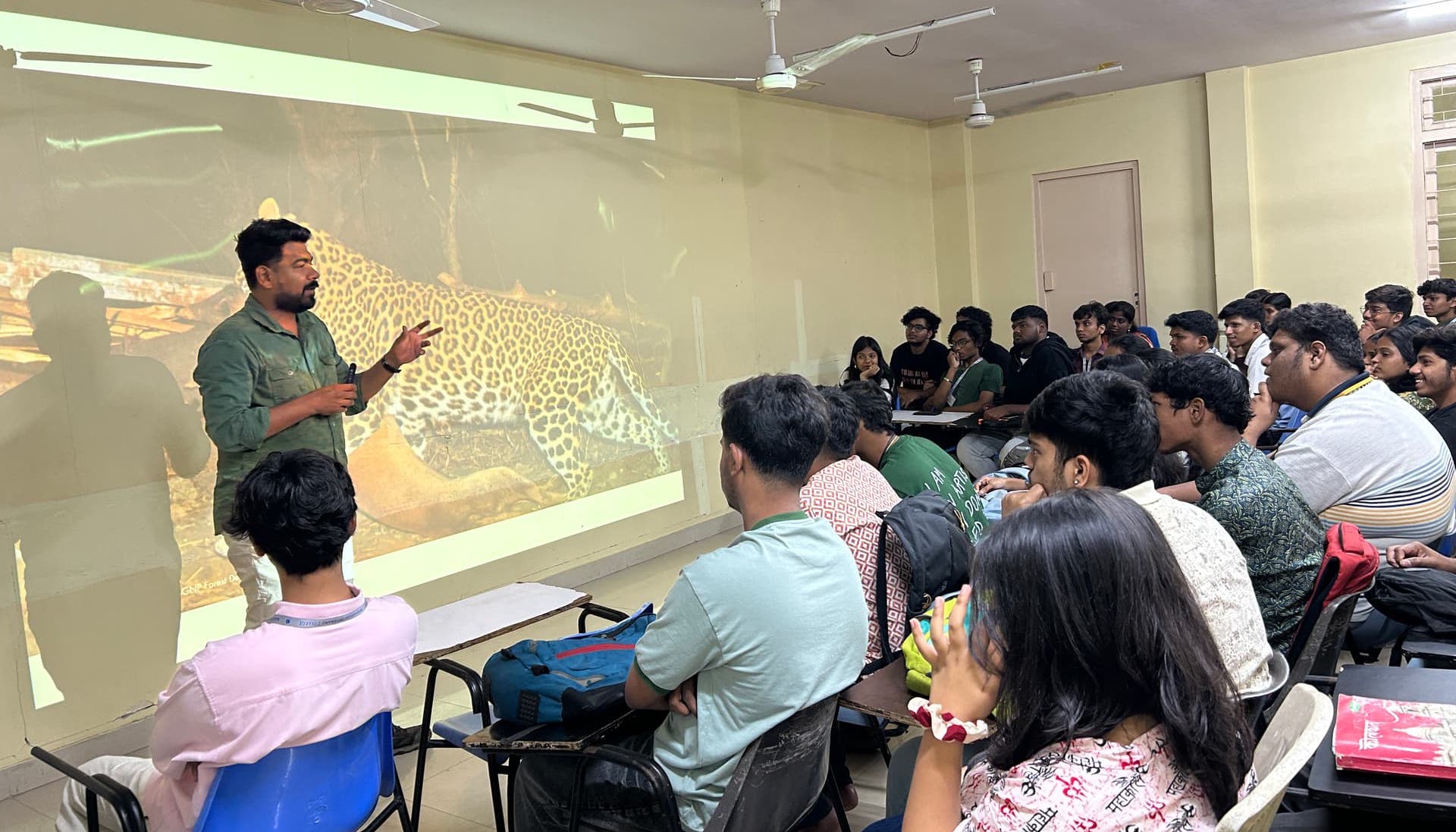
WCS-India delivered sessions on “Urban Biodiversity and the Media Narrative,” across four Mumbai colleges to more than 310 media and communication students. The sessions introduced Mumbai’s forests, mangroves, wetlands, and marine ecosystems, while exploring how unmanaged waste, free-ranging dogs, and leopards intersect in complex human-wildlife interfaces. Students engaged with real-world reporting dilemmas and learnt how framing can either sensationalise or deepen understanding of human-wildlife interactions. In parallel, WCS-India also engaged with IFS officers at the Chandrapur Forest Academy, as part of their training programme on conflict issues. These engagements are helping shape both future media professionals and forest officers to respond to human-wildlife interactions with nuance and responsibility.
Swarathma – ClimateJam concert series kicks off
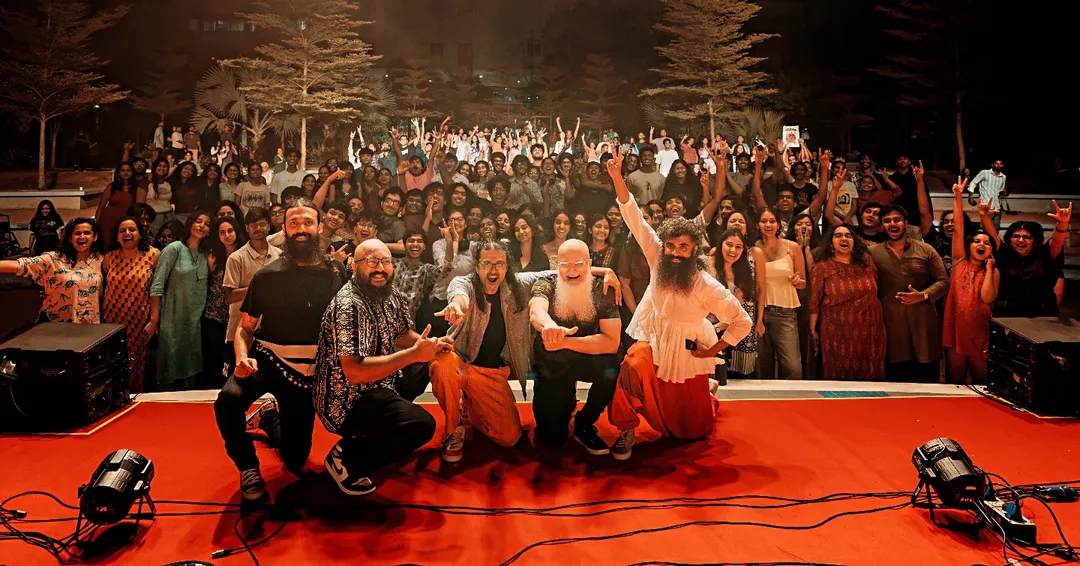
ClimateJam is a culture project by folk-rock band Swarathma in partnership with Rainmatter and educational institutions. It aims to reframe climate action through live music, humour, and hope. In a planned 10-campus series, the first one took place at KREA University where ClimateJam was woven into a course called “Engaging with the Environment” and included a creative showcase by the students. The second in the series took place at the BML Munjal University as part of their Policy Conclave that also saw a competition on creative communications of policies. In both the jams, Swarthama’s songs, lyrics, and music created an electric atmosphere for students and triggered a sense of belonging – with nature, climate change, society, and our roles as active citizens. Swarathma is exploring collaborations for ClimateJam with institutions and organisations to deepen climate connections through music and build agency among youth across campuses. Reach out to Jishnu at [email protected] if you wish to collaborate!
A Rocha India – Anti-snare drives and reframing conservation
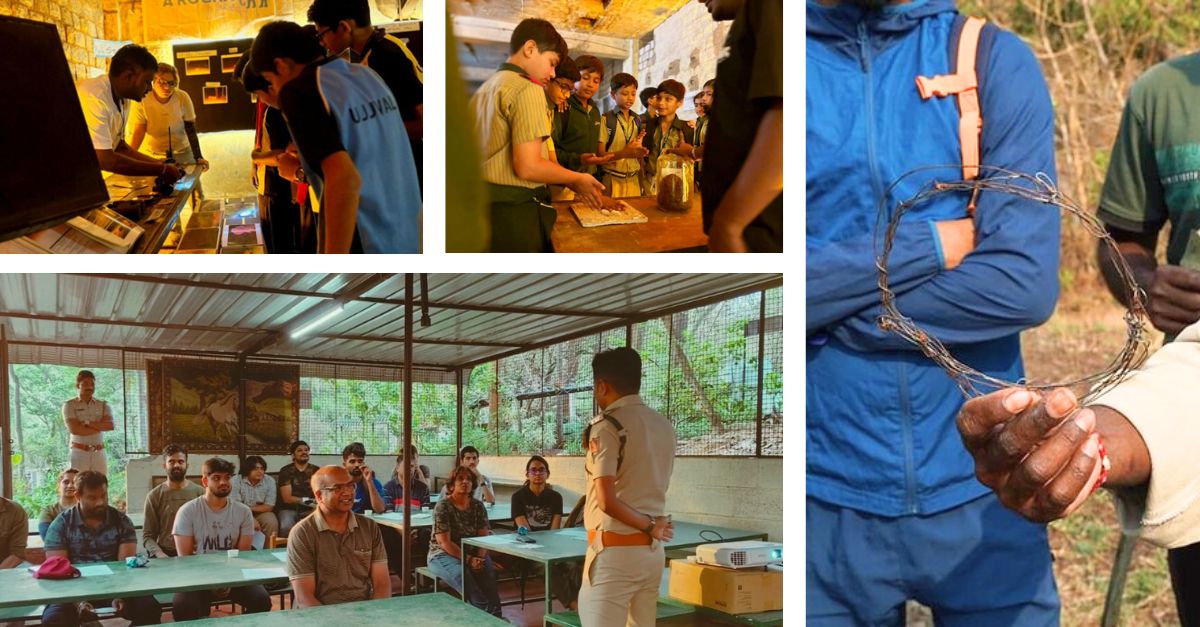
A Rocha conducted an anti-snare drive in the Kodihalli Range of Bannerghatta National Park with 25 trained volunteers and 10 forest department staff, focusing on forest-farmland edges where poaching pressures are high. Volunteers walked alongside forest watchers, gaining an in-depth understanding of how simple wire snares, often made from brake cables, can cause severe injury or death to wildlife moving through shared landscapes. Participants’ reflections highlight how proximity to Bengaluru can mask the reality that a rich forest ecosystem, with elephants, sloth bears, civets, and leopards, lies barely 30 minutes away. A Rocha also works on animal sign-based surveys that document species presence in both park and human-dominated areas, revealing how wildlife use and walk through spaces beyond formally protected forests. Through classroom engagements with urban students and public-facing installations at cultural festivals like Sixth Sense, A Rocha is reframing conservation as something embedded in everyday environments, not just distant wilderness. Find out more about A Rocha and the ongoing anti-snare drives here on Instagram.
Socratus – Launching an Art & Crafts Experience Centre
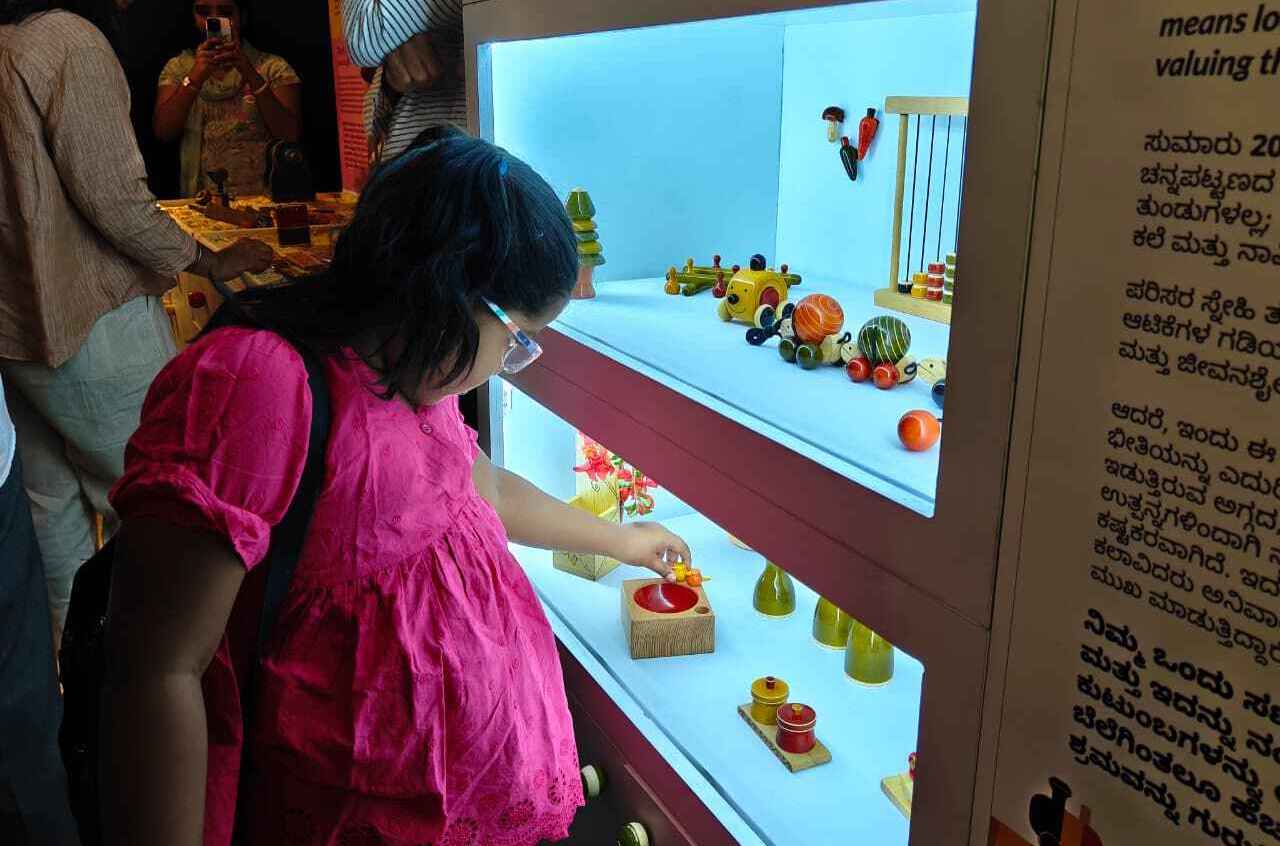
As part of the Neighbourhood Initiative, Socratus launched an Art and Crafts Experience Centre to spotlight the craft processes behind Channapatna’s lacquered wooden toys and artefacts – the art and the artisans themselves. Visitors can explore interactive exhibits, close-up displays, and live craft demonstrations that make the journey from raw wood to finished toys. The presence of artisans, who explain materials and techniques, shifts how people value everyday objects, turning casual curiosity into deeper appreciation. For Socratus, the centre is a way to use physical spaces to bring people, materials, and stories together and where serendipity and community can emerge around crafts. It is the fourth in a series of centers around rivers, textiles, and everyday materials. Find more information about all the four centres here.
Goonj – Gram Swabhimaan & cross-pollination
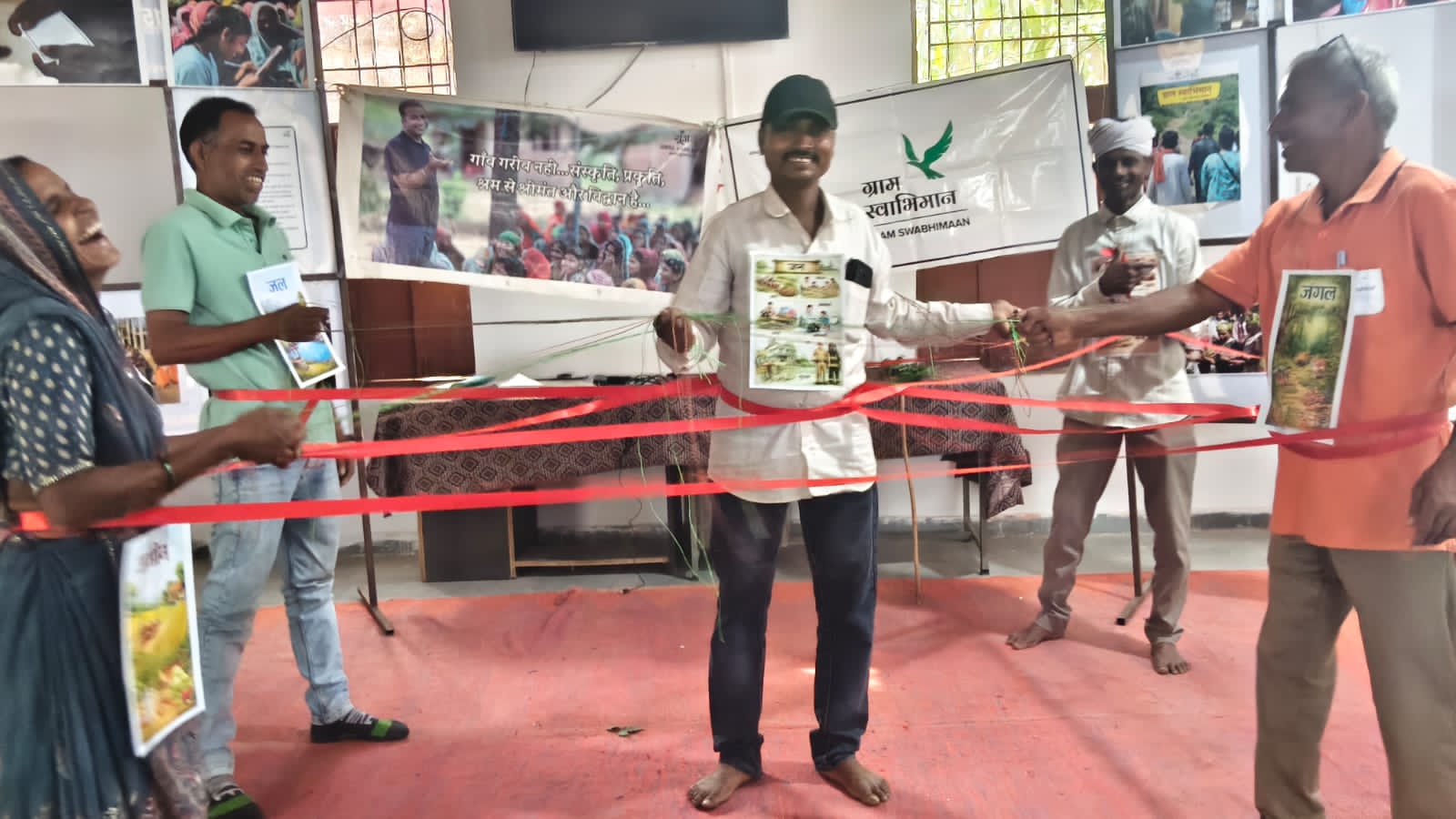
Through Gram Swabhimaan gatherings, Goonj brings villages together to reflect on their strengths, local resources, and shared responsibility, shifting the focus from “what is missing” to “what do we have”. The process creates space for conversations through community meetings, school sessions, youth interactions, and partner-led engagements.
A recent SoTH Alliance visit to PRADAN’s work in Jharkhand led to an interesting exchange of ideas. Goonj adapted PRADAN’s 5J exercise (Jal, Jangal, Jameen, Jan, Jaanwar – the interconnectedness between people, nature, and livelihoods) into its own community meetings, while several organisations in the Alliance continue to learn from and build upon the Gram Swabhimaan approach in their own regions.
Dakshin Foundation – Where Care meets the Coast
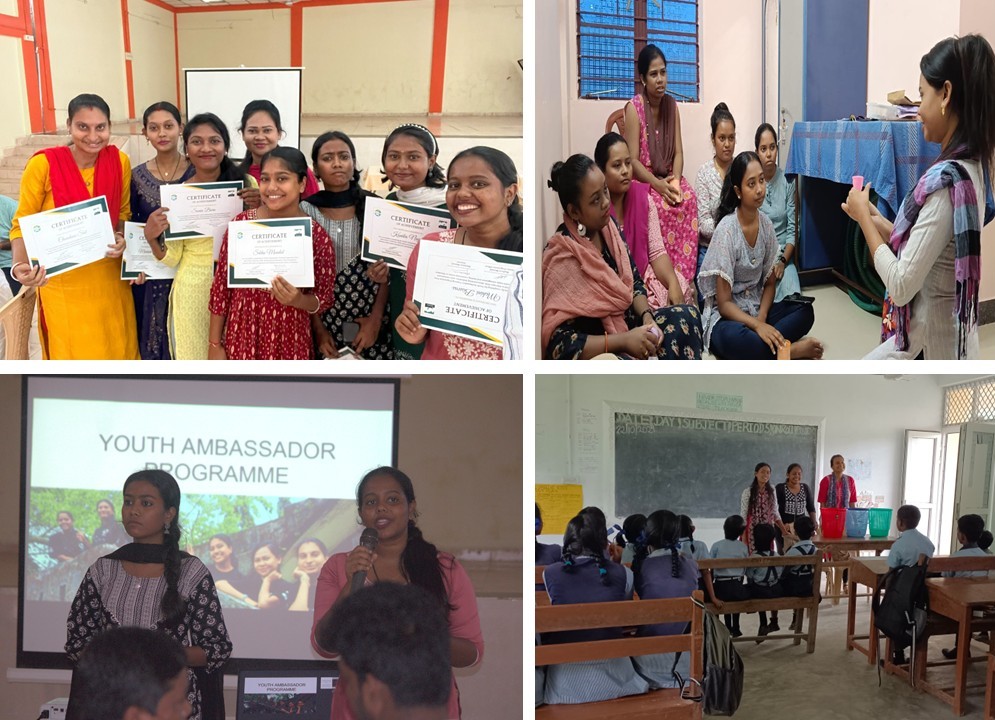
On small and ecologically sensitive islands like South Andaman, menstrual waste is rarely spoken about, yet it poses a growing environmental challenge. Through community partnerships and open conversations, Dakshin Foundation’s Andaman & Nicobar Environment Team (ANET) has been working to make menstrual health more sustainable while reducing non-biodegradable waste.
The initiative has trained Youth Ambassadors, ASHA and Anganwadi workers in partnership with the Wandoor Panchayat, helping introduce sustainable menstrual products to more than 1,200 women, who have now shifted to eco-friendly alternatives such as menstrual cups, cloth pads, and period panties. It brought together environmental conservation, public health, and conversations around a taboo subject that is still too often treated as taboo. This effort was recently recognised through the 5th Samir Acharya Memorial Award for Conservation of Coastal and Island Ecosystems.
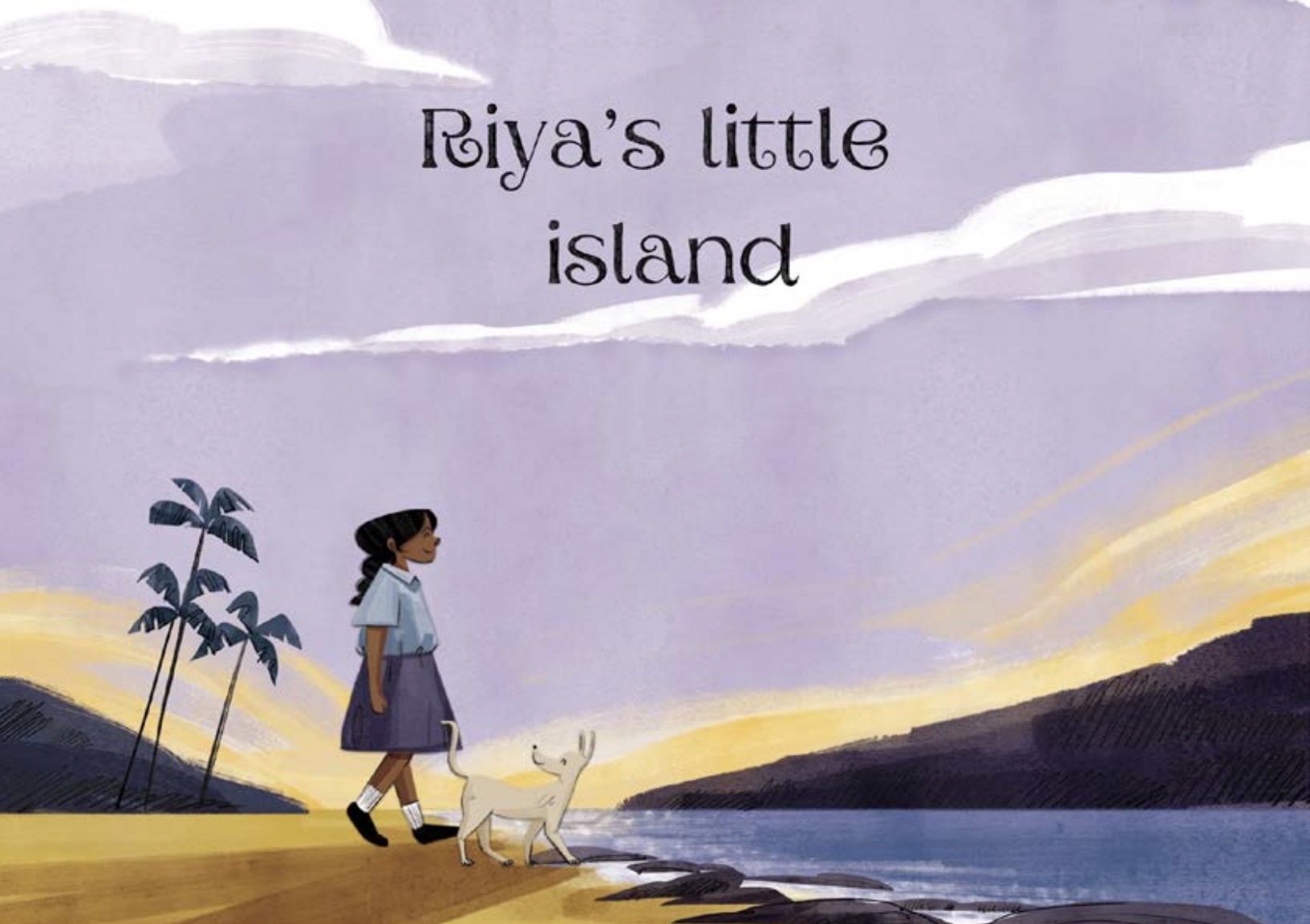
Also, in their ongoing work to build care and concern for their place among children, the team collaborated with 13 children from the Junglighat community to launch a book, Riya’s Little Island. Set against the beauty of the Andaman Islands, this tale explores the delicate balance between worry and wonder – something we all carry within us. You can access the full PDF of the book here.
The Climate Brief – Making climate impact visible in everyday life
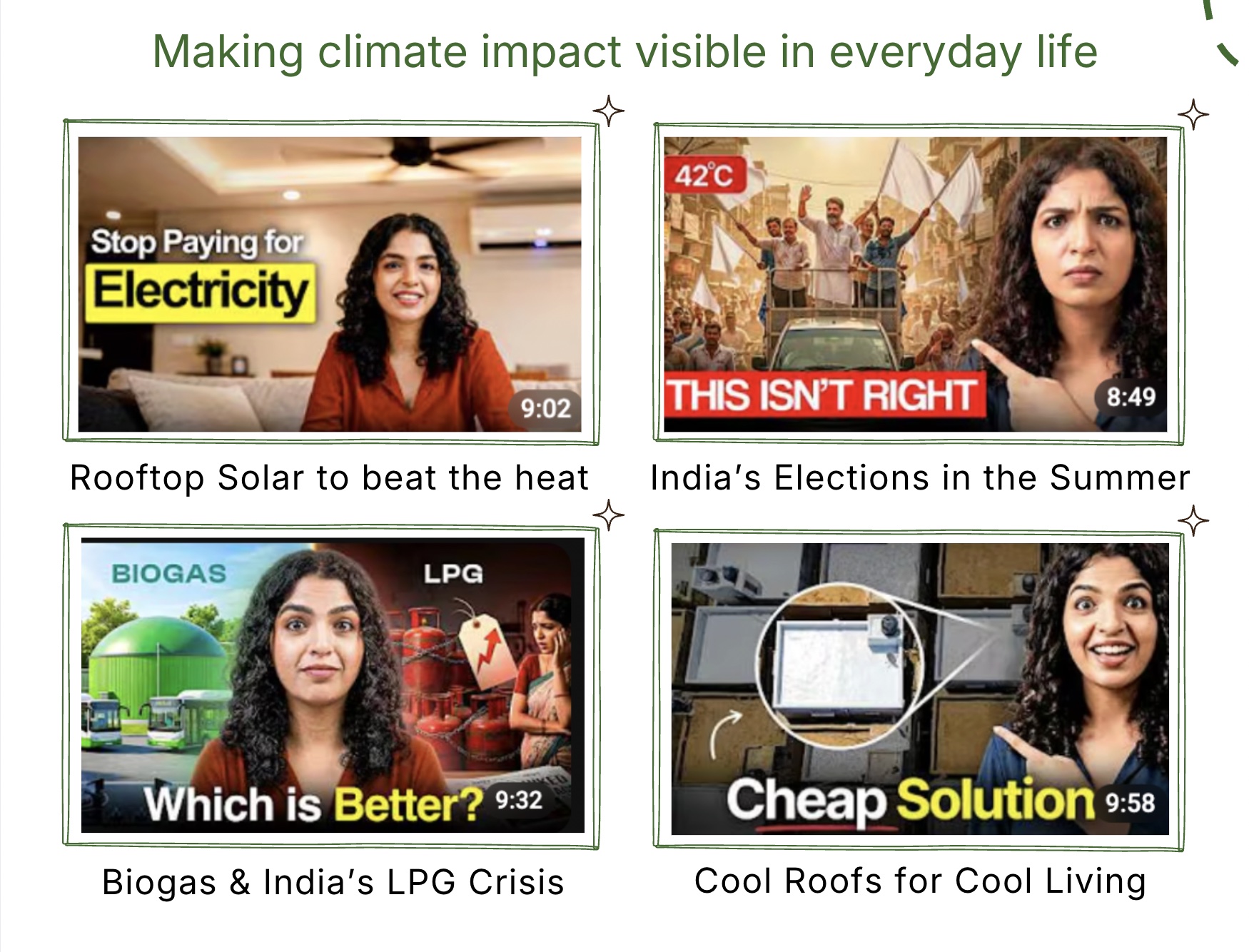
In April, The Climate Brief continued its YouTube series on India’s climate and energy choices, from rooftop solar and “life hacks” for summer to biogas, heatwave responses, and voting in 40‑degree heat. Each episode translates complex topics and science into everyday stories, helping viewers connect climate systems with their own lives and decisions. If you haven’t caught our latest episodes yet, they’re on @TheClimateBrief YouTube channel and worth your time.
Opportunities
Green Stories – Environmental documentary projects
Green Stories is a mentoring and pitching forum dedicated to wildlife and environment documentaries from Asia. The applications are now open for 2026 from filmmakers, producers, and production houses across Asia working on documentary projects with an environmental focus. Up to 16 feature-length and six short documentary projects will be selected, spanning themes such as ecosystems, climate and environment, wildlife conservation, and people and community. Due by 30 June 2026, submit your application via an online form and include a visual clip (email or postal submissions are not accepted). To apply, click here.
IDR – Northeast Media Fellowship
India Development Review’s Northeast Media Fellowship is a 10-month programme for three young fellows from the Northeast, who work with IDR’s editorial team to tell grounded stories from the region. Fellows travel within and beyond their states to report on livelihoods, education, health, gender, and more, producing written and multimedia content that informs policymakers, funders, and nonprofits. The last date to apply is May 15th 2026. Organisations working in the Northeast can write to [email protected] to connect their work with the fellowship.
Until next time, may your roads be auspicious | śubhāste panthānaḥ santu
Team Rainmatter Foundation
Roots & Resilience – March news digest from Rainmatter Foundation
The month of March was about roots – in soil, in storytelling, and in community.
We engaged with people building change from the ground up. Saw immense potential in youth undergoing regenerative farming fellowship. Created frameworks to enable tribal self-governance from on-ground learnings. Got the non-profit ecosystem to build intuitive tech tools with responsible AI use. Saw resilience taking shape through creativity and spoken word at student showcases.
Partners continued to deepen place-based work – a new guide on better reporting on human-wildlife interactions, coexistence conversations where all place-owners came together to learn, and 14 Jagah Fellows telling India’s climate stories from the places the world has looked at too quickly.
Across farmlands, classrooms, forests, and convenings, one thread stands out time and again: lasting change takes root when communities take ownership.
A Room Full of Conversations about ‘Place’
In Udaipur, about 13 philanthropic and civil society organisations sat together to ask a genuinely hard question – what does it actually mean to fund a place, not just a project?
The Unnati Funders’ Table, facilitated by Energiva Ventures, unlocked the co-creation of a shared roadmap for collective impact across rural landscapes. The team also presented the Unnati Framework that re-imagines place-based funding. That’s the kind of conversation we hope to have more of.
Our Strategy Lead for Entrepreneurship and Platformisation, Tanmay Mukherji, walked the room through Rainmatter’s Place-based thesis, our Rural thesis, the 6M Framework, and the Livelihood Network Map.
Young People Choosing Farming as a Future
Akshayakalpa has spent 16 years proving that small-scale farming can be dignified – 2,800 farmers, with monthly incomes around ₹1,00,000, and healthy soil to show for it. Now they’re passing that knowledge forward through a 9-month fellowship for young people who want to build a future in regenerative and financially profitable agriculture.
Fellows go deep on the practices that make this model work – composting, integrated dairy, soil health, natural pest management, mixed cropping, and water conservation – grounded in what’s already been proven at scale. Currently, the fellowship runs in Karnataka, Tamil Nadu, and Telangana, with an opportunity to spread across India.
Our Thesis Lead for Rural, Vikas Hosoor, spent time with the first three cohorts of fellows this month. His takeaway? These young people have built strong foundations and are capable of farming sustainably in their own regions – but more than that they’re capable of carrying it forward and teaching others.
If you are an organisation focusing on sustainable agriculture in your region for your communities, these fellows are a proven resource.
AI, for Social Good
Bengaluru hosted the Insight Out workshop this month, brought together by Tech4Good Community and Oasis. The big question: can AI actually serve the social sector – beyond the noise?
Dr. Kailash Nadh, CTO at Zerodha and co-founder of Rainmatter Foundation, guided the room through responsible AI use and then made it real through ‘learning by doing’. Participants unlocked insights from their own data and mission, built intuitive tools and platforms, and worked through what it means to bring human judgement to the what, why, and how of AI.
Several of our team members and partner organisations attended this fun workshop to learn and build.
When Communities Own their Future, Things Change
Our partner Shivganga works with the adivasi communities in Jhabua, Madhya Pradesh, and operates on a simple but radical belief: change lasts when it comes from within. Their regularly conducted Baithaks (village meetings) and Tolis (local action groups) are more than participation mechanisms, they’re how decisions get made and followed through.
Communities voice concerns and then work on solving them together. The Tolis also act as bridges between villages and institutions (government bodies, larger orgs, etc.), ensuring plans stay grounded in local realities while successful ideas take root in more regions.
As part of the SoTH (Sense of The House) Alliance, Shivganga is now co-creating broader place-ownership frameworks that strengthen tribal self-governance. One such being through such baithaks and tolis.
Building Agency Early On
Slam Out Loud brought their ‘BOL’ showcases to Delhi, Bengaluru, Mumbai, and Pune this March, and 400+ people showed up to watch children talk about nature, climate change, and the world they’re inheriting.
These children had moved from being passive students to active thinkers – kids who had opinions, made art from them, and shared it publicly with confidence. Watching children frame complexity better than most adults is truly humbling. Their artworks and performances left a lasting impression on our Climate Education & Communications Lead, Vartika Goel. She left with mixed emotions, hopeful about the futures children might shape, and uneasy about the weight our present continues to place on them.
14 Places. 300+ Applications. One Powerful Cohort.
The Jagah Fellowship – a collaboration between FactorDaily and Rainmatter Foundation – selected its first cohort of 14 from over 300 applications. These fellows are deeply embedded in their places, ranging from a coast, a forest, a river, a desert, to even a locked up space.
The fellowship is about telling stories as the jagah (place) itself – a practice of place-based storytelling and narratives that travel, shifting climate stories from extraction to stewardship, deficit to dignity, “I” to “We”.
Pankaj Mishra, founder of FactorDaily, will mentor the fellows through 2026. He put it better than we could: “Each fellow is carrying a place the world has looked at too quickly, too externally, too shallowly.” We couldn’t agree more. Follow Pankaj on LinkedIn to witness the journey.
Leopards, Bears, and the Conversations We Needed
In Devprayag and Rudraprayag districts of Uttarakhand, WCS-India, Titli Trust, and Asar brought together the place-owners. Forest officials, media, field-science experts, local communities, and students talked about something that doesn’t get nuanced attention: humans and wildlife trying to share the same land.
The meetings surfaced what field experience always does – that coexistence requires community action, trust-led collaboration, responsible journalism, and approaches that are rooted in science.
Reporting Coexistence, Not Just Conflict
The Climate Narrative Hub has launched the Human-Wildlife Interactions Reporting Manual, for journalists and storytellers covering the full spectrum of how people and wildlife share space.
Co-created with six partner organisations, the manual moves beyond one-dimensional conflict narratives. It acknowledges that while moments of tension and tragedy often dominate headlines, they are only a small part of a much larger, ongoing reality- one where people and wildlife continuously adapt, share space, and navigate risk.
Drawing from insights across media, research, and civil society, the guide invites creators to widen their lens. By doing so, stories can become not just more accurate and empathetic, but also more constructive, thus shaping public understanding, informing policy, and creating space for shared responsibility. Curious what more nuanced storytelling could look like? Explore the manual at ClimateNarrativeHub.org.
The Climate Brief Kept Asking the Hard Questions
The Climate Brief spent March unpacking the systems hiding in plain sight. Why do women pay more money and time to get around a city? What’s really at stake in the Nicobar Islands? Who is responsible when a city bakes in 46°C heat?
The episodes this month were about the roads we build, the policies we approve, and the people who bear the cost. If you haven’t caught our latest episodes yet, they’re on the Climate Brief YouTube channel and worth your time.
Welcome, New Partners
We’re glad to welcome five new partners into the Rainmatter network this month:
Common Ground Initiative – Collaborative initiative of 91+ organisations working to strengthen ecological, social, and economic wellbeing in rural India through decentralised, community-led governance.
Asar Social Impact Advisors – Builds sub-national ecosystems through multi-stakeholder networks across clean air, energy transition, commons governance, climate education, and narratives.
IIHS – ASSURE – Accelerating high-performance buildings to reduce resource consumption and improve productivity through technical assistance, capacity building, and innovative market mechanisms.
Thicket Tales – Connects classroom learning to children’s backyards through place-based education. Enables children to explore, map, and act on climate challenges in their local ecosystems.
Green Stories – Mentors filmmakers to create and pitch impactful wildlife and environmental documentaries from India and Southeast Asia.
Until next time, may your roads be auspicious | śubhāste panthānaḥ santu
Team Rainmatter Foundation
Nurturing Custodians of a Place: The Kendrapada Sandbox in Odisha
In 2023, a group of partners came together and took a collaborative approach to build a sandbox.
The idea was to test and create a place-based, ecosystem-led model that can build climate resilience and community stewardship.
What is a place, though? It is more than the sum of its parts, the geography, the people and all the elements it comprises – air, rivers, lakes, seas, soil, hills, bugs, birds, animals, plants, trees, and the people, their cultures, livelihoods, relationships, flow of money, and more.
Why was Kendrapada chosen?
With a population of about 15 lakhs across 9 blocks and close to 1600 villages, Kendrapara is a coastal delta district located between the Brahmani, Baitarani, and Mahanadi rivers, home to the Bhitarkanika mangrove ecosystem. It is highly vulnerable to cyclones and saline floods. Predominantly agrarian, with paddy, pulses, and fisheries, it is also largely rural and informal with significant job-linked migration.
Facing mangrove loss, saline intrusion, and human–wildlife conflict, especially around crocodile zones, Kendrapara has been a focus district for the government (with a rich political past) in Odisha’s coastal resilience programmes, emphasizing pond rejuvenation, mangrove restoration, and women-led adaptation.
The objective of this initiative was to evaluate if Kendrapara had the potential to emerge as a model for ecosystem-based rural resilience, blending conservation, livelihoods, and community leadership.
That’s how the Kendrapada Sandbox was formed, of a cluster of 205 villages from the larger district.
Kendrapada district map, Odisha (Source: Odisha Tourism)
Identifying the Problems
The first step of the Kendrapara Sandbox was deep sensemaking. Instead of coming in with pre-defined interventions, it was important to listen to the land and people. While we have witnessed multiple frameworks for this “ownership” discovery, Goonj’s Gram Swabhimaan approach was deployed in a DIY (do-it-yourself) format as part of the process and handed over to community representatives. The community contextualized the format for Kendrapara and went ahead to implement it.
Some of the critical challenges surfaced by the exercise were:
Ecological Degradation: The region was vulnerable to repeated cyclones, saline intrusion, and erosion.
Livelihood Insecurity: Traditional agriculture and fishing were becoming unsustainable, forcing seasonal and distress migration (even generational migration – plumbers from Kendrapara work all across India, and in the Gulf countries and West Asia).
Cultural Disconnection: Mangroves and water bodies, once integral to local identity, were now viewed as threats.
Institutional Fragmentation: Multiple schemes existed but there was limited local convergence and ownership.
Through participatory mapping, citizen juries, and informal dialogues led by the local organisations and facilitated by the sandbox team, the discovery process shifted the focus from ‘what is wrong here?’ to ‘what is happening here, really?’.
Bhitarkanika National Park
Community Ownership: People as Architects of Change
Instead of participating in projects, local actors led problem-solving. Bit by bit, the ownership took shape.
Women Climate Champions: Over 300 women across Odisha, including 100 in Kendrapara, were trained as Climate Champions under the ECRICC programme (UNDP, Mar 2025). They adopted resilient farming, led mangrove replantation, and shared knowledge through peer networks.
Self-Help Groups and Youth Networks: SHGs, youth clubs, and panchayat representatives formed the nucleus of action. They engaged in Citizen Juries, Climate Recipe exhibitions, and Gram Swabhiman dialogues—turning abstract consultations into tangible community voice mechanisms.
Cultural Re-framing: The narrative around mangroves shifted from fear to friendship. Community members began to see mangroves not as obstacles but as natural allies—providing flood protection, honey, crab farming etc.
Local Institution Building: Nature’s Club, a Kendrapara-based NGO, evolved into the core local institution—holding the space for external collaborations while ensuring the ecosystem remained locally governed.
Kanika Agarbatti Producers Group, Kendrapada
Over the course of 2 years, livelihoods diversified building resilience:
Agarbatti Producer Groups (PG) – 3 producer groups comprising over 150 women are making organic agarbattis (incense sticks) that are being sold to corporates like ITC
SRI cultivation – Saline-resistant rice varieties introduced in 84 villages were adopted by 7000+ farmers
Nalia artisan group – over 1000 families across 5 villages started making handicrafts using the Nalia grass
Waste to wealth tailoring – 150 women came together to form 7 tailoring clubs
Azolla cultivation – 5000 growers across 120 villages are providing azolla as animal feed and biofertilizer
Mushroom cultivation – 45 SHGs were trained on mushroom cultivation, who are using paddy stubble as the growing medium for mushrooms
Organic pesticides & fertilisers are being produced by over 5000 families
Nalia Grass Artisan Producer Group – Baghataila Village in Kendrapada
Key Actors and Orchestrators
The Kendrapada Sandbox brought alive place-ownership through several actors, enablers, solutions, and infrastructure:
Grassroots Stewards: Coastal agriculture reforms, mangrove restoration, and awareness drives led by Women Climate Champions and village youth
Civil Society Partners: Nature’s Club, WellLabs, Socratus Foundation, and Goonj
Government and Global Partners: Odisha Forest & Environment Department, UNDP, GCF, Kendrapara District Administration
Media and Cultural Amplifiers: Local influencers and journalists produced short films and reels during the Mangrove Patha Utsav 2024
Mangrove Patha Utsav 2024, organised by Socratus Foundation and Nature’s Club
Lessons and Takeaways
The sandbox is an example of true on-ground collaboration for any organisation working at the grassroots level.
Start with Listening: Real insight comes from community sensemaking.
Shift the Story: Change local narratives to build intrinsic motivation.
Identify & Strengthen Anchors: Facilitation models like Nature’s Club that played the role of ecosystem stabiliser ensure continuity.
Design for Emergence: Replace fixed project plans with prototypes that allow iterations and enable adaptive scaling.
Integrate Institutionally: Bottom-up (community-led) innovations have the power to influence formal government programs and systems.
The Result
The Kendrapada Sandbox brought together fragmented efforts and transformed them into a scalable, locally sustained climate resilience model. The journey evolved through iterative community-led experimentation: mapping, co-designing, celebrating, and transferring ownership. It helped communities realise their power–the power to change, build and sustain.
Our team gathered last week, on a cold January afternoon soaking in the warm sun, to reflect on how the past year had been for each of us. A few themes kept bubbling up.
2025 felt like the year climate impact got personal.
We could all recount examples of people in our circles, many outside the climate bubble, who were deeply impacted by climate change or pollution this year. We knew of friends who were suffering from a stubborn cough for months, acquaintances who were seriously considering moving out of the city they had lived in for years, and of far too many families with at least one member suffering from cancer.
Our own anecdotes weren’t isolated stories as much as fragments of a larger pattern. We felt something had shifted in public conversations around climate change, pollution, and the environment. This was visible across mainstream media, digital content creators, and even popular culture, like stand-up comedy1. The sheer volume of conversation certainly seems to have amped up especially around a few issues, such as air pollution, quality of life in our cities, and deforestation. The discourse may still miss the nuances or fall short of bringing out the full picture. For instance, we talk about air quality in Delhi and the destruction of the Aravalis without necessarily making the connection between the two. Or we talk about cancer without consistently examining food systems or the explosion of chemicals and microplastics2. So, while it’s undeniable that talking about climate has gone beyond the ‘climate bubble’, whether this growing visibility translates into deeper understanding of the crisis and pathways of action, remains to be seen.
The next obvious question was, so what next, what’s happening beyond the talk, the angst and the rhetoric?
We recalled examples of collectivising, most notably Delhi citizens coming out to protest the toxic air quality3, but also examples of people standing up to protect the last few wild spaces we have left – Kancha Gachibowli in Hyderabad4, Dhol ka Badh in Jaipur5 and Aravalis in Delhi6. We are seeing markers of governments, institutions, and corporations beginning to acknowledge these impacts, as they are becoming more and more undeniable. We saw hope in innovations from new players offering alternate solutions to problems that promise real change on ground. However, we also saw a trend of individuals choosing private solutions as a last resort to address the failing public goods. For instance, installing air purifiers to tackle air pollution or even moving cities to protect themselves7. Of course, these options are unevenly available, shaping very different realities for those who can opt out and those who cannot. And while it may not be structural or solving the root of the problem, it is what individuals seem to have control over. We may fear the long term outcomes of these pathways, but these are perfectly rational responses in a situation where systems and institutions are failing to respond fast enough and struggling to address these challenges in a structural way.
In fact, that seems to be a theme for not just climate change. All over the world, across many areas we seem to be in an era of chaos – wars, tariffs, and energy. As Rajesh aptly put in this piece8, we may be moving to a zone of polyconflict and not polycrisis. We are not in a crisis, a term that implies that it is temporary and we will at some point snap back or solve our way back into an equilibrium that we knew in the past. Our current situation may be better defined as a ‘polyconflict’ which will evolve to a new normal and a new future. We are already seeing signs of this, for instance several areas in the US have seen and are expected to have such devastating forest fires that they have been declared as uninsurable9.
What we remain curious to see is what the new normal would look like and believe that the actions and decisions that each of us – institutions, organisations and individuals – take now may well alter the course of history towards this and may indeed make 2026 a seminal year.
Notes from the field- Madhya Pradesh; September ’24
Early September, Sameer, Vikas and Akshatha from the Rainmatter team spent four days in Indore and surrounding rural areas where Rainmatter’s partner organizations are working actively in the climate space. The experience was both, inspiring and important for our work.
Some notes from the field trip in the words of Akshatha Narayana…
It was incredible to see how communities come together to solve their place issues with a strong sense of belonging and ownership; yet, there’s also a feeling of being lost in unfamiliar landscapes due to displacement. How young people can be the hope if they really understand their places better and be part of the solution-building. The intent of the trip was to understand Shivganga’s approach to place-based ownership and what comes after, to bring local organizations working with communities and young people to explore a coalition in Jhabua, Banswada and Bharwani, and to expand our understanding of the challenges, gaps and efforts of our partner organizations on ground.
Day 1 Overview
Day 1 began early at 7 AM, filled with curiosity about community ownership in Jhabua. Our first meeting with Maheshji introduced us to a collective of positive place owners actively engaged in various aspects of the village, including water management, soil conservation, agriculture, and health. We enjoyed locally grown Buttas while discussing their initiatives, which set the tone for a day of learning and connection.
Next, we visited a large lake that the community had successfully restored through their Halma traditions. Villagers from surrounding areas came together for 15 to 20 days to rejuvenate the lake, while others provided food and shelter. This collective effort resulted in improved groundwater recharge and better soil quality, positively impacting agricultural practices throughout the region.
After a delicious lunch with community members, we made several observations. The community lives harmoniously with nature, treating animals as family and showcasing rich biodiversity. We noted the importance of transferring traditional knowledge to address climate-related challenges and witnessed the market reaching the last mile, with a Tata ACE truck delivering essential goods to the village.
In the afternoon, we explored another village where Halma was used to solve local problems, such as constructing roads and conserving sacred groves. We learned about the tradition of inviting natural powers for guidance during tough times, which also fosters discussions within local panchayats to resolve legal issues. This approach emphasized the community’s commitment to collaboration and sustainable practices.
The day concluded at the Shivganga campus with a captivating skit performed by community members. The performance illustrated their struggles and collective efforts regarding Jan, Jungal, Jameen, Jal, and Janwar. We left feeling inspired by the sense of shared responsibility and the commitment to improving their community, further enriched by interactions with young leaders who led various focus groups.
Day 2 Overview
Day 2 began with an exploration of the profound impact of community collaboration in a hilly area near Jhabua. This region is carefully revived and conserved with an understanding of contours and water flow, showcases restored green patches and a resurgence of biodiversity. However, as we admired the landscape and enjoyed the morning sounds of nature, we were disheartened to see significant plastic waste, reminding us of the ongoing challenges of human existence.
Our next stop was the bamboo maker’s space and processing unit of Shivganga, where we witnessed the enthusiasm of school-aged children eager to learn and share their skills in bamboo crafting. We explored traditional methods of bamboo treatment and its various applications, prompting reflections on how education should empower individuals to pursue their interests rather than impose rigid paths.
After returning to the Shivganga campus for a breakfast with partners from Global Dev Incubator, TRIF, and Vaaghdhara, we focused on cross-learning and exploring potential collaborations. Nitinji from Shivganga emphasized the importance of creating awareness about one’s place in the community to foster a sense of belonging among young people. Initiatives like Gram Atlas and “Know Your Gram” were highlighted as efforts to bridge this gap.
Following lunch, representatives from various organizations gathered to discuss collaboration opportunities for Jhabua, Bhanswada, and Bharwani. The discussions centered around fostering ownership, understanding climate change in relation to social and economic security, and encouraging innovative, local solutions. As we concluded the day and set off for Bharwani, we reflected on the landscape we missed during our evening travel and felt a renewed sense of hope and urgency for the possibilities ahead.
Day 3 Overview
Day 3 started with a delicious breakfast as we headed to the last village in the Bharwani district. This community has faced displacement and a disconnection from their landscape due to the nearby Narmada river. With support from TRIF, the local collective is working to identify their challenges and potential solutions. During discussions, we recognized that losing connection to one’s place can also diminish confidence within the community.
After our discussions, we visited the village’s main market area to observe the entrepreneurial efforts of residents. Some villagers have started businesses, such as shops and shamiana services, while building their own houses. We were particularly struck by a beautifully constructed mud house next to a PMAY house, which was too hot to live in and being used for storage.
Next, we traveled to Bharwani city to visit the Youth Hub, a space dedicated to making knowledge, skills, and solutions accessible to young community members. This initiative, part of the Global Dev Incubator’s GOYN effort, aims to strengthen the local economy with a compendium of livelihoods tailored for the Bharwani district. Additionally, women leaders from Self-Help Groups (SHGs), who have successfully been elected to their panchayats, were receiving training to enhance their leadership skills and systemic thinking.
We then enjoyed a traditional lunch at the Youth Hub before continuing to Matla village, where we met a collective of women, known as local ministers, and the Sarpanch. They shared valuable insights about the community’s needs and priorities, emphasizing the importance of integrating these into the Gram Panchayat Development Plan. Their enthusiasm and commitment to their village highlighted how ownership and belonging can inspire collective improvement, bringing hope to our group as we set off on our journey to Khategaon, enjoying Poha as an evening snack along the way.
Day 4 Overview
Day 4 of our visit began with delicious aloo parathas and chai. Our first stop was a household in Khategaon that produces a natural fertilizer solution using five locally available plants. Initiated by women from Self-Help Groups (SHGs) and supported by Samaj Pragati Sahayog and HDFC Parivarthan, this initiative showcases the motivation of these women to turn their knowledge into a business, despite facing challenges in accessing market support.
Next, we visited the Sant Singhaji Educational Society, which focuses on nurturing young change-makers and entrepreneurs rather than adhering to a traditional curriculum. Here, students were introduced to community women and mentored on branding their natural fertilizer, improving packaging, and understanding market dynamics. It was impressive to see BCom students pitching the product and demonstrating their understanding of local industry opportunities, reinforcing the value of staying connected to their community instead of seeking prospects in cities.
As we began our journey back to Indore, we felt a mix of uncertainty about how to ignite imagination within the community, balanced by the uplifting interactions we had experienced with the young innovators. Once in Indore, we visited Raheja Solar, where we learned about solar drying as a method to reduce food waste, with promising implications for nutrition. We tasted various dried fruits and observed the ongoing testing processes, further highlighting innovative approaches to local challenges.
Our final stop was at Udhyam’s entrepreneur-in-residence, where we saw the creation of banana fiber food cups and Shakti Jhola bags made from upcycled railway cloth, enhanced with tie-dye techniques. These products exemplified creativity and sustainability. We also visited Tanmay’s tinkering space, which inspired thoughts about establishing a similar space at the Rainmatter Foundation for Friends of Rainmatter.
This visit rounded off our journey, prompting reflection on our experiences and the urgent need for action. As a result, we are now exploring the conceptual idea of a regional hub.
Energy: Focus on efficient, decentralised solutions
The question of energy has been a particularly knotty one to address in all of the climate puzzles. While a shift is certainly needed from fossil fuels to renewables, optimising resource utilisation is a crucial pillar to reduce strain on available resources.
At Rainmatter, we aim to take a systemic and holistic approach to understand this, and move towards solutions. We move beyond individual technologies and projects to delve into the critical ecosystem partnerships Rainmatter fosters, collaborating with organisations like Zodhya, Solar Square, and Sunday Grids, as well as academic think tanks, to understand and address efficiency across all levels, from optimising resource usage to empowering communities through decentralised solutions.
Supply-Side Challenges and Solutions:
Addressing the challenges on the supply side, especially the extraction of natural resources and concerns around end-of-life scenarios for renewable energy solutions, prompts interesting discussions on transitioning to sustainable solutions. We wonder what happens to solar panels after their use case is over. (Read: Solar Panels Are Starting to Die, Leaving Behind Toxic Trash , The Afterlife of Solar Panels) The availability of minerals for a complete transition and the government’s awareness of these challenges are focal points to consider as well. Can we even do a full renewable energy transition? These gaps shed light on the opportunities for entrepreneurs and organisations to fill.
Integrating Innovative Approaches:
Solar Square and Sunday Grids are two partners in the Rainmatter network working in the energy landscape. Solar Square, dedicated to rooftop solar installations for individual houses, societies, and industries, is transforming how we harness solar power; while Sunday Grids disrupts the traditional solar model with “digital solar,” a subscription service that grants access to clean energy without rooftop installations. By connecting consumers to existing solar projects, they empower individuals to save on electricity bills, contribute to India’s green energy transition, and embrace sustainability without upfront costs or installation hassles.
Navigating the Transition:
Acknowledging that a full transition to alternative energy sources may not be immediate, strategic planning at different levels is important. Raising questions about resource availability,open-sourcing land usage data and addressing challenges in electricity grid management can lead to open communication and exploration. The success of the decentralised microgrid in Gumla is a testament to just transition.
In the conversation around energy, the socio-economic impact of transitioning from fossil fuels to alternative sources is also an important area to consider. Emphasising on just transitions, we need to be mindful of potential unemployment and tax losses for states. India’s transition to renewable energy requires addressing the employment concerns of over 2.15 crore individuals currently engaged in fossil fuel and related sectors to prevent social and economic distress. Rainmatter believes that a holistic and ecosystem-oriented approach is needed while planning for this transition and while understanding and addressing the complexities of this transition.
Demand-Side Interventions:
Demand-side interventions shine a much-needed light on a crucial blind spot: our lack of granular data on how energy is used across different sectors. As individual industry demands for energy vary, incentivizing and encouraging smarter energy practices is the need of the hour. Imagine buildings crafted with materials that innately minimise energy needs, reducing reliance on external sources and shrinking our collective footprint as this article explores.
This insight highlights a significant avenue for entrepreneurs, organisations, and industries to innovate and incorporate energy-smart practices into our daily lives. Consider the savvy choice made by builders who are steering clear of all-glass structures. Why? Well, these glass buildings trap heat, prompting increased reliance on air-conditioning to cool the space, consequently escalating electricity consumption. This revelation not only underscores the potential for innovative practices but also introduces game-changing solutions such as the offerings from Zodhya. By leveraging Zodhya’s tools, buildings can achieve a remarkable 30% reduction in both energy bills and carbon emissions, all without any upfront investment.
As we navigate the intricate pathways of energy change, one thing becomes abundantly clear: a singular focus on technology is not enough. A comprehensive approach that takes into account energy efficiency, decentralised solutions, and just transitions to create a movement of sustainable progress is required, and is being pushed through the Foundation. By fostering collaboration, igniting innovation, and empowering communities, we envision the path towards a future where energy serves not just as a resource but as a catalyst for a thriving planet and equitable societies.

 .
.