
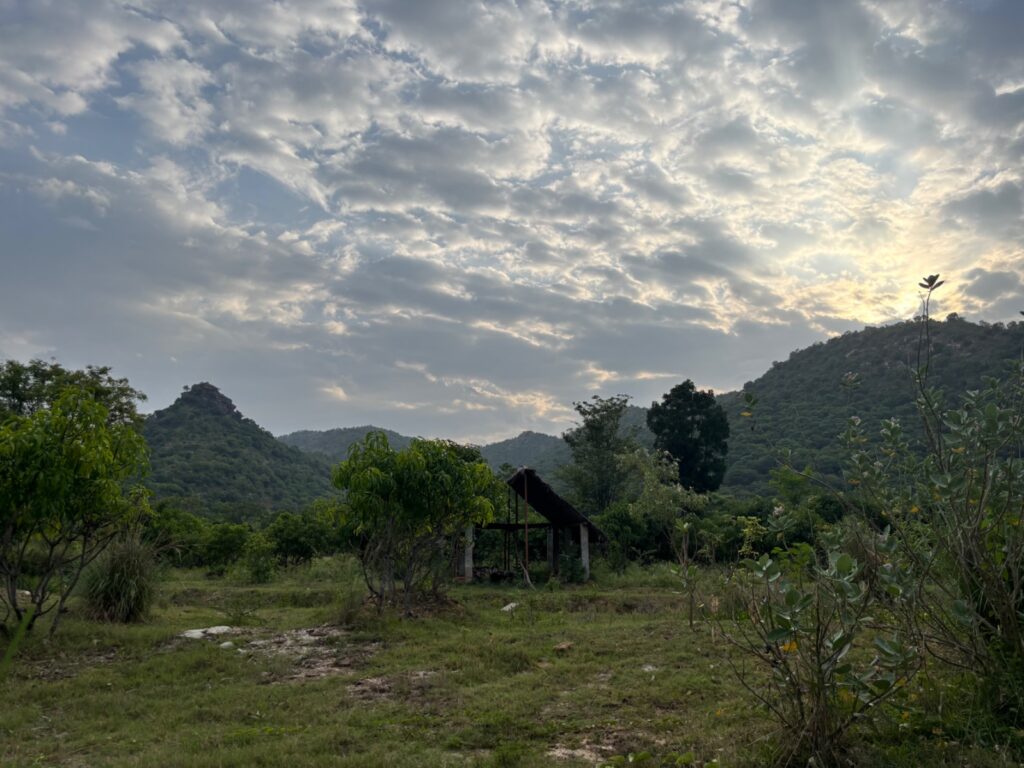
Aav re varsaad (આવ રે વરસાદ) is a Gujarati folk poem sung to welcome the rains. Yet this year, the monsoon has reminded us that no two places experience climate change in the same way. While some regions have seen intense rainfall, others continue to wait as El Niño reshapes weather patterns across the country.
As climate impacts become more uneven, the responses they demand become more local. Across our ecosystem this month, communities, practitioners, and governments responded in different ways – from translating research into regional languages and helping communities interpret local data, to reimagining public spaces as classrooms and strengthening local governance.
The work may look different from place to place, but it shares a common thread: responding to local realities while helping people better understand, adapt to, and shape the places they call home.
This month’s digest brings together updates from the Rainmatter Foundation team, our partner ecosystem, and the fellowships we support.
From the Rainmatter team
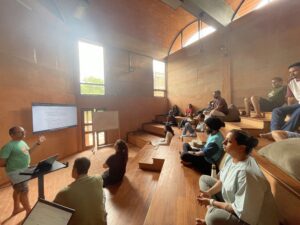
Standing in the middle of 70 acres being restored at Elephants by the Lake (EBTL) took us back to the origins of Rainmatter Foundation almost 6 years ago.
Through this visit, we navigated the gears of transition, reflected on our role as an ecosystem weaver, and discussed the role of design for our focus areas. A visioning exercise in the form of improv for our aspirations for 2036 (that had us in splits) also brought out our thoughts on balance between ecology, community, and self. We were deeply moved by the screening of My Otter Diary by wildlife filmmakers Sugandhi & Rana.
The 2-day visit also introduced us to the different gears in motion at EBTL. The rewilding efforts are being co-executed with the local communities and have resulted in a farmer’s collective, dedicated organic farming areas, and a space for research through the Center for Eastern Ghats Studies.
Forest Stewardship in BR Hills
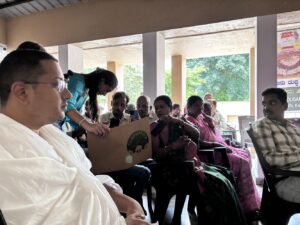
The team visited ATREE’s Community Conservation Centre across BR Hills and MM Hills landscapes in Karnataka. In BR Hills, the Soliga community became the first in the country to secure Community Forest Rights over an entire tiger reserve, spanning 540 sq km. BRT stands as a living example of coexistence between indigenous communities and wildlife.
For decades, ATREE has supported this journey by combining research with community needs. Their newly launched GramaMitra chatbot in BR Hills brings together traditional knowledge and scientific research to strengthen livelihoods, conservation, and agro-ecosystems. We also visited craft centres in MM Hills where communities transform the invasive Lantana camara into furniture and murals to restore degraded landscapes.
“What stood out was how years of research had been translated into practical tools that communities can use to better govern their forests and strengthen livelihoods,” reflected Nayantara Lakshman (Partner Manager, Conservation & Restoration).
ATREE is currently seeking collaborators for market linkages, programme design, and field internships.
The Next Generation of Climate Designers & Buildings
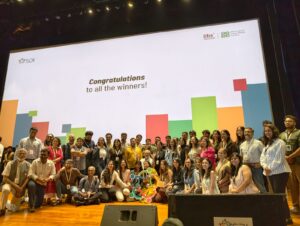
As climate change becomes more visible, concern among young people is growing. Platforms like Solar Decathlon India (SDI) play an important role in turning that concern into action where students gain practical experience, the industry gains fresh perspectives, and both work towards designing better buildings. At the SDI finals, students presented projects rooted in local climates, passive cooling, and natural materials, while startups showcased practical innovations for the construction sector.
What does it actually mean to design and build with the place you are building in? With it. This was the key focus at a conversation hosted by SHIFT (a global architecture movement) and Masons Ink. The architects and practitioners reflected on the importance of traditional knowledge and place-based design. They also launched an initiative to crowdsource documentation of regional building practices, organised by place.
Reflecting on both events, Akshatha Narayan (Thesis Lead – Buildings) shared, “This matters now because the construction boom happening across the Global South is not slowing down. It’s encouraging to see architects and builders prioritise site, climate, and material context over ratings and benchmarks. What gave me hope was seeing the same shift emerge at both ends – students learning to design with context from the start, and practitioners recognising the value of knowledge rooted in place.”
Collective Changemaking for Places
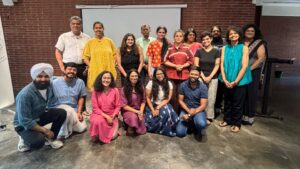
11 organisations working across conservation, community development, and systems change came together at the Samagata Space in Bengaluru to explore what it would take to enable collective changemaking for places.
Ripudaman Bevli (Thesis Lead – Changemaking) reflected that the discussion centred on a shift from supporting individual changemakers to enabling changemaking that is for, by, and of the place. They spoke about the common challenges: from getting communities involved to finding funding and the right partners. They also explored how working together could help everyone do more than they can alone.
The group will continue the conversation, inviting more organisations to strengthen this emerging ecosystem.
Reach out to Ripudaman if you’re exploring place-based changemaking.
Climate Communication in the Age of AI
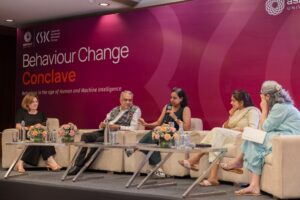
The Annual Behaviour Change Conclave, hosted by the CSBC at Ashoka University, brought together researchers, practitioners, and technologists to explore behaviour in the age of human and machine intelligence.
Kailash Nadh (CTO, Zerodha & Co-founder Rainmatter Foundation) and Sailee Rane (Thesis Lead, Ecosystem Messaging) joined the panel discussions exploring conversations across agency, accountability, and resilience in the age of AI.
Sailee reflected on how AI is reshaping the way people discover and consume information – While it makes climate knowledge more accessible and reveals hidden connections across complex systems, AI’s impact ultimately depends on the quality of the underlying data and research. It is creating both new opportunities and new challenges for climate communication.
Partner Updates
Neighbourhoods of the Future (NoTF)
NoTF aims to build neighbourhoods that are resilient to climate shocks and offer a better quality of life. It brings together citizens, governments and organisations at a very local level to transform the place. From South Bangalore with Socratus to Ahmedabad with Saath, the response to the first few meet-ups has been energising.
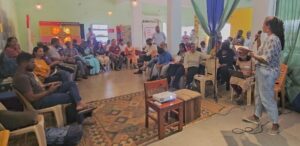
In South Bengaluru on 9th May, local community groups and Resident Welfare Associations (RWAs) working on neighbourhood action came together with experts in mobility, water, waste management, urban planning, and green spaces to exchange local challenges and explore pathways forward.
The conversations connected local context with practical expertise, giving way to new conversations for neighbourhood-led action.
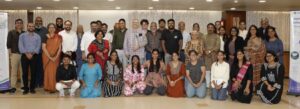
In Ahmedabad on 21st June, Saath anchored the second convening of the Urban Resilience Collaborative for the Informal Sector (URC-IS). The discussions brought out lived experiences of community leaders and practitioners around climate adaptation, heat and flood resilience, youth engagement, finance, and scaling local innovations.
If you wish to bring the efforts of community champions and experts together in one room and be a part of Neighbourhoods of the Future, please reach out to us at [email protected].
Janagraha – Urban Reforms Collective
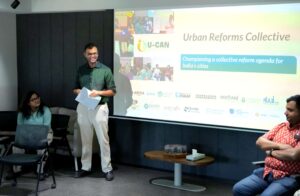
As cities evolve, strong urban local governments are essential for delivering services, managing infrastructure, and shaping more liveable neighbourhoods. To strengthen these institutions, Janaagraha has launched the Urban Reforms Collective (URC).
The URC brings together governments, political leadership, civil society partners, and organisations from across the country working in sectors such as urban development, governance and citizen engagement.
Together, they aim to build momentum for long-pending urban governance reforms and improving the quality of life for every citizen.
Praja – Policy to Implementation for Cleaner Cities
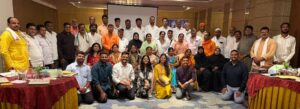
Praja Foundation organised workshops to help government officials and elected representatives build cleaner, healthier, and more climate-ready cities. One workshop introduced the new Solid Waste Management Rules, 2026, to councillors from Meerut, Varanasi, and Gorakhpur. Another brought together 105 officials and elected representatives from Dibrugarh to discuss waste segregation, better waste management, and practical solutions for their cities. Participants shared local challenges, exchanged ideas, and committed to encouraging waste segregation at source and greater public awareness in their communities.
These workshops were held soon after the Supreme Court’s new Solid Waste Management Rules, 2026 were notified. Helping local leaders understand the changes early and put them into practice. The new rules place a stronger focus on accountability and make waste segregation at source the starting point for better waste management.
B.PAC – Scaling Reuse Through Cutlery Banks
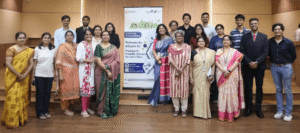
As events increasingly rely on single-use plastic, cutlery banks are offering a practical alternative by providing reusable plates, cups, glasses, and cutlery on a rental basis.
To explore how this model can be scaled across Bengaluru, B.PAC (Bangalore Political Action Committee), in collaboration with the Center for Sustainability, Ramaiah Institute of Management, brought together Cutlery Bank founders, students, researchers, and sustainability practitioners.
Through SWOT analyses and Business Model Canvas workshops, participants identified strategies and opportunities to strengthen the city’s cutlery bank ecosystem.
The insights will inform a research report with an actionable roadmap for increasing access to reusable cutlery services and making low-waste events easier to organise across Bengaluru.
Palluyir Trust – Noticing the Small Species That Sustain Cities
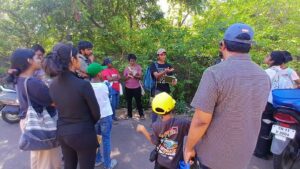
Many of the species that sustain urban ecosystems go unnoticed or are met with fear. Palluyir Trust’s recent pollinator walks and insect campaigns in the green spaces of Chennai invited people to slow down, look more closely, and rediscover the biodiversity around them.
Participants observed insects up close, explored the role they play in healthy ecosystems, and reflected on how widespread pesticide use is affecting local biodiversity. The conversations challenged common perceptions of insects while highlighting the connections between everyday choices and ecological health.
By creating opportunities for people to experience nature where they live, Palluyir Trust is deepening the connection between people, co-habitants, and the places they call home.
Jana Urban Space – Turning Urban Environments into Classrooms
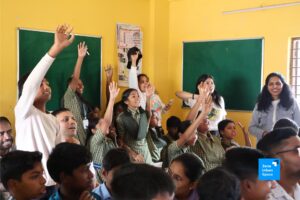
Following the ethos of Understand, Own, and Act, Jana Urban Space Foundation has been working to help young people build a stronger relationship with the places they live in. In collaboration with Mercedes-Benz Research and Development India (MBRDI), they engaged students in Bengaluru through place-based learning experiences.
A visit to neighbourhood lakes and nallahs transformed familiar public spaces into living classrooms, where children observed urban ecosystems, discovered local biodiversity, and learned directly from their surroundings.
By taking learning outdoors, the initiative encouraged young people to better understand, connect with, and care for the systems that shape their city.
Socratus – Making Heat Visible Beyond Temperature
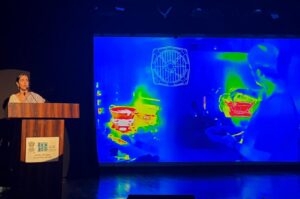
The Heat Experience Centre by Socratus Foundation for Collective Wisdom is emerging as a space that helps people understand heat not just as rising temperatures, but as an issue that shapes health, livelihoods, gender, and everyday life. Over the past month, the Sustainable Futures Collaborative and HeatWatch India explored indoor heat, unpaid care work, and women’s access to cooling. Restless Development and Swasti highlighted voices of young people across Karnataka and how extreme heat affects livelihoods.
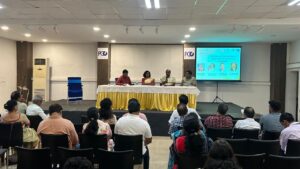
Socratus also collaborated with Asar and the Odisha Environment Congress in Bhubaneswar to bring together journalists, researchers, public health experts, and practitioners to discuss how Heat Action Plans can become more community-driven, locally relevant, and rooted in lived experience.
Together, these conversations highlighted how rising heat affects far more than the weather, setting off ripple effects across health, livelihoods, care work, public systems, and who gets hit the hardest.
PRADAN – From Village Scorecards to Landscape Restoration
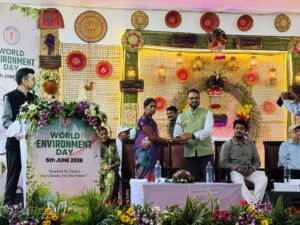
At a state-level programme organised by the Chhattisgarh Department of Forest & Climate Change, PRADAN’s approach to community-led restoration was recognised as a model for improving both stewardship and livelihoods.
Using the example of Silibahar village, the team showed how villagers use simple scorecards
- to understand the health of their forests, farms, water, and livelihoods,
- and plan improvements together with government departments.
This has helped Silibahar become an organic village, increase green cover, prevent forest fires, grow incomes through lac cultivation, and stop migration from the village over the past two years.
This is a powerful example of how community-led planning could build a working relationship between natural, social, and economic systems – a relationship that thrives by itself. And organisations such as PRADAN play an important role in supporting this.
CoRE Stack – Making Landscape Data Accessible
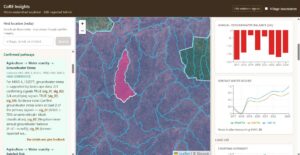
CoRE Stack is a digital public infrastructure and platform that brings information about local landscapes, integrated with community knowledge, directly to the people. This allows communities and other diverse stakeholders to co-create programs tailored to their ground reality.
CoRE Insights, the platform’s newest capability, converts complex landscape data into usable insights and analysis.
The vision is to embed this engine in community-facing tools, alongside Commons Connect. This would let place-based changemakers diagnose problems, discover solutions, connect with enabler organisations, and take collective action grounded in their own landscape data.
Know Your Landscape dashboard → CoRE Insights layer → Commons Connect tool
More about CoRE Insights here: https://lnkd.in/grNPf_3g
Join the CoRE developer community and weekly open calls every Friday at 3 PM: https://lnkd.in/grZtJYw3
Climate Narrative Hub – From Community Voices to Public Narratives
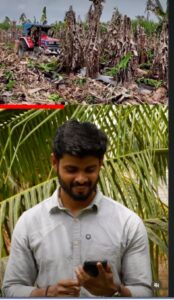
How can the broader narrative of local economies (local production and consumption) be shown to wider audiences and also highlight the efforts of organisations who are enabling this?
CNH has figured out a unique way of doing this – they identified the growing popularity of reels (short form videos) as an easy medium to amplify varied stories. As conversations around aatmanirbharta (self-reliance) gain momentum, they have been building a network of local content creators across Madhya Pradesh, Karnataka, Tamil Nadu, Rajasthan, and Uttar Pradesh.
Rooted in local languages and lived experience, these creators are documenting communities transforming banana stem waste into handcrafted products, producing naturally dyed textiles, and strengthening local economies through community-led enterprises.
Asar – ‘Simplifying Science’ on Air Pollution
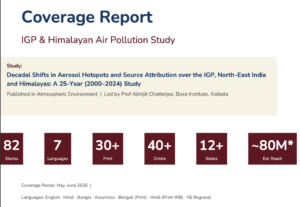
Through Simplifying Science, Asar works with researchers and regional media to turn complex studies into easy-to-understand stories in multiple Indian languages.
In June, they picked Prof. Abhijit Chatterjee’s 25-year satellite study on air pollution across the North and North-East India. They developed three research-based narratives tailored to different contexts: a national story, one focused on West Bengal and the Sundarbans, and another for the North-East.
Published in seven languages across national and regional media, Asar reached over ~75 million people in 12+ states, helping bring evidence-based climate conversations closer to the communities most affected.
By following how these stories are shared, discussed, and acted upon, Simplifying Science is helping climate research travel from academic papers to everyday conversations and policy decisions. Explore the coverage report here.
Smarter Dharma – Putting Better Building Choices Within Reach
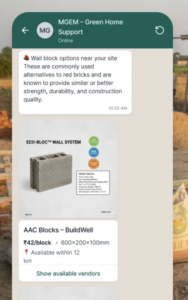
As construction accelerates across Tier 2 and Tier 3 cities, making informed choices about environment-friendly building materials remains a key challenge for builders and homeowners.
To address this gap, the International Finance Corporation (IFC), the Global Buildings Performance Network (GBPN), and Smarter Dharma have launched the Marketplace for Green Equipment and Materials (MGEM) . A multilingual, location-aware digital platform, MGEM gives easier access to reliable information on green building materials. By bringing verified information on product performance, certifications, costs, and local availability into one place, MGEM makes it easier for users to discover, compare, and choose better materials.
MGEM will be rolled out across select cities in 10 states, and a nationwide expansion expected by year-end. Smarter Dharma is currently inviting manufacturers and vendors of green building products to join the MGEM platform. Organisations interested in collaborating can reach out at [email protected] or call +91 6361 443 806.
For more information, watch this podcast.
The Climate Brief – Making climate impact visible in everyday life
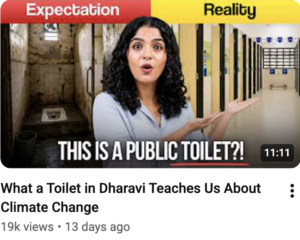

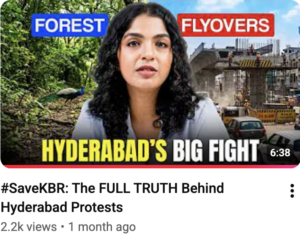

In June, The Climate Brief published four videos that uncovered the climate stories hidden in everyday life – from Dharavi’s public toilets and the science behind El Niño to the environmental cost of Indian weddings and Hyderabad’s movement to protect KBR Park.
Each episode connects familiar places, events, and decisions to larger climate systems, making complex topics easier to understand while encouraging viewers to see the links between climate, cities, public health, and everyday choices.
If you haven’t caught the latest episodes yet, head over to @TheClimateBrief on YouTube and join the conversation.
Fellowships
Sensing Local
Bengaluru Street Lab Fellowship 2026: A two-month, hands-on fellowship for students and young professionals to work on Bengaluru’s Street Atlas while gaining practical experience in walkability, climate action, AI-enabled street mapping, and data-driven urban planning alongside urban practitioners and government stakeholders.
Apply by: 17 July 2026
Through the form: https://lnkd.in/dddcBA-M
YouCAN
The Rewilding Storytellers Fellowship: For young storytellers (18–40 years) passionate about ecology, climate, and people-nature relationships to tell untold stories rooted in their own communities.
More details here: YouCAN Linkedin, Instagram
How to apply: Write to [email protected] or WhatsApp 8310306073 to express your interest.
śubhāste panthānaḥ santu
(May your roads be auspicious)
– Team Rainmatter Foundation