
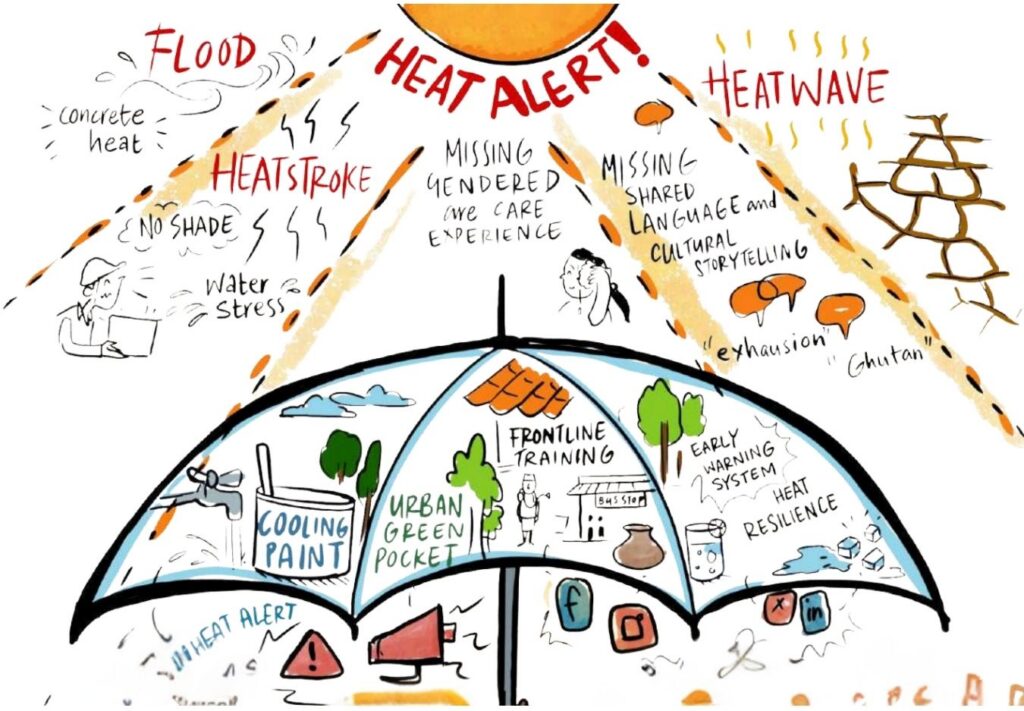
Teevra bisilu (ತೀವ್ರ ಬಿಸಿಲು in Kannada; भीषण गर्मी in Hindi; intense heat): As May brings the peak of summer heat across India, the landscape braces for the arrival of the monsoon. Last month saw significant internal transition and external deepening, as we navigate the challenges of a super El Niño (that threatens to intensify further) while rooting our work in long-term community resilience.
Just like the changing seasons that demand adaptation, the ecosystem is constantly evolving to tackle the scale of the climate crisis and challenges ahead.
We attempt to map out some of the movements and evolutions within our team and partners below.
Team updates
Different Roles for Different Phases of Ecosystem Building
Our internal structure is evolving to deepen our role as an ecosystem weaver and to enable more coordinated action towards shared goals.
Join us in welcoming Sathyanarayanan Sankaran as the new CEO of Rainmatter Foundation. Urban technologist, Co-Founder of Urban Morph, Bicycle Mayor of Bengaluru, author of Break the Block, host of the OoruLabs podcast – Sathya has worked at the intersections of technology, public policy and citizen action for nearly three decades.
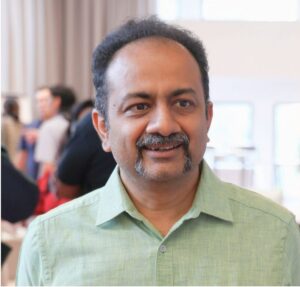
From building data-driven platforms for mobility and urban governance to championing community-led change, his work has consistently focused on translating complex systems into practical action. Having led Rainmatter Foundation’s urban work over the last two years, he now steps into the role with a deep understanding of the ecosystems, partnerships, and long-term transitions required to build climate resilience in India.
Simultaneously, after 5.5 years of building the Foundation’s core guiding principles and strategies, Sameer Shisodia is moving into an Ecosystem Fellow role.
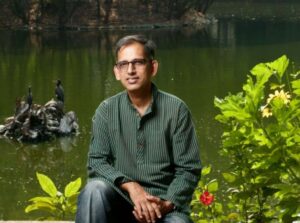
He will work with the wider ecosystem, our partners, and the internal team to reimagine the architecture for place-rooted systems change. His sole focus will be on helping build strategies that unlock ecosystem participation.
Onto more team updates.
Designing for Coexistence: Bird-Window Collisions
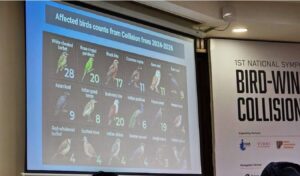
The 1st National Symposium on Bird-Window Collision in Delhi was co-organized by IISER Tirupati, Nature Conservation Foundation (NCF), Vidhi Centre for Legal Policy, and Feather Library. The symposium brought forward a first-of-its-kind dataset that made visible both the scale of wildlife loss and the systemic gaps in policy, standards, and data that perpetuate it.
Akshatha Narayan (Thesis Lead for Buildings) shared that the symposium was able to connect an invisible conservation crisis to multiple systems, including green building standards, developer and builder incentives, gaps in data infrastructure, and how ecology is valued. She emphasised that this is not a new area of focus but one that deepens the same systemic shifts that partners are working towards.
Experts also noted that a lack of local data and high costs for imported bird-safe films currently hinder adoption, calling for biodiversity to be integrated directly into architectural education and performance metrics. What we need is thoughtful facade, design, and landscape planning.
Weaving a Green Rural Economy
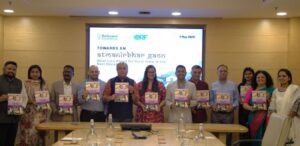
Reliance Foundation and Observer Research Foundation hosted a roundtable discussion on ‘Towards an Atmanirbhar Gaon: What Lies Ahead for Rural India in the Next Decade.’
A critical point of the discussion was: unless we eliminate the siloed approach towards livelihoods, the efforts end up in ‘program mode’ and often fail to achieve long-term goals. Tanmay Mukherji (Strategy Lead – Entrepreneurship and Platformisation), brought in a fitting example from the automotive world where 8000 parts from 400 suppliers come together just in time to make a vehicle. Similar to an automobile production line, an Atmanirbhar Gaon needs an ecosystem approach: integrating SHGs, FPOs, youth, institutes, innovators and markets, so places move beyond isolated programs into sustainable, community-led economic models.
The goal should be to move towards weaving together the strengths of various actors in the ecosystem to make a better whole.
If you would like to know more or want to contribute, do reach out to www.grameee.org where a consortium is coming together to build this.
Partner Updates
Climate Trends – Reframing Heat as an Economic Threat
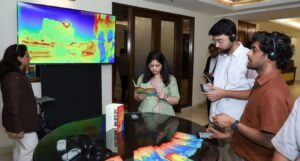
At the 5th India Heat Summit, Climate Trends called for a policy and narrative shift in how we talk about extreme temperatures – moving from “adaptation” to recognizing it as a GDP-scale economic threat.
Four research papers published through May grounded these discussions: on rising night temperatures as a silent killer, evening cooling demand as the energy system’s new breaking point, warming winters eroding wheat yields central to food security, and indoor heat as a function of built environment design.
Together these surfaced narratives that remain outside mainstream Indian discourse: heat as a GDP-scale economic threat, the governance gap across India’s 300+ Heat Action Plans, the undercounting of heat-related deaths that keeps heat off budget lines and out of courtrooms, and the evidence that the most vulnerable are being failed indoors, not just outside.
Climate Narrative Hub (CNH) – Reframing Heat Messaging for Dignity

The Climate Narrative Hub (CNH) has designed the Cooling Futures Narrative & Messaging Guide for communicators, creators, researchers, practitioners, institutions, and ecosystem actors. The guide is intended as a practical resource for anyone working to make conversations around heat more relatable, grounded, and actionable. By changing the language around heat, the goal is to move beyond cooling solutions – and drive more equitable and proactive policy responses.
Their analysis reveals that English-language coverage focuses heavily on data, alerts, and administration, while Marathi and Hindi media are more effective at surfacing ground-level reporting and public sentiment.
To read the full report, please click here. https://climatenarrativehub.org
Socratus Foundation – Visualizing Urban Heat Shifts
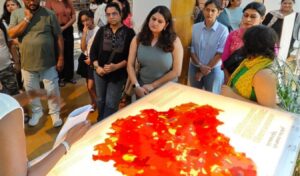
Socratus Foundation launched its 6th Experience Centre on Heat at the NGMA (National Gallery of Modern Art), running until June 30th. The exhibition uses historical maps from the 1970s to track how Bengaluru’s rapid urban growth and disappearing green cover have directly contributed to rising local temperatures.
The curated walkthroughs at these centres help citizens and policymakers understand that rising heat is a result of decades of extractive land-use, weak governance and short-sighted urban growth. All of this is done while highlighting how contemporary choices by citizens are impacting heat in the city as well.
Having an Experience Centre is almost like having a micro-museum in the neighbourhood, where one occasionally stops by to see what’s new. Socratus is hoping that beyond knowing one’s city and building a connection, the six Experience Centers also become spaces where people gather for learning experiences, activities, conversations, and discoveries across ages.
Ethos Foundation – Navigating Tidal Flooding in Kochi
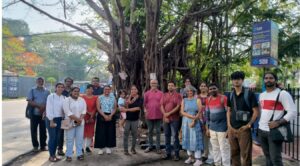
Ethos Foundation, in collaboration with Equinoct, recently conducted “Arcause Spotlight 2.0” in Kochi, an immersive program designed to help neighbourhoods plan for the reality of tidal flooding.
Participants utilized the SeaSight Resilience Model to visualize how rising tides impact specific neighbourhoods, and discussed the potential of Textile Reinforced Concrete (TRC) for flood-resilient construction.
By bridging the gap between scientific modelling and practical architectural solutions, Ethos is empowering local communities to move beyond reactive measures toward science-backed, resilient designs.
Praja Foundation – Empowering Local Governance
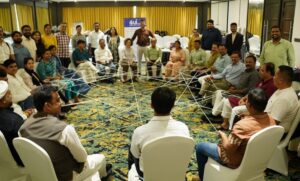
Praja Foundation convened two consultations this May to examine the future of India’s cities.
At the national consultation, mayors and administrators from 15 cities discussed findings from Praja’s latest report, which showed that Indian cities still depend on state and central governments for nearly 60% of their revenues. The conversations focused on giving city governments greater financial autonomy, diversifying revenue sources, and linking funds to service outcomes. The Maharashtra consultation brought together over 60 delegates from 13 municipal corporations and revealed gaps in citizen participation and local decision-making processes, with many cities lacking basic conduct-of-business rules and effective digital grievance systems.
Together, the discussions reinforced that stronger cities need both empowered institutions and more meaningful public participation.
Janaagraha – Reimagining Municipal Accounting Systems
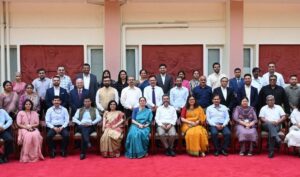
Janaagraha, in collaboration with the Comptroller and Auditor General of India (CAG), convened a workshop on reimagining and strengthening the National Municipal Accounting Manual (NMAM) 2.0.
The discussions explored what municipal finance systems need to become in order to better serve cities today and brought out gaps in the previous version. The focus was especially on how cities approach accounting, budgeting, reporting, and auditing as interconnected parts of a larger financial system, rather than isolated functions.
A key shift that emerged from the workshop was the move towards a differentiated, tiered approach for Urban Local Bodies (ULBs) to account for varied sizes and capacities.
PRADAN & SoTH Alliance – Community Stewardship for Places
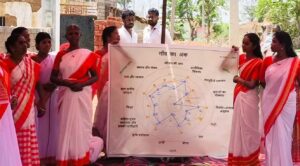
The PRADAN-led exposure visit to the Rocho and Porha villages in Jharkhand brought alive the Sense of the House (SoTH) process for the alliance members.
The local communities talked about how they came together to have open discussions and analyse economic inflows and outflows of the village. They understood the interconnections between social, economic and ecological systems.
This self-knowledge gave way to their future aspirations, taking complete ownership of tracking and fulfilling their own targets. They created a village-level spider map measuring progress across 11 parameters.
Communities already hold the intelligence to shape their own pathways. PRADAN’s role was to reduce friction, enabling easy access to infrastructure and solutions for the stewards of the place. (Rather than the top-down approach of infrastructure being pushed to places that don’t need it or can’t use it.)
To learn more about the SoTH Alliance, reach out to the Climate Rise Alliance.
Industree Foundation – Local Enterprises and Sustainable Snacking
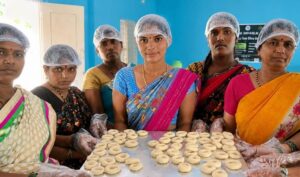
Industree Foundation is scaling a transformative model of local production for local consumption through its work with six Van Dhan Vikas Kendras in Karnataka to promote local snack production and creating jobs for women (VDVKs are a scheme by the central government to empower tribal communities through sustainable, forest produce-based entrepreneurship).
The model combines training and tech tools to make community‑owned enterprises financially viable. In addition to training on production, they are helping with supply chain management through electric vehicles, route planning, and cost optimisation. The goal is to significantly reduce outside dependency on snacks, reducing “food miles”, avoiding harmful ingredients, and multilayered-plastic packaging. And create a community-owned enterprise model that will be fully replicable for adoption by other organisations within two years.
Dakshin Foundation – Education for Future Place-Stewards
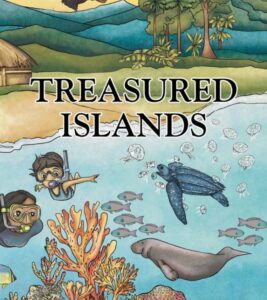
Dakshin’s Andaman & Nicobar Environment Team (ANET) is focusing on building a new generation of place-stewards through immersive ecological education.
This month, they conducted specialised training for local youth guides and tour operators, equipping them with the skills to lead intertidal walks that deepen the connection between tourists and the island’s unique coastal biodiversity.
Simultaneously, they are working closely with school teachers to integrate environmental education into classrooms through the “Treasured Islands” resource book. The workshop helped build teacher confidence in using the resources and highlighted how island-specific examples can make learning more engaging for students.
The central idea being: ecosystems remain functional when people develop meaningful, informed, and reciprocal relationships with nature. A deeper connection between people and the places they call home.
WCS-India – Human-Wildlife Coexistence in Ratnagiri

WCS-India is deepening its efforts in human-wildlife coexistence by launching culturally relevant resources and engaging future storytellers.
Maharashtra has the second-highest leopard population among all states. Leopards are highly adaptable, apex predators that maintain the balance of prey populations and overall health of the ecosystems, and so their conservation is vital.
WCS-India partnered with local organisations in Ratnagiri to launch a leopard awareness guide and films in Marathi, the local language. While the district sees frequent human-leopard encounters and incidents of leopards falling into open wells, actual attacks on humans remain rare. By drawing on the “Mumbai model,” these resources provide simple “do’s and don’ts” to help communities prevent negative interactions and understand the meaning of shared landscapes.
WRI India – Celebrating the Changemakers of Bodoland
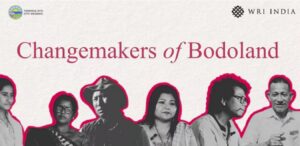
Through the Eco City-Regions Initiative, WRI India’s “Changemakers of Bodoland” video series is now live on YouTube. The series tells stories of local change-makers who are finding new ways to bring in innovation to support and celebrate their culture, livelihoods and environment.
From the farmer experimenting with integrated farming practices or an artisan keeping indigenous crafts alive, the people of Bodoland are redefining livelihoods on their own terms. With around 25,000 MSMEs, 98% of them being micro-enterprises, grassroots entrepreneurship is thriving in Bodoland.
These stories showcase how protecting local ecology, re-evaluating land use and celebrating traditional knowledge can create sustainable pathways for resilient livelihoods.
The latest episodes features individuals like Kirat Brahma, a toy maker and entrepreneur, and Sarbeshwar Basumtary, an agriculturist and teacher.
The Climate Brief – Connecting Climate Change to Everyday Life





In May, The Climate Brief published 5 videos, exploring a wide range of topics: from Mumbai’s BKC mobility crisis and what extreme heat does to our bodies to how parks can help us beat the heat. We also highlighted Puri’s successful drink-from-tap initiative and broke down Delhi’s EV policy.
Every episode tries to simplify the systems that shape our lives – water, mobility, heat and energy – helping viewers understand how climate change connects to their own choices.
If you haven’t caught our latest episodes yet, head over to @TheClimateBrief on YouTube to watch them!
śubhāste panthānaḥ santu
(May your roads be auspicious)
– Team Rainmatter Foundation