
Vaphasa – Creating Conditions for Growth
In Marathi, Vaphasa (वाफसा) describes a very specific moment in the soil – not wet, not dry, but perfectly balanced to hold a seed and let its roots take.
Farmers don’t rush this but instead they wait; sowing too early or too late into soil that isn’t ready wastes the seed.
Much of what our ecosystem does works the same way – not the sowing itself, but the patient work of getting the soil right: building partnerships, listening to communities, supporting local leadership, so that when the moment comes, people, place, and nature can actually take root.
July’s work follows that similar process of cultivation. As relationships are built and ideas take shape, the foundations are strengthening for what can grow next.
This month’s digest brings together updates from the Rainmatter Foundation team, our partner ecosystem, and the fellowships we support.
From the Rainmatter Team
A New Chapter for the Ecosystem Messaging Thesis
 .
.
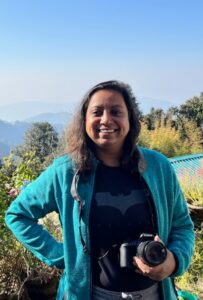
After leading the focus area for Ecosystem Messaging at the Foundation for the past two years, Sailee Rane is moving on from her current role. She worked on building the infrastructure (the base layer) to take climate narratives emerging from different places and make them a part of mainstream conversations. This kind of infrastructure is the first step to strengthening the ecosystem of climate storytelling in India. Sailee will continue to work on the YouTube channel – The Climate Brief by Rainmatter.
As Sailee embarks on her next chapter, we are delighted to welcome Divya Narayanan, who will now lead the Ecosystem Messaging thesis. Divya brings in over a decade of experience at the intersection of democracy, climate justice, and citizen participation. Her most recent work spans ten years at Jhatkaa.org, working with citizens, campaigners, and technologists to build people-powered campaigns on climate, gender, public health, and social justice across India.
We’re investing in the cultural conditions that make change last, focusing on place, nature and public imagination. The work is about shifting what people believe is possible about India’s relationship with nature.
We look forward to this next chapter as the Messaging thesis continues to strengthen how climate stories are told, shared, and experienced across places.
From Better Buildings to Better Systems
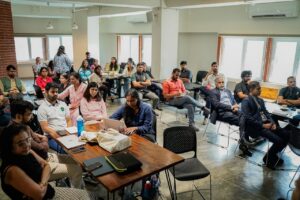
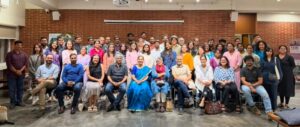
Rainmatter Foundation attended the Building Futures Forum, hosted by GBPN (Global Buildings Performance Network) in Bengaluru. The forum brought together developers, government, architects, philanthropy and civil society to push the built environment conversation toward systemic change.
The forum worked across two lenses: designing healthy, climate-resilient buildings leading to healthy neighbourhoods, and mainstreaming the adoption of green materials. Discussions on day one centred on environmental health being inseparable from human health. Sathya (CEO – Rainmatter Foundation) joined the panel on institutionalising healthy buildings and cities. Day two turned to GBPN’s new Market-Readiness Toolkit, built to help innovators navigate demand-side frictions.
This aligns with our Build Shift work – redefining what a good building means, and building the ecosystem consensus that helps that definition stick. As Akshatha Narayana (Thesis Lead – Built Environment) says, “Forums like this help us see the ecosystem’s thinking and figure out where we can add value. It’s less about doing work in parallel, and more about finding the right collaborations – because materials shape buildings, and buildings shape places.“
Mapping Our Connection to Nature
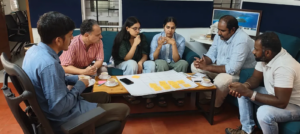
Most urban growth treats nature as an afterthought, often cutting off the natural connections that keep ecosystems alive. But if we are to build resilient cities, we have to look beyond isolated patches of green. We have to restore the functional relationships between people, species, and the physical environment.
Adavi Trust, with support from the Zerodha Rewilding Fund and Rainmatter Foundation, has been building the Nature Network Atlas. It’s a practical tool designed to map out urban ecological nodes such as wetlands, parks, lakes, and home gardens, to help conservation groups and citizens make informed decisions about local restoration.
Siddharth Rao (Thesis Lead – Conservation & Restoration) and Nayantara Lakshman (Partner Manager – Conservation & Restoration) were also part of the team. They recently wrapped up the first pilot test with Farmers for Forests, using the feedback to see how the tool holds up on the ground and where it needs tuning.
Building water-resilience in Jodhpur
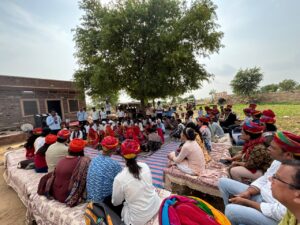
Sandilya Mutluru Venkata (Strategy Head – Rainmatter Foundation) along with EdelGive Foundation team visited 2 villages in Jodhpur, to learn about the grassroots work supported by the GROW+ initiative.
They visited a village in Kalyanpur block, Ram Devpura where there was equal participation in the Village Development Committee by both men and women. Vasundhara Seva Samithi (VSS) has been working in this block restoring 3200 tankas (household storage tanks) benefitting 15,000 families over the years. Beyond water security, the people of Ram Devpura had a strong sense of community, voiced by women who helped reduce village expenses and create common emergency savings.
In Bhakri village, Gramin Vikas Vigyan Samiti (GRAVIS), works alongside the Bishnoi community to strengthen farmer producer organizations, promote natural farming, and protect sacred groves (orans) using traditional water harvesting structures.
These field visits show how people of the place can become custodians of their commons, social structures and livelihoods when grassroots organizations work alongside them.
Envisioning the Future of Rural Livelihoods
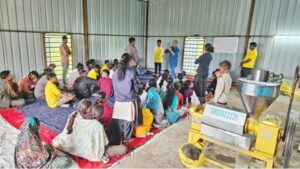
Tanmay Mukherji (Strategy Lead – Entrepreneurship) collaborated with Green Chakra and Pragati Grameen Vikas Sanstha for a Local Economy workshop in Bhimpur, Madhya Pradesh.
Around 50 young people from five tribal villages came together to build a future vision for their villages around local resources, natural farming, and migration challenges. The workshop enabled them to shape enterprise ideas rooted in nature and local ways of living.
The initiative and its emerging enterprises are supported by Rang De, an organization that provides affordable credit to underserved rural entrepreneurs.
Listening to Our Places and People
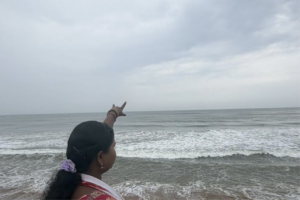
Pankaj Mishra, founder of Factor Daily and mentor for the Jagah Fellowship, recently facilitated a listening and sharing session with the Rainmatter Foundation team and a few partner organisations. He told stories of the first few places (jagah) where he visited the fellows from across the country spanning 10,000 kms.
One story stayed with many in the room: a fellow had submitted her Jagah application from a coastal village that no longer exists because it got engulfed by the sea. As Pankaj reflected,
“To the people of this place, it’s not ‘climate change’; it’s pure loss – of livelihood, of home, of everything they’ve ever known.”
The Jagah Fellowship supports storytellers in their own landscapes to document climate in the languages and experiences of the communities they belong to – it is an invitation for places to speak for themselves.
Partner Updates
Climate Trends – Enhancing Public Knowledge of Climate Impacts
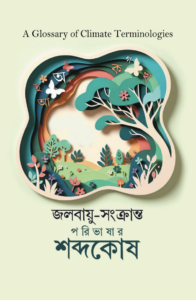
Climate knowledge is most useful when people can understand and relate to it.
The changing patterns in monsoon and heat are more than seasonal events. Climate Trends continued to center the focus on climate change impacts on people and urban planning. Through research briefings, media engagement, and discussions with creators, they connected everyday experiences to these larger systems. Their analysis linking record electricity demand to rising cooling needs also informed discussions within the Ministry of New and Renewable Energy, helping bring climate science into future energy planning.
They launched the Climate Glossary in Bengali, following earlier editions in Tamil and Marathi, to help journalists report on climate in regional languages.
They engaged creators and young storytellers through labs and collectives equipping them with knowledge and tools. They were encouraged to look beyond the event itself and tell the bigger story behind it with greater clarity, confidence, and scientific accuracy.
Asar – Shaping Narratives on Rising Heat
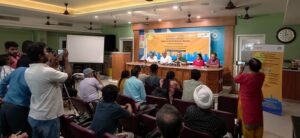
Asar hosted the seventh workshop in its National Heatwave Workshop series in Kolkata, bringing together journalists, researchers, health experts, and civil society to strengthen reporting on extreme heat.
The workshop shed light on several important insights such as –
- the growing health risks of combined heat and humidity
- the disproportionate impact of extreme heat on women and their livelihoods
- the need to translate climate data into stories rooted in lived experience
- the importance of making climate science more accessible for journalists
Asar has also been exploring storytelling, music, comedy, and satire as a way to bring climate conversations into everyday life. Through plays like Fever Dream and The Great Indian Ukada, they use art and culture to make the impacts of rising heat easier to understand for mainstream audiences.
SHIFT Transport – Moving Cities Towards Public Transport
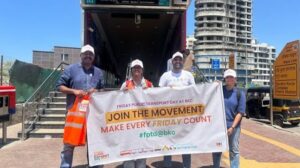
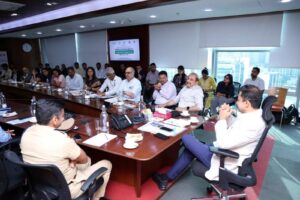
If you’ve ever visited Bandra Kurla Complex (BKC) in Mumbai, even if just for a meeting, you would know its traffic congestion woes. SHIFT Transport worked with MMRDA, to launch a ‘Friday Public Transport Day’ initiative. The initiative urges people to go car-free every Friday and choose the extensive public transport network from metros and locals to buses.
As an added bonus, the campaign ended up sparking conversations about last-mile connectivity. Commuters found it difficult to walk or find an auto to and from their bus stops or train stations. MMRDA introduced feeder buses to manage the interim situation so that the Public Transport Day continues.
Climate Narrative Hub collaborated to amplify the initiative. They worked with Mumbai-based creators to tell stories about public transport in their own voice.
WRI India also presented the SHIFT Transport Framework at the London Climate Action Week. They showcased how open data, cross-sector collaboration, and AI can support effective transport planning for cities to respond to people’s everyday commute.
Common Ground – 100 Stories of Commons

A promise between two villages in Lahaul to protect old trees. A 3,000-year-old farming tradition from Goa. River Guardians from Kashmir.
These are some of the stories featured in 100 Stories of Commons – a public archive documenting how communities across India care for shared places like forests, wetlands, grazing lands, and village commons.
Created by Common Ground in collaboration with Land Conflict Watch, the archive highlights how people use local knowledge and work together to protect nature and support their livelihoods. It also brings attention to stories and ideas that are often missing from mainstream conversations about development. Read the stories here.
CoRE Stack – Commons Connect
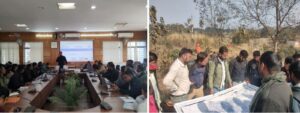
Where should a check dam be built? Which areas should be planted with trees? These decisions are often based on limited information.
In Pali village, Jharkhand, villagers, the panchayat, district officials, and PRADAN walked the landscape together, using Commons Connect by CoRE Stack to combine local knowledge with satellite data and digital maps on a mobile screen. Together, they identified the best locations for water conservation and plantation, helping plan natural resource management with greater confidence. The approach proved so useful that it expanded from one village to 237 villages in Ramgarh district. What once took 10-15 days can now be completed in just 3-4 days.
Today, Commons Connect is being used across 45 districts in 9 states, making planning faster, more collaborative, and rooted in both community knowledge and data.
CoRE Stack also offers tools like Know Your Landscape, which helps communities explore their landscapes through geospatial data. Its APIs make this data available to other applications, allowing more people to build on these resources.
Data and Design Jams – Turning Data into Public Conversations
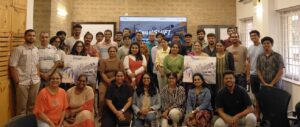
VisualSHIFT, a collaboration between Oorvani Foundation, OpenCity, and WRI India, explored new ways of communicating urban mobility data. The design jam brought together designers, planners, students, and technologists. They converted transport datasets into interactive maps, dashboards, and visual stories, integrating complex information into everyday decision-making.
OpenCity also hosted an Air Quality data jam at Rainmatter Foundation’s office. Participants analysed air quality data from Jayanagar alongside traffic and seasonal trends, and explored its links to public health. Working with real-world datasets and collaborative analysis, the session showed how local data can help communities better understand the environmental challenges in their own neighbourhoods.
Explore future jams at – https://opencity.in/category/jams/
Also, explore the Multispecies Hackathon organised by Socratus Foundation on 12-13 September in Bengaluru – https://elephantacademy.org/multispecies-hackathon
Janaagraha – A Historic Opportunity for India’s Cities
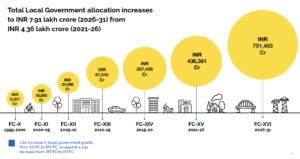
India’s cities could receive a record ₹3.56 lakh crore through the XVI Finance Commission – the largest-ever funding recommendation for Urban Local Bodies.
Janaagraha’s latest analysis highlights how this gives cities more freedom to address local needs and prepare for rapid urban growth. It also points out that funding alone is not enough. Strong local leadership, better planning, public participation, and transparent systems will be key to turning this opportunity into better services and more liveable cities that offer everyday quality of life.
Read Janaagraha’s analysis of the XVI Finance Commission recommendations here.
Praja Foundation – Strengthening the People and Systems Behind Cities
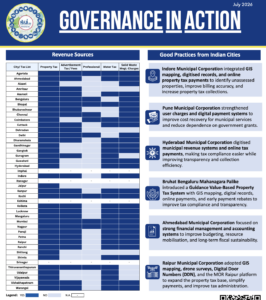
Praja Foundation has released the Fiscal Empowerment of City Governments 2026 publication that analyses how 43 city governments raise and manage their revenue.
At a time when most cities continue to depend heavily on state and central government financial transfers, the publication maps successful reforms that have helped municipal corporations strengthen their financial independence. Other local governments can adapt these practical lessons – from improving property tax systems to digitising revenue collection – and apply them to their own contexts. Read the Fiscal Empowerment publication here.
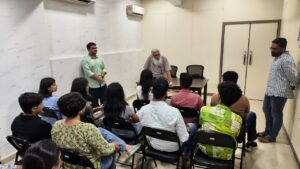
Alongside research, Praja Foundation engaged young people through Prajanubhav sessions and mentorship programmes, introducing students to urban governance through experiential learning, conversations with practitioners, and opportunities to participate more actively in shaping their cities.
WRI India – Strengthening Urban Governance for Climate Action
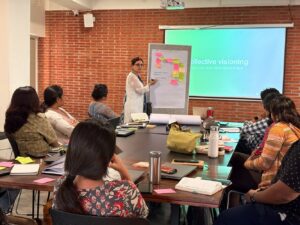
As extreme heat becomes an increasingly pressing urban challenge, the Government of India launched the “Building Heat Resilient Cities: A Strategic Pilot for Urban India” programme under AMRUT 2.0 scheme. It is a pilot programme for scientific assessment of urban heat mitigation in 12 cities, Bengaluru being one of them.
11 organisations came together to form the Bengaluru Heat Collective – WRI India, along with CSTEP, Socratus Foundation, Hasiru Dala, ARTPARK, Bengaluru Sustainability Forum, C40 Cities, HeatWatch, Jan Sahas, KHPT, and NIMHANS to build a coordinated response to rising heat.
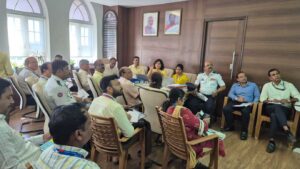
Additionally, WRI India worked with the Mumbai municipality to release its third Climate Budget for Financial Year 2026–27. This year’s budget introduces ward-level climate budgeting for the first time, piloting the approach across four wards. Bringing climate planning closer to local decision-making has enabled departments to align investments with neighbourhood climate priorities, building accountability and ownership of climate action across the city.
Biome Environmental Trust – Expanding the Devanahalli Living Lab Pilot
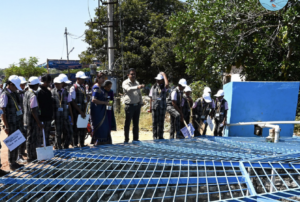
Cities often struggle to manage water as one connected system. Biome’s Devanahalli Living Lab demonstrates an integrated approach by bringing together rainwater harvesting, groundwater recharge, wastewater reuse, and local water governance in one place.
The pilot has now been approved to scale into a larger government-led water security project under AMRUT 2.0 scheme.Through a partnership with Indian Institute for Human Settlements (IIHS), Biome aims to replicate the model in Chikkaballapura. This is a testimony of how locally tested approaches can inform larger public investments.
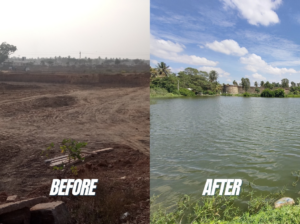
Biome is also working with Bengaluru’s new City Corporations (North, South, and West) to strengthen water management in local action plans. Several of these ideas were taken up by the corporations, helping bring integrating water management into city planning. Biome is now identifying projects to take these ideas forward.
Resident Welfare Associations (RWAs) in Bengaluru South interested in reviving open wells can reach out to Biome to explore collaboration at [email protected] or by call on
+91 80 4167 2790 / 2364 4690
Sense of The House – Exploring SoTH approach Through Practice
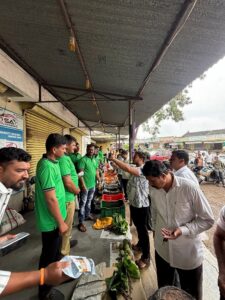
Paani Foundation used a series of field anecdotes to reflect on how the Sense of the House (SoTH) approach takes shape on the ground. Drawing on experiences from Karmala, Maharashtra, the stories show how challenges such as water scarcity, declining soil health, rising input costs, and livelihoods are deeply interconnected. They explained how addressing one issue in isolation can create bad trade-offs elsewhere.
The anecdotes also highlight the value of collective action. By experimenting together on small portions of their land, farmers shared risks, learnt from one another, and looked beyond farm incomes towards healthier communities and landscapes.
Gram Vikas – Expanding the Water Secure Gram Panchayat Network
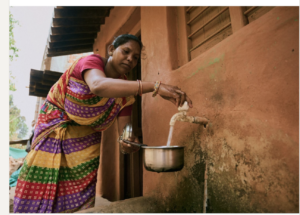
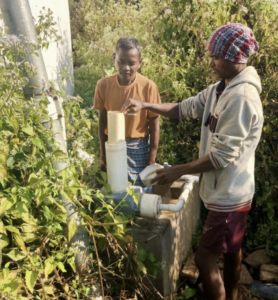
Gram Vikas has launched the network for the Water Secure Gram Panchayat (WSGP), bringing together seven grassroots organisations to expand the approach across Odisha and Jharkhand. The network, which has reached 21 Gram Panchayats and 405 habitations, has created a shared platform for community-led water governance, peer learning, and the exchange of local knowledge.
The initiative marks an important step towards scaling locally rooted approaches to water security across the region.
Socratus Foundation and Nature’s Club – Building a Place With Many Hands
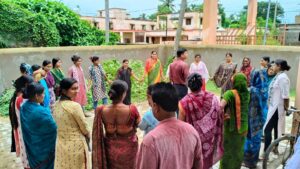
Socratus Foundation collaborated with a community-based NGO, Nature’s Club, and are together highlighting what it takes to build long-term, place-based change in Odisha’s Mahakalapada landscape.
Through the Odisha Landscape Diary, they are documenting stories from one of India’s most ecologically significant coastal regions called Bhitarkanika. The stories bring out how ecology, livelihoods, industry, and community are deeply interconnected.
At the same time, 35 Climate Champions from Kendrapara participated in a six-day Entrepreneurship Development Programme under the Government of Odisha’s ECRICC project, implemented by Nature’s Club. The programme shows how different institutions can contribute at different stages of a Climate Champion’s journey, from community mobilisation and capacity building to entrepreneurship.
These efforts highlight the change that occurs when multiple actors work towards a shared vision for a place.
Industree Foundation – Building regenerative bamboo livelihoods in Nagaland
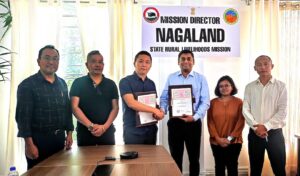
Industree Foundation is working with the Nagaland state to diversify and improve people’s income sources through bamboo. It grows quickly, restores degraded land, and provides a renewable source of income, making it a powerful resource for both people and nature.
The initiative aims to connect 30,000 smallholder women farmers to the bamboo value chain and support women-led collective enterprises. By improving everything from cultivation to market access, the partnership is building a stronger bamboo economy that benefits both local communities and the environment.
Common Ground – Bamboo Villages India
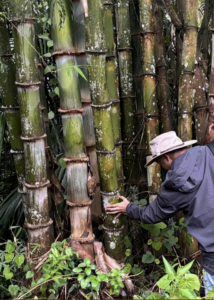
Bamboo Villages India, a Common Ground initiative, is showing how degraded natural landscapes can become thriving ecosystems that also support local economies.
A Bamboo Village is a 2,000-hectare landscape where around 500 households work together to restore biodiversity, soil and water systems, and build bamboo-based livelihoods.
The efforts are shared. Women lead nursery and production activities, while community-owned enterprises help ensure that most of the value created remains within the community.
Already implemented across 25 villages in 6 countries, the initiative is gaining momentum in India and is creating the demand needed to grow at scale. As more villages adopt it, states are supporting its expansion by creating the conditions for commons, communities and markets to grow together.
Sahjeevan – Learning from the Place
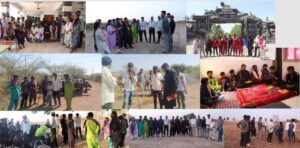
Understanding the subtle interconnections in a landscape is the first step towards caring for it. Through the Salim Node Certificate Course, Sahjeevan is equipping pastoralist youth in Banni with a blend of local knowledge, science, and policy to strengthen community-led grassland conservation. An exposure visit to Chotila and Gir enabled participants to learn from other pastoral communities about grazing systems, native breeds, and grassland management.
By reconnecting young people with both their own places and those of other pastoral communities, the programme is nurturing future custodians of Banni grasslands of Gujarat.
Thicket Tales – Building capacity for place-based climate education
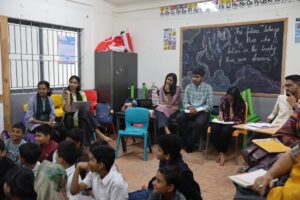
The Educator Incubation Program is a year-long initiative by Thicket Tales. It equips a growing community of educators who intend to bring climate learning into classrooms.
In May, Cohort 1 brought together teachers and after-school educators from 10 schools across Bengaluru, helping them design and test learning rooted in their local environment.
In July, Cohort 2 welcomed Masters in Education students from Azim Premji University, introducing future educators and curriculum designers to place-based learning and its potential to shape classrooms and curricula.
The program introduced participants to the principles and practices of place-based education through:
- Immersive learning in the local landscape.
- Designing lesson plans and curriculum projects across different subjects.
- And a session on their flagship program, ‘Learn Around Nature’ to understand how hyperlocal learning is adapted in a real classroom.
The Climate Brief – Understanding the Systems Behind Our Cities



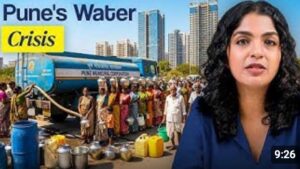
In July, The Climate Brief explored how everyday urban challenges are deeply connected to climate resilience. From Pune’s growing water crisis to the state of India’s footpaths, the series examined how decisions around water, mobility, waste, and urban planning shape the health and liveability of our cities.
Through stories of Panjim’s waste management system and the importance of clean rivers and walkable streets, the episodes unpacked complex urban and climate issues in accessible ways, encouraging viewers to look beyond symptoms and understand the systems behind them.
Explore the latest episodes @TheClimateBrief on YouTube and see how everyday urban issues connect to larger climate systems.
Welcoming New Partners to the Rainmatter Ecosystem

Swarathma: An Indian folk rock band uses the power of storytelling and live performance to inspire conversations and collective action around social and environmental issues.

Oorvani: A civic media organisation that strengthens citizen participation by making urban governance and public data more accessible through storytelling, community engagement, and technology.
Fellowships
Reap Benefit
Graduate Fellowships: Two early-career fellowships (Tech for Social Good and Data Innovation & Insights) for recent graduates and final-year students who want to build technology and data solutions that help young people and communities solve real-world civic and environmental challenges.
More details here: LinkedIn
How to apply: Apply through the application form here.